
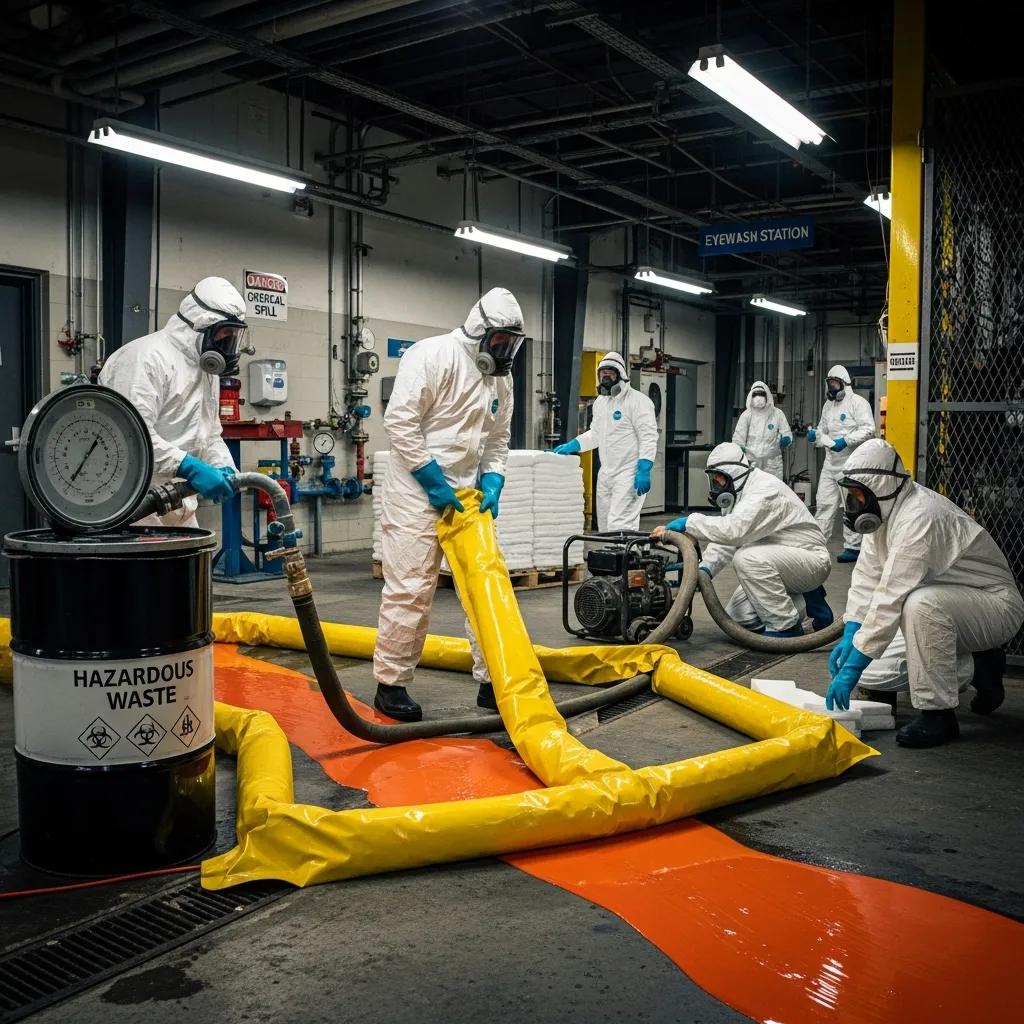
Emergency Spill Cleanup & Remediation — Metro Detroit Rapid Response and Trusted Solutions
When a spill threatens people, property, or the environment, you need a fast, compliant cleanup you can rely on. Our emergency spill cleanup and remediation services stop active contamination, protect occupants and the surrounding area, and get commercial properties back into service as quickly as possible. We combine immediate containment, hazard assessment, regulated waste handling, decontamination, and follow-up restoration to minimize business interruption and reduce regulatory exposure. Below we explain what counts as an urgent spill, which hazards demand immediate action, how 24/7 response is handled across Metro Detroit, specialized approaches for biohazard and chemical incidents, and the disposal and reporting paths that satisfy regulators. Facility managers, safety officers, and property owners will find a clear step-by-step response process, practical prevention tips, and guidance on how professional cleaning and disinfection fit into recovery plans for Macomb and Oakland counties.
What Are Urgent Emergency Spill Cleanup & Remediation Services?
Urgent spill cleanup and remediation are immediate-response services that stop hazardous releases, reduce exposure, and return facilities to safe operation through assessment, containment, decontamination, and proper waste disposal. Speed matters: delays increase health risks, expand contamination, and create bigger regulatory problems. Early containment also limits remediation scope and preserves information needed for reporting. The primary goals are to protect people, prevent environmental spread, and restore business continuity — all while documenting actions for compliance and client records. Knowing these differences helps decide when to call an emergency remediation team rather than a routine cleaning vendor.
Unlike standard janitorial work, emergency spill cleanup focuses on hazard control, regulated waste handling, and incident documentation instead of appearance. Hazardous materials need specialized PPE, containment equipment, and permitted disposal channels that routine cleaners typically don’t provide. Next, we’ll show how these responses protect health and the environment in practical terms.
How Do Emergency Spill Response and Remediation Protect Health and Environment?
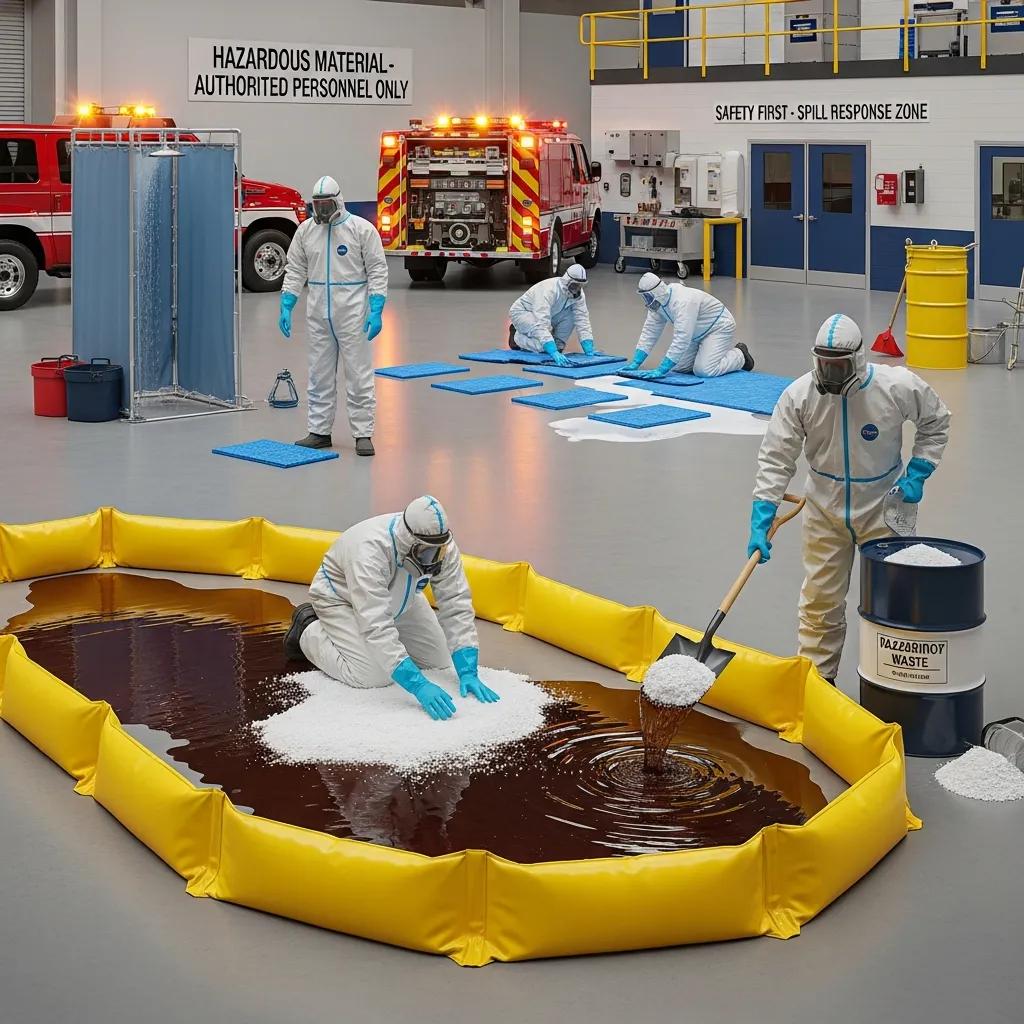
Effective spill response interrupts exposure pathways, isolates contaminated materials, and applies targeted decontamination that removes or neutralizes hazards while preventing secondary spread. Immediate scene control — ventilation, cordons, and moving people out of harm’s way — reduces inhalation and contact risks. Containment tools like booms, absorbents, and temporary berms stop migration to drains and soil. Decontamination uses disinfectants or neutralizers chosen for the specific contaminant, followed by regulated collection and transport of waste to permitted disposal facilities. These steps lower acute health risks, limit long-term impacts such as groundwater contamination, and produce the documentation needed for reports and client assurance.
By reducing exposure and environmental spread, professional remediation also shortens downtime and accelerates safe re-occupancy after verification testing confirms acceptable residual levels. That verification step is why understanding which spill types need urgent action matters.
Which Types of Spills Require Immediate Cleanup in Metro Detroit?
The following spills generally require urgent remediation because they pose immediate health, fire, or contamination risks and may trigger local reporting obligations:
- Biohazardous fluids (blood, bodily fluids): require prompt containment to reduce bloodborne pathogen risk and must be handled as regulated waste.
- Hazardous chemicals (acids, bases, solvents): can cause burns, toxic vapors, or fire hazards that threaten occupants and responders.
- Oil and fuel releases from equipment or tanks: create fire risk and can contaminate soil and groundwater or violate stormwater rules.
- Industrial hazardous wastes (heavy metals, PCBs, reactive solids): pose long-term liability and need specialist handling.
- Medical or pharmaceutical waste: carries infection and diversion risks, so it must be transported and disposed of under regulation.
- Unknown or mixed-material spills: when the material isn’t identified, isolate the area and call professionals to avoid incorrect measures that worsen the incident.
Recognizing these categories helps facility teams prioritize emergency calls and take safe initial steps like evacuation, isolation, and temporary containment while awaiting professional responders.
How Does McCoy Maintenance Provide 24/7 Emergency Spill Response in Metro Detroit?
McCoy Maintenance delivers around-the-clock spill response across Metro Detroit using a local operations model built for speed and coordination. We stage crews and trucks to shorten travel time, keep pre-packed response kits and PPE sets ready, and use clear communication protocols to capture hazard details, scope, and on-site contacts before arrival. That preparation lets our teams tailor PPE and containment materials en route and coordinate access with facility leaders or emergency services when needed. The result: faster containment, less exposure, and quicker restoration.
We pair remediation with trained cleaning and restoration crews who handle post-remediation recovery and infection-control verification. Our services include commercial carpet and upholstery cleaning, floor maintenance, construction cleaning, and ULV fogging with hospital-grade disinfectants — all aimed at returning spaces to safe, usable condition after hazards are removed. Combining remediation and restoration cuts overall downtime and reduces residual contamination risks while restoring facility function and appearance.
Exact dispatch and reporting procedures depend on incident severity and regulatory needs, but local coverage, prepared crews, and integrated cleaning services together provide a coordinated, faster recovery for commercial clients across Macomb and Oakland counties. Below we review the certifications and expertise that support safe hazardous cleanup.
What Certifications and Expertise Ensure Safe Hazardous Waste Cleanup?
Safe hazardous cleanup requires trained technicians, clear procedures, and competent equipment. Industry-standard training like HAZWOPER teaches hazard recognition, PPE selection, decontamination zones, and incident command — all essential for high-risk containment and removal tasks. Other key competencies include infectious-disease remediation, chemical handling, and the safe operation of recovery tools like pumps, sorbents, and neutralizers. When jobs need special certifications or heavy equipment, responsible providers disclose subcontractor partnerships with qualified contractors so regulatory and technical requirements are met.
Keeping training records, on-scene supervision, and well-defined safety roles ensures crews operate within their scope. If a situation requires chemical analysis or confined-space entry, escalation pathways bring in higher-level specialists. Those controls protect workers, the public, and the environment while creating traceable records for regulators and insurers. Next we outline how we keep response times short across local counties.
How Is Rapid Deployment Achieved Across Macomb and Oakland Counties?
Rapid deployment combines local resource placement, pre-packed response kits, and fast intake procedures. Teams stage equipment near high-demand areas, maintain inventories for common spill types — absorbents, booms, PPE, neutralizers — and plan routes that account for municipal access and traffic. Our intake captures the hazard description, exact location, and on-site contacts so crews can choose the right PPE and materials before they arrive and coordinate any needed utility shutoffs or access with facility staff.
After the incident, crews deliver incident documentation and recommendations for follow-up testing or remediation that support regulatory filings and business-continuity planning. Local knowledge and operational readiness reduce arrival time and keep initial containment moving efficiently. Next, we describe the specialized services used during cleanup.
What Specialized Services Are Included in Emergency Spill Cleanup?
Specialized spill cleanup combines containment, hazard mitigation, decontamination, waste packaging and transport, and restoration to return a site to safe operation. Typical services include scene assessment and risk categorization, containment and source control, biohazard remediation, chemical neutralization, oil and fuel recovery, regulated hazardous waste packaging and manifesting, and restoration work such as carpet and upholstery cleaning, floor care, and disinfection. Each service is chosen based on the contaminant and the facility’s needs to protect workers, the environment, and regulatory standing. The table below helps facility managers compare service types and usual response approaches.
| Service Type | Typical Contaminants | Typical Response & Disposal Approach |
|---|---|---|
| Biohazard Remediation | Blood, bodily fluids, medical waste | Scene control, PPE, regulated sharps/waste packaging, validated disinfection, transport to medical-waste facilities |
| Chemical Spill Cleanup | Acids, solvents, corrosives | Hazard assessment, neutralization or sorbents, containment, chemical-specific PPE, disposal at permitted hazardous-waste facilities |
| Oil & Fuel Recovery | Diesel, gasoline, hydraulic oil | Containment booms/berms, absorbents, recovery pumps, soil stabilization, oily-waste disposal at authorized facilities |
| Industrial Hazardous Waste Handling | Heavy metals, reactive solids | Segregation, sampling and lab analysis, specialized packaging, transport to licensed hazardous-waste facilities |
This side-by-side view shows how the contaminant type drives the response and disposal path. After containment and removal, techniques like ULV fogging and professional cleaning complete disinfection and restoration.
With those categories defined, the next sections explain how biohazard and chemical procedures are performed and how restoration services support full-site recovery.
How Is Biohazard Remediation and Bloodborne Pathogen Cleanup Performed?
Biohazard remediation starts with a controlled assessment to define the affected area, then secures the scene and establishes contamination zones. Technicians wear the required PPE, package regulated materials in labeled, compliant containers, and use validated disinfection methods on affected surfaces, repeating cleaning cycles until verification criteria are met. We document chain-of-custody for waste, disinfectant products and dwell times, and technician actions to support regulatory and client records. Final verification may include surface testing or visual inspection before the area is released for restoration.
Restorative steps often follow — professional carpet and upholstery cleaning or ULV fogging — to address any remaining risk and return the space to routine use. Those steps bridge remediation and safe re-occupancy.
What Are the Procedures for Chemical, Oil, and Fuel Spill Remediation?
Chemical and hydrocarbon responses follow a decision tree based on hazard class and spill volume: isolate and ventilate when vapors are present, then contain using booms, berms, or absorbents to limit spread. For oil and fuel, mechanical recovery and absorbent media remove free product while saturated soil or surfaces are remediated; for corrosives or reactive chemicals, neutralizers and controlled dilution may be used when safe. All collected wastes are segregated, containerized, and moved by licensed hazardous-waste carriers to permitted facilities, with manifests and documentation retained for compliance.
Coordination with environmental regulators and sampling often determines follow-up remediation or monitoring to protect groundwater and stormwater receptors. With disposal paths clear, the next section explains how we maintain compliance and safety overall.
How Does McCoy Maintenance Ensure Regulatory Compliance and Safety?
Regulatory compliance and safety rest on written procedures, trained personnel, appropriate PPE and equipment, and transparent documentation of waste handling and disposal. Providers must follow federal and state reporting triggers, maintain chain-of-custody for hazardous materials, and use permitted transporters and disposal facilities to limit client liability. Regular safety briefings, documented training, and incident reports are the foundation of a compliance program that protects workers and demonstrates due diligence to regulators after an incident.
When special certifications or permits are required, responsible remediation teams clearly state which work they perform in-house and when they’ll bring in certified subcontractors. Documenting those arrangements and the qualifications of assigned personnel supports accountability and regulatory acceptance. The next subsections summarize the key regulatory frameworks and the role of certified technicians.
What Are OSHA, EPA, and MIOSHA Requirements for Spill Cleanup?
OSHA, EPA, and MIOSHA intersect on worker safety, environmental protection, and waste-disposal rules. OSHA/MIOSHA focus on worker protection — training, PPE, and safe practices — while EPA rules cover reporting certain releases and correct hazardous-waste classification and disposal. Reporting thresholds, containment expectations, and manifesting rules depend on spill type and quantity and may require notifications to local or state agencies. Keeping accurate incident records, safety data sheets, sampling results, and manifests demonstrates compliance and supports regulatory review.
Practically, contractors document exposure controls, retain training records (such as HAZWOPER where applicable), and provide disposal manifests showing waste was handled by permitted transporters and received at authorized facilities. These records reduce client liability and facilitate regulatory inquiries. Next we explain certified technician involvement in higher-risk scenarios.
How Are Certified HAZWOPER Technicians Involved in Remediation?
HAZWOPER-trained technicians handle higher-risk containment, removal, and stabilization tasks involving chemical hazards, unknown substances, or complex decontamination. Their training covers hazard recognition, decontamination protocols, respiratory protection, and emergency procedures, allowing them to manage incidents that exceed basic cleanup scopes. Organizations deploy HAZWOPER-certified staff for confined-space entry, extended chemical handling, and oversight of hazardous-waste packaging and transport. When incidents exceed in-house capabilities, certified partners are brought in to preserve safety and compliance.
Using certified technicians ensures high-risk work follows established safety practices and that required documentation for regulators and insurers is maintained. With safety and compliance in place, the next section details the step-by-step response workflow.
What Is the Typical Process for Industrial Spill Containment and Waste Disposal?
Industrial spill response follows a clear, accountable sequence: rapid assessment, containment and source control, removal and decontamination, proper transport and disposal of waste, and full documentation and client reporting. This staged workflow limits exposure, prevents environmental migration, and produces the records regulators expect. Each phase assigns responsibilities and tools so actions are effective and defensible. The numbered steps below give facility managers a concise reference for planning and incident response.
- Assessment: Evaluate hazards, identify materials, and determine immediate risks to people, the environment, and infrastructure.
- Containment: Put physical controls in place — booms, berms, absorbents — and isolate the release to stop migration.
- Removal: Recover free product, remove contaminated solids, and apply decontamination agents or neutralizers.
- Disposal: Segregate, package, and manifest wastes for transfer to permitted treatment or disposal facilities.
- Documentation: Maintain chain-of-custody, incident reports, waste manifests, and sampling results for regulatory compliance and client records.
This sequence gives on-site teams an action map and highlights where facility managers should help with access, shutoffs, or sampling. The table below ties each step to common roles and tools used during industrial responses.
| Response Step | Responsible Party / Tool | Purpose |
|---|---|---|
| Assessment | On-site facility manager and response technician / detection tools | Identify material, hazards, and immediate risks |
| Containment | Response crew / booms, berms, absorbents | Stop spread and protect receptors |
| Removal | Trained technicians / pumps, sorbents, vacuum units | Recover contaminants and reduce residuals |
| Disposal | Licensed transporter / manifesting system | Move waste to permitted facilities lawfully |
| Documentation | Project lead / incident reports, chain-of-custody | Create a compliance record and client deliverable |
This mapping clarifies roles during an incident and supports efficient handoffs between facility staff, contractors, and regulators. The following subsections explain safe removal practices and disposal best practices in more detail.
How Are Spills Assessed, Contained, and Removed Safely?
Safe assessment starts with keeping non-essential personnel clear, reviewing safety data, and using remote detection when appropriate to avoid unnecessary exposure. Containment is selected by material and surface conditions — absorbents for small spills, berms or booms for larger releases — to minimize migration. Removal uses the right mechanical or chemical techniques: skimming and pumping for free liquids, sorbents for sheens, and manual removal with PPE for saturated solids. Continuous monitoring for vapors or residual hazards during removal protects workers and helps determine whether to call specialized contractors.
Those decisions reduce immediate risks and set the stage for effective decontamination and waste segregation. After removal, proper disposal practices protect long-term compliance.
What Are Best Practices for Environmentally Responsible Waste Disposal?
Responsible disposal depends on accurate waste-stream classification, segregation of incompatible materials, and transfer to licensed treatment or disposal facilities using permitted transporters. Best practices include sampling and characterization when waste composition is uncertain, using manifests to document chain-of-custody, and choosing disposal options that reduce environmental impact, such as energy-recovery facilities when appropriate. Keeping disposal documentation and certificates provides proof of due diligence and shields property owners from future liability.
Following preferred disposal pathways and maintaining vendor qualifications lowers the risk of improper disposal and enforcement actions. With response and disposal processes clear, businesses can focus on prevention and preparedness to reduce incident frequency and impact.
How Can Businesses Prepare for and Prevent Emergency Spills?

Businesses cut spill risk by combining planning, regular maintenance, employee training, and professional cleaning schedules to address root causes and limit spread when incidents occur. A written response plan with assigned roles and contact lists, scheduled equipment inspections, accessible spill kits, and routine professional cleaning of high-risk areas all reduce incident rates and speed recovery. Regular drills and coordination with local responders make sure internal teams act confidently under stress. The checklist below gives five practical prevention steps facility managers can implement now.
- Create a written environmental response plan and keep an up-to-date contact list for internal and external responders.
- Perform scheduled inspections and preventative maintenance on tanks, piping, and transfer equipment to catch failures early.
- Keep on-site spill kits, secondary containment, and labeled waste containers in high-risk areas to limit migration.
- Schedule regular professional cleaning and floor/carpet maintenance to remove residues that increase fire or contamination risk and to help detect hidden leaks.
- Train staff with tabletop exercises and live drills so everyone knows initial actions, reporting procedures, and documentation expectations.
These steps reduce operational risk, shrink downtime, and make regulatory reporting simpler when incidents occur. The table below links preventative measures to practical benefits for facility operations.
| Preventative Measure | Implementation | Benefit |
|---|---|---|
| Environmental response plan & drills | Written plan, periodic tabletop and live drills | Faster, coordinated response and less confusion |
| Regular equipment maintenance | Scheduled inspections and preventative repairs | Fewer failures and earlier leak detection |
| Professional cleaning & carpet maintenance | Routine deep cleaning and floor care | Removes residues that raise fire/contamination risk and aids leak detection |
| Accessible spill kits & secondary containment | Strategically placed kits and containment systems | Immediate mitigation and reduced environmental spread |
This mapping shows how routine actions strengthen operational resilience. In practice, qualified cleaning and disinfection services complement prevention by keeping critical surfaces maintained and by providing rapid post-incident restoration.
McCoy Maintenance recommends pairing preventative maintenance with scheduled professional cleaning — commercial cleaning, carpet maintenance, and ULV fogging using hospital-grade disinfectants — as part of a complete prevention and recovery strategy. These services remove residues that can speed corrosion or increase flammability and provide a proven restoration path after remediation. For facility managers in Metro Detroit, McCoy Maintenance offers these complementary services to bridge prevention and recovery.
What Are Effective Environmental Response Planning Strategies?
Effective planning centers on a concise, actionable plan that assigns roles, lists hazards, notes emergency contacts, and specifies response resources and escalation triggers. A useful plan includes hazardous-material inventories, maps showing shutoffs and containment locations, a drill schedule, and procedures for regulatory notification. Review the plan at least annually or after any incident so it stays current with operational and regulatory changes. Training and tabletop exercises validate the plan by revealing gaps and improving team coordination under pressure.
Embedding these strategies into routine operations shortens decision time during incidents and improves outcomes for people, property, and the environment. The following subsection explains how tailored prevention measures apply to different facility types.
How Does Customized Spill Prevention Support Commercial Facilities?
Customized prevention matches controls to a facility’s operations, materials, and layout: manufacturing sites benefit from secondary containment and spill trays; healthcare facilities need sharps management and strict biohazard segregation; office complexes gain from routine carpet and floor checks to spot leaks early. Tailored programs set inspection frequencies, recommend equipment upgrades, and provide training modules aligned with a facility’s risk profile and regulatory context. In many cases, prevention investments pay off by reducing costly emergency responses and fines.
Adding routine commercial cleaning and proactive maintenance to a customized program not only lowers incident probability but also speeds recovery when incidents happen, protecting continuity and stakeholder interests.
Emergency Spill Cleanup & Remediation — Metro Detroit Rapid Response and Trusted Solutions
Frequently Asked Questions
What should I do immediately after a spill occurs?
First, protect people: evacuate or isolate the area and keep bystanders away. From a safe distance, identify the material if you can and, if it’s safe, use available absorbents or barriers to slow the spread. Notify your internal emergency team and call a professional spill cleanup service. Record the type of material, estimated volume, time, and actions taken — that information helps responders and supports regulatory reporting.
How can businesses ensure they are prepared for potential spills?
Develop a clear environmental response plan, train employees on spill procedures, and keep spill kits and PPE accessible. Schedule regular inspections of equipment and storage areas, and run drills so staff are comfortable with roles and notifications. Partnering with a professional cleaning or remediation provider for regular maintenance and on-call support strengthens preparedness.
What are the costs associated with emergency spill cleanup services?
Costs vary based on spill type and volume, the materials involved, site complexity, disposal requirements, and any required testing or regulatory reporting. Downtime and remediation scope also affect total cost. Obtain detailed quotes from qualified providers and weigh those costs against the potential liabilities and downtime of inadequate response. Investing in prevention and routine maintenance can reduce long-term expenses.
How can I verify the qualifications of a spill cleanup service provider?
Ask about relevant training and certifications such as HAZWOPER, request references for similar incidents, and review their safety record. Confirm they use permitted transporters and disposal facilities and that they provide documentation like training records, manifests, and incident reports. A reputable provider will readily share credentials and proof of compliant processes.
What role do local regulations play in spill cleanup procedures?
Local and federal regulations define reporting thresholds, containment expectations, and disposal rules. OSHA/MIOSHA focus on worker safety and training, while EPA rules govern reporting and hazardous-waste handling. Noncompliance can lead to fines and legal exposure, so align your response plan with applicable regulations and work with providers who understand local reporting and permit requirements.
How can I assess the effectiveness of my spill response plan?
Test the plan with regular tabletop exercises and live drills that simulate realistic scenarios. Measure response time, clarity of roles, and how well protocols are followed. After drills or real events, review incident reports and participant feedback to identify gaps and update the plan. Regular updates keep the plan aligned with operations and regulations.
What are the environmental impacts of improper spill cleanup?
Poor cleanup can lead to soil and groundwater contamination, harm to wildlife, and long-term ecological damage. Hazardous materials can enter stormwater systems or groundwater, posing public-health risks and triggering enforcement actions. Proper response limits environmental harm and reduces legal and financial exposure for the responsible party.
Conclusion
Fast, professional spill cleanup and remediation protect people, the environment, and your bottom line. Knowing which spills require immediate action and how remediation, documentation, and disposal work together helps facility managers reduce risk and meet regulatory obligations. McCoy Maintenance provides local, 24/7 response and integrated restoration services across Metro Detroit to help you recover quickly and prevent future incidents. For tailored support or to discuss preparedness for your facility, contact us today.