
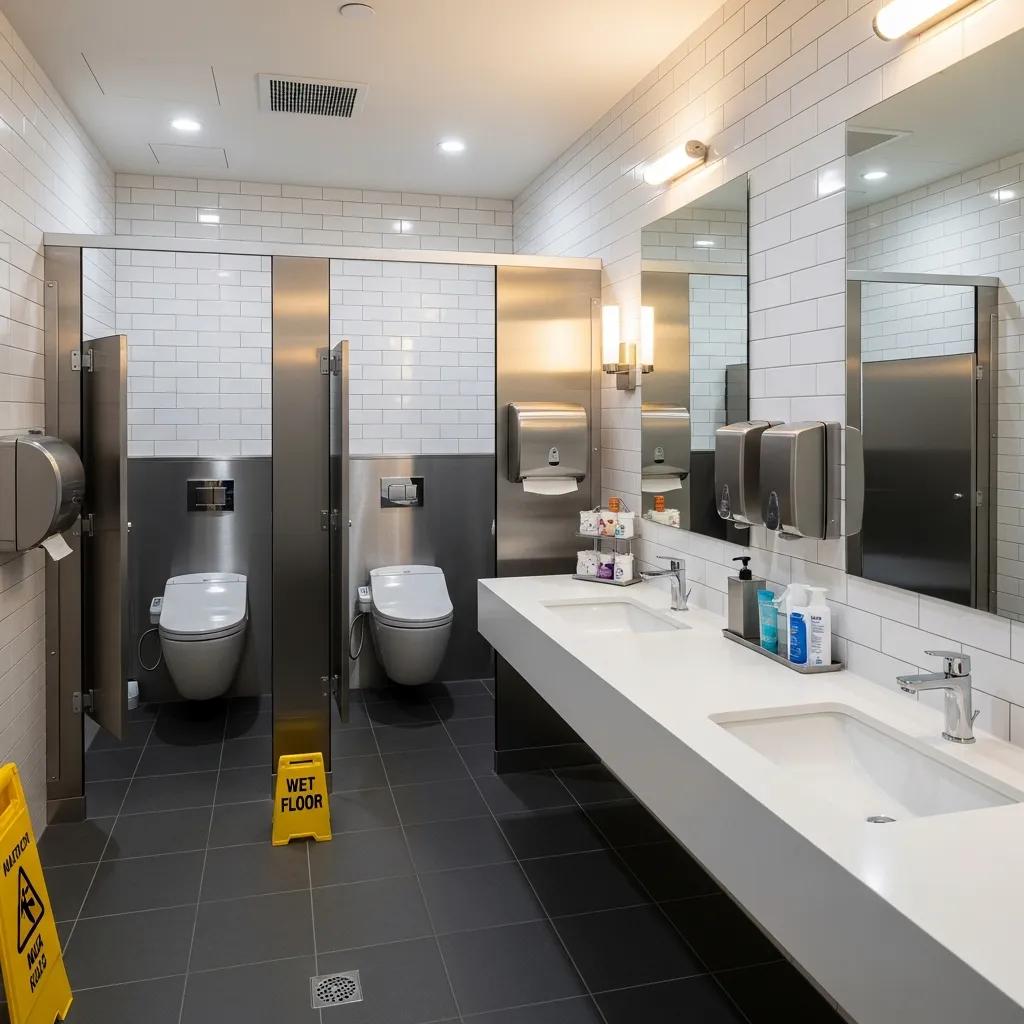
Elevating Restroom Hygiene: Proven Cleaning Protocols and Standards
High restroom hygiene starts with regular cleaning, validated disinfection, and ongoing monitoring to control pathogens and keep building occupants confident. This guide lays out measurable sanitation standards, daily and periodic cleaning protocols, disinfectant chemistry and techniques, plus facility upgrades that cut cross-contamination and improve restroom air quality. Facility managers and janitorial teams will find practical checklists for office toilet schedules, proven public-bathroom practices, and guidance on when to call for deep cleaning—like advanced fogging. We balance day-to-day steps—what to clean, how often, and which products to use—with policy items on training, recordkeeping, and sustainability, all aimed at reducing germ spread in high-traffic spaces. Following these recommendations supports regulatory compliance, lowers complaints, and raises perceived cleanliness for staff and customers. Read on for actionable daily checklists, product comparisons, fixture guidance, and tips for working with professional janitorial providers.
Commercial Restroom Cleaning Standards: What Facility Managers Should Expect
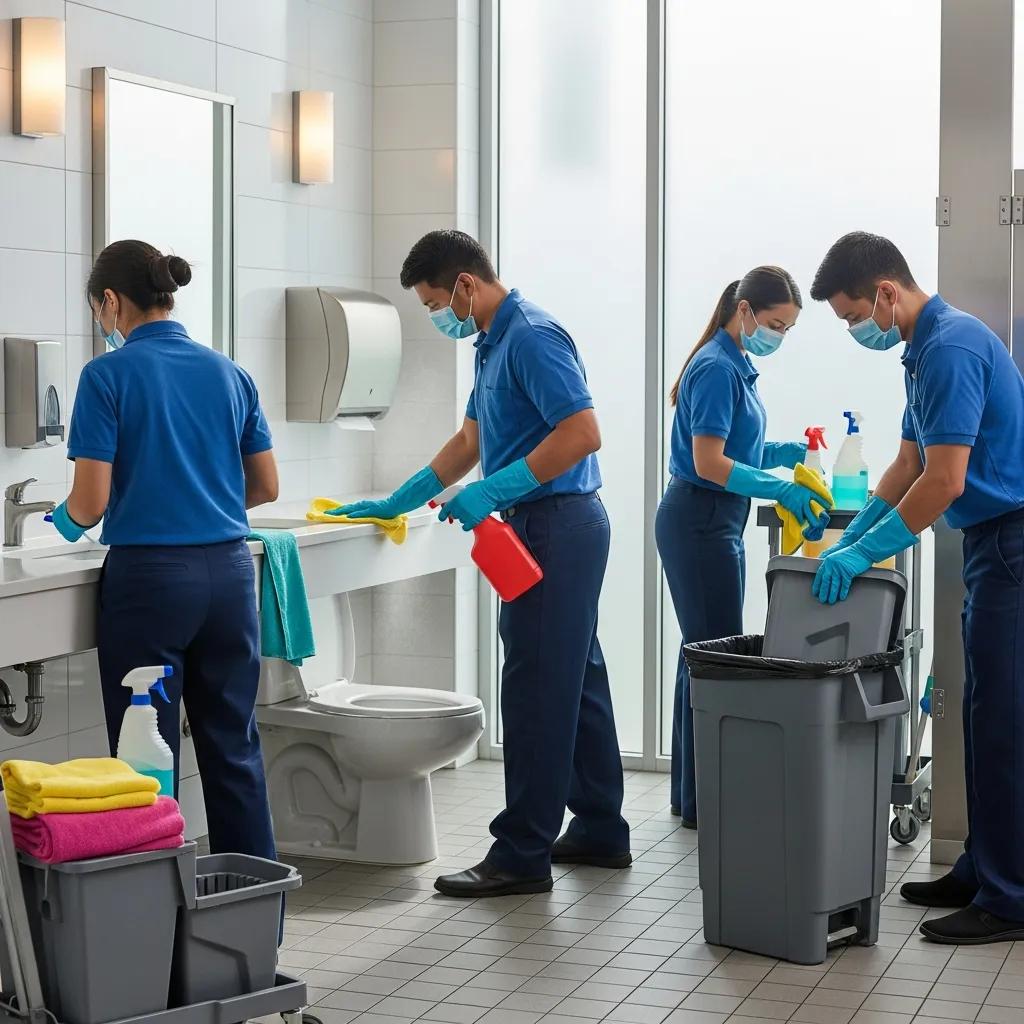
Cleaning standards for commercial restrooms set clear, measurable expectations for visible cleanliness, odor control, supply levels, and written procedures that reduce infection risk and protect users. Effective standards rely on three pillars: routine removal of soils and organic matter, the targeted use of EPA‑registered disinfectants with correct dwell times, and ongoing monitoring through checklists and audits to keep work consistent. Putting standards in place improves restroom air quality, lowers surface bioburden on high‑touch points, and creates objective triggers for escalation to deep cleaning. Measurable outcomes—no visible soil on fixtures, steady availability of hand‑hygiene products, and documented daily logs—give teams the data needed to evaluate performance and adjust staffing or methods as required.
The table below compares common cleaning tasks with recommended frequency, tools, and the expected result so managers can prioritize resources and train staff effectively.
| Task | Recommended Frequency | Tools / PPE | Expected Outcome |
|---|---|---|---|
| Toilet bowl disinfection | Multiple times daily; dwell time 1–10 minutes depending on product | Disinfectant, toilet brush, gloves, eye protection | Lowered enteric pathogen load; visible stains removed |
| High-touch surface disinfection (handles, faucets) | Hourly to multiple times daily in high-traffic areas | EPA-registered wipes/sprays, microfiber cloths, gloves | Reduced contact transmission risk |
| Floor cleaning and odor control | Daily sweeping and mopping; deep cleaning weekly/monthly | Auto-scrubber or mop system, neutral cleaner, PPE | Fewer slip hazards and less malodor |
| Supply restocking | Inspected hourly in busy sites; daily minimum | Spare soap/paper supplies, stocking cart | Continuous availability of hand-hygiene supplies |
This task-level mapping makes clear which activities are operational essentials and which need periodic escalation. Standards tied to monitoring logs drive accountability and simplify audits or regulatory inspections.
Daily Cleaning Checklist for Reliable Restroom Sanitation
Daily cleaning targets fresh soils, disinfects high-contact points, and keeps supplies topped so users encounter a hygienic space throughout the day. A short, repeatable checklist helps teams maintain consistency and makes handoffs between shifts quick and auditable. Using a standard sequence—trash, sink/touchpoints, toilet/urinal, floors—reduces recontamination and saves time. Color-coded tools prevent cross-contamination between fixture types and general areas. Staff should wear appropriate PPE, respect manufacturer dwell times for disinfectants, and complete a written or digital log to record completed tasks and any issues that need escalation.
Practical checklist for each shift:
- Empty trash and replace liners: Remove soiled items and prevent overflow that spreads odors.
- Restock soap, paper, and sanitizer: Keep supplies visible and fully functional for hand-hygiene compliance.
- Disinfect high-touch points: Wipe door handles, faucets, stall latches, and dispensers with EPA‑registered products.
- Clean and disinfect toilets and urinals: Apply bowl disinfectant with required dwell time, then clean exteriors and seats.
- Sweep and mop floors: Remove debris and disinfect areas of concentrated soil; address spills immediately.
Consistently following this checklist reduces complaints and sets clear expectations for staff. Regular completion prevents small issues from becoming major sanitation problems.
Weekly and Monthly Deep Cleaning Protocols for Long-Term Hygiene
Weekly and monthly deep-clean tasks remove embedded soils, mineral buildup, and other system-level issues that routine cleaning can’t fully address. Typical deep cleaning includes grout and tile work, descaling fixtures, drain maintenance, and ventilation grille cleaning—steps that restore surfaces and remove odor sources. Schedule these tasks based on traffic patterns and surface vulnerability—ceramic tile behaves differently than resin finishes—to balance effectiveness with minimal disruption. Keeping records of deep-clean cycles helps with consumables planning and shows when specialty services, like construction cleaning or advanced fogging, are warranted.
Key deep-clean actions include grout scrubbing and sealing, fixture polish and scale removal, drain and trap inspection, and HVAC grille cleaning to improve restroom air quality. Performing these items monthly or quarterly preserves surface life and reduces emergency remediation needs. If surface damage or persistent odors continue after scheduled deep cleaning, escalate to specialty services for targeted remediation.
How Professional Cleaning Services Improve Restroom Hygiene and Safety
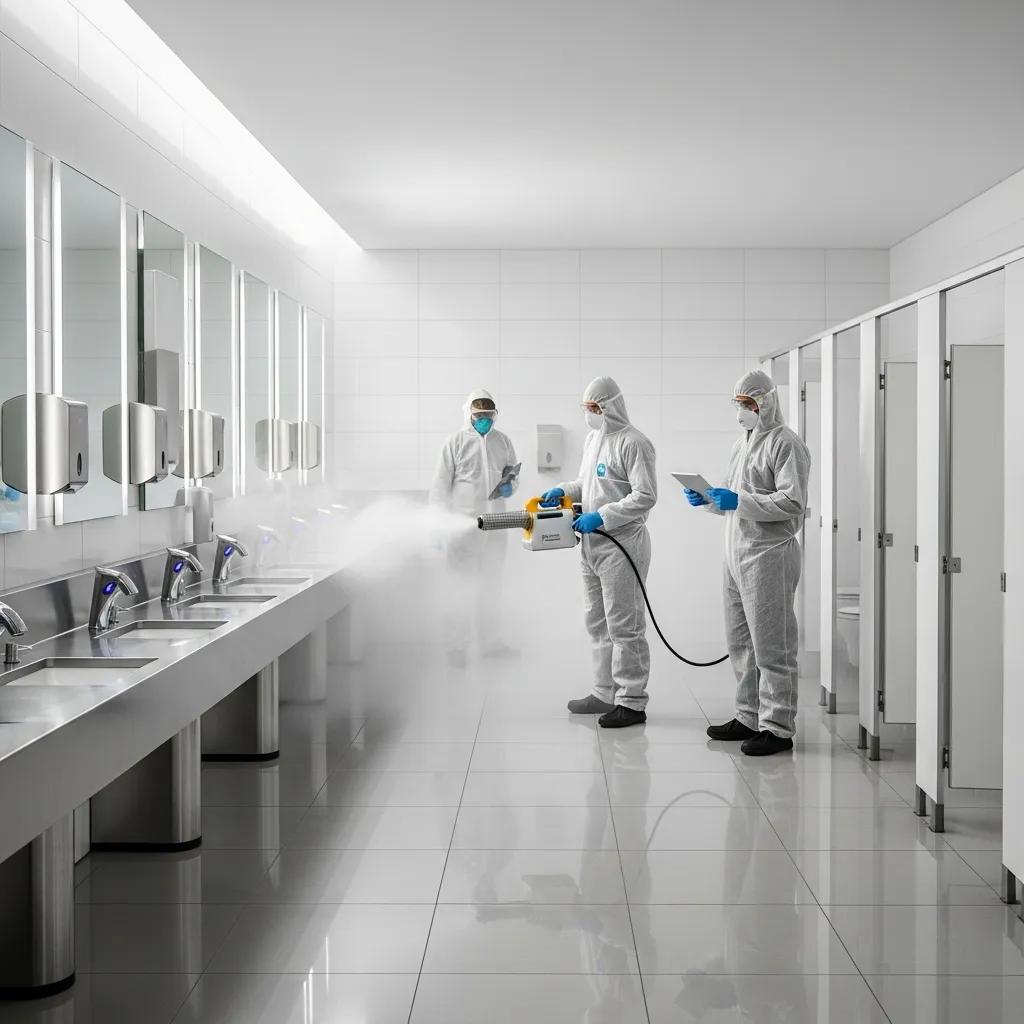
Professional restroom cleaning services bring trained crews, validated procedures, and specialized equipment that together reduce pathogen transmission and improve facility uptime. Experienced providers run quality‑assurance programs—inspections, documented logs, and corrective-action plans—that produce predictable results and measurable sanitation gains. Outsourced teams also have access to EPA‑registered disinfectants, advanced fogging equipment, and scalable staffing models to match peak traffic, delivering stronger germ control in commercial restrooms. Those capabilities translate to fewer customer complaints, improved regulatory compliance, and demonstrable air‑quality and surface cleanliness improvements.
Benefits of hiring professional janitorial teams include:
- Consistent procedures: Trained staff follow standardized cleaning and disinfection protocols to reduce variability.
- Specialized equipment: Access to fogging machines and industrial floor-care tools speeds and improves deep-clean cycles.
- Quality assurance: Routine inspections and documentation enable continuous improvement and compliance.
Outsourcing also lightens the administrative load for facility managers, letting in‑house teams focus on oversight and exceptions. For organizations needing local responsiveness and customized plans, partnering with a vendor that documents services and guarantees satisfaction delivers predictable restroom hygiene outcomes.
McCoy Maintenance provides locally focused commercial janitorial services combining trained, background‑checked staff with hospital‑grade disinfectants and advanced fogging technology to handle tough sanitization challenges. Family‑owned and serving Macomb, Oakland, and Metro Detroit, McCoy Maintenance offers customized cleaning plans and a 100 percent satisfaction guarantee to give businesses dependable restroom sanitation and quick service. For facilities that need tailored scopes and documented protocols, McCoy Maintenance builds schedules and specifies product choices to meet industry needs and support routine audits.
What Expert Janitorial Teams Bring to Restroom Sanitation
Expert janitorial teams deliver operational consistency, faster incident response, and training that lowers cross‑contamination risk and meets regulatory expectations. Trained technicians understand sequencing—top‑to‑bottom and clean‑to‑dirty—so disinfectants reach required contact times and recontamination is minimized. Background‑checked, well‑trained staff are more reliable, and supervisory QA checks plus digital logs provide traceability for inspections and complaint resolution. Contracted teams can scale for events or busy periods, keeping office toilet cleaning schedules intact without gaps.
These operational strengths reduce the chances of outbreaks and service interruptions and improve measurable metrics like complaint frequency and inspection pass rates. By standardizing routines and documenting performance, expert teams offer a defensible approach to restroom hygiene that aligns with public‑health guidance and corporate risk management.
How McCoy Maintenance Builds Custom Restroom Cleaning Plans
Family‑owned since 1984, McCoy Maintenance provides commercial and residential services including office cleaning, janitorial services, commercial and residential carpet cleaning, upholstery cleaning, floor maintenance, fogging, and construction cleaning. We back work with a 100 percent satisfaction guarantee, competitive pricing, customized cleaning plans, background‑checked and trained staff, hospital‑grade disinfectants, and advanced fogging technology. We serve Macomb, Oakland, and Metro Detroit. David McCoy is described as a certified ‘Master Cleaner’.
Using that scope, McCoy Maintenance tailors frequency, product selection, and task lists to each facility’s layout and foot traffic. Plans can include hourly checks for busy retail restrooms, daily deep‑clean rotations for multi‑shift workplaces, or scheduled fogging after specific incidents. Customization may choose eco‑friendly cleaners or hospital‑grade disinfectants depending on client preferences and regulatory needs—balancing sustainability with pathogen control.
Best Practices for Toilet Disinfection and Pathogen Control
Effective toilet disinfection combines the right chemistry, validated contact times, and procedural controls—like color‑coded tools and top‑to‑bottom sequencing—to stop pathogen spread between fixtures and other restroom surfaces. The basic approach is to remove organic soil first, then apply an EPA‑registered disinfectant with enough dwell time to inactivate target organisms. Best practices include isolating areas during deep disinfection, ensuring ventilation to manage fumes, and training staff on PPE and re‑entry times for fogging or stronger chemistries. Preventing cross‑contamination requires separate tools and protocols for toilets, sinks, and general areas, plus documentation that disinfectant label directions were followed.
Below is a comparison of common disinfectant approaches and their active types to help with product selection for different scenarios.
| Product / Method | Active Ingredient / Type | Effectiveness / Notes |
|---|---|---|
| Bleach solutions | Sodium hypochlorite | Broad‑spectrum; effective against many pathogens but corrosive and may release fumes |
| Quaternary ammonium compounds (quats) | Ammonium salts | Surface‑stable; good for many surfaces—follow label for dwell time |
| Hydrogen peroxide systems | Accelerated hydrogen peroxide | Effective and often gentler on materials; verify compatibility |
| Fogging (electrostatic/fine-mist) | Various hospital-grade disinfectants | Reaches crevices; requires trained operators and adherence to re‑entry timing |
Each option has trade‑offs: bleach is potent and low‑cost but can damage some materials; quats are user‑friendly but need correct application; fogging expands reach but must supplement manual cleaning to remove soils first.
Choosing EPA‑Registered Disinfectants and Techniques
Pick an EPA‑registered disinfectant based on target pathogens, surface compatibility, and operational constraints such as dwell time and ventilation. For routine restroom sanitizing, quats and hydrogen‑peroxide formulations are common because they balance efficacy with material compatibility and milder odor. Bleach is useful for heavy contamination or when broad‑spectrum action is needed quickly, but it requires careful handling and ventilation. Always follow the EPA label for contact times and required PPE, never mix incompatible chemistries, and remove visible soil before applying any disinfectant to maximize effectiveness.
Keep an inventory of labeled products with documented contact times and notes on surface compatibility. Train staff on correct dilution, application technique, and required dwell times so disinfectants deliver the pathogen control intended and crews stay safe.
How Advanced Fogging Technology Adds Value
Advanced fogging disperses a fine mist of hospital‑grade disinfectant to reach crevices and vertical surfaces that manual wiping can miss, improving pathogen reduction in hard‑to‑clean areas. Fogging works well after an incident that raises infection risk or as part of scheduled deep cleaning to supplement manual work. However, fogging must follow manual soil removal, be performed by trained operators, and respect manufacturer re‑entry times for safety and efficacy. When used inside a validated cleaning protocol, fogging can lower surface bioburden in ventilation grilles, behind fixtures, and inside drains.
Because fogging chemistry and particle sizes vary, choose systems and disinfectants with proven efficacy for your target organisms and follow safety guidance on ventilation and occupant clearance. Proper documentation of fogging events demonstrates a proactive approach to pathogen control and supports claims of improved restroom sanitation.
Implementing Effective Public Bathroom Hygiene Protocols
Effective public‑bathroom protocols combine scheduled cleaning that reflects traffic levels, staff training, targeted facility upgrades, and visible communication to users about cleaning efforts. The key is aligning cleaning frequency and scope with real usage data—using sensors or manual counters where feasible—to trigger extra servicing during peaks. Policies should include documented restroom schedules, escalation procedures for spills or biohazards, and procurement standards for disinfectants and consumables. Visible signage about cleaning intervals reassures patrons and supports hand‑hygiene behavior.
Below is a practical comparison of fixtures and control options and their hygiene impacts to help prioritize investments.
| Fixture / Control | Recommended Option | Benefit / Impact |
|---|---|---|
| Faucets | Touchless sensor faucets | Reduces cross-contact on high-touch points |
| Soap dispensers | Sensor or sealed cartridge systems | Lowers contamination during refills and improves reliability |
| Hand dryers vs. paper | Paper towel with hands-free disposal | Often preferred to reduce aerosolization in busy restrooms |
| Odor control | Enzyme-based or carbon filtration systems | Improves perceived cleanliness and reduces odor sources |
Recommended Cleaning Schedules and Checklists
Cleaning schedules should mirror traffic and risk: low‑traffic restrooms may be serviced daily with interim checks, while high‑traffic public washrooms often need hourly inspections and multiple cleanings per shift. A sample schedule ties tasks to traffic tiers—low, medium, high—and spells out inspection frequency, tasks per inspection, and responsible roles. Checklists should be brief, include time estimates, and require staff signatures or digital confirmation to ensure accountability. Monitoring logs and periodic audits reveal trends that may call for increased frequency or facility upgrades.
Sample schedule highlights:
- Low traffic: Daily deep clean, visual checks twice daily, restock as needed.
- Medium traffic: Daily cleaning with visual checks every 2–4 hours; disinfect high-touch surfaces every 4 hours.
- High traffic: Hourly cleaning and restocking; disinfect high-touch surfaces every hour; continuous monitoring during peaks.
Structured schedules create consistency and provide the data needed to refine staffing and supply decisions while clear checklists reduce ambiguity for frontline staff.
How Touchless Fixtures and Odor Control Improve Hygiene
Upgrading to touchless fixtures and investing in odor control cuts contact transmission points and improves user perception, which in turn supports better hand hygiene behavior. Touchless faucets, soap dispensers, and flush valves remove frequent touchpoints that can harbor microbes, limiting hand‑to‑surface transfer. Odor control systems—enzyme cleaners, carbon filters, or scheduled deep cleaning—address underlying biological odor sources that often signal sanitation issues. While initial costs can be higher, lifecycle savings from reduced consumables, fewer complaints, and less reactive cleaning time often justify the investment.
When selecting fixtures and systems, factor in maintenance and supply reliability for disposables. Regular upkeep of sensors and timely replacement of filters or cartridges keep hygiene gains consistent and support a measurable improvement in customer or commuter experience.
Why Eco‑Friendly Restroom Cleaning Matters and How to Achieve It
Eco‑friendly restroom cleaning reduces occupant and staff exposure to volatile organic compounds, lowers wastewater impact, and supports corporate sustainability goals—without sacrificing disinfection when done correctly. The strategy blends green‑certified disinfectants where appropriate, microfiber systems that cut chemical use, and dilution‑control dispensers to prevent overdosing. Other measures include water‑saving fixtures and refillable dispensers to reduce packaging waste. Balancing eco choices with regulatory needs means picking products that hold green certifications and meet disinfection requirements for the pathogens of concern.
Moving to sustainable cleaning often requires retraining crews to rely more on mechanical action (microfiber) and correct dilutions rather than extra chemical concentration, paired with monitoring to verify microbial control. Documenting product efficacy and procurement choices supports audits and demonstrates that sustainability does not compromise cleaning outcomes.
Sustainable Products and Practices That Reduce Environmental Impact
Practical choices that cut environmental impact while maintaining hygiene include biodegradable cleaners, concentrated dilution systems, microfiber programs, and refillable dispensers. These steps reduce packaging waste, transportation emissions, and chemical overuse when combined with proper training. Procurement should favor certified products and confirm that green‑labeled disinfectants meet the facility’s disinfection needs. Adding water‑efficient fixtures and periodic performance reviews ensures sustainability measures deliver both environmental and operational benefits.
Common sustainable practices include scheduled microfiber laundering, centralized dilution systems with locked dispensers to ensure correct concentrations, and supplier agreements that prioritize refillable packaging. When backed by monitoring and training, these measures protect occupant health and lower operational environmental impact.
How Eco‑Friendly Cleaning Supports Health and Compliance
Eco‑friendly cleaning lowers staff and occupant exposure to harsh chemicals, reducing risks of respiratory irritation and VOC‑related complaints while still supporting pathogen control when products are selected and used properly. Green practices can align with regulatory disinfection requirements if products are both certified and effective; keeping product labels and efficacy documentation on file supports compliance. From a brand standpoint, sustainability commitments can boost stakeholder perception and fit corporate procurement policies that favor responsible vendors. With proper training and verification records, businesses can claim both health and environmental benefits during audits.
By combining validated disinfectants with greener operational practices, facilities can meet compliance and safety goals while advancing sustainability—often a differentiator in procurement and tenant satisfaction.
Common Questions About Maintaining High Restroom Hygiene Standards
The FAQ below offers concise, practical answers facility managers and janitorial supervisors can apply immediately to improve restroom hygiene and safety. Each response includes escalation triggers and documentation tips to ensure traceability and continuous improvement.
How often should commercial restrooms be cleaned and disinfected?
Cleaning frequency depends on traffic and event triggers. High‑traffic public restrooms commonly need hourly checks and several disinfecting cycles per day, while low‑traffic office restrooms may manage with daily deep cleaning and interim visual checks. Event triggers—known illness, visible soiling, or spills—should prompt immediate cleaning and possible fogging if contamination risk is high. Document frequency decisions and set escalation criteria tied to measurable indicators like occupant counts or complaint volume. Regular review of logs lets you adjust schedules to actual usage and infection‑control needs.
Consistent documentation and responsive scheduling ensure restroom sanitation scales with risk, reducing pathogen transmission and supporting operational transparency.
What chemicals are safe and effective for public restroom cleaning?
Safe and effective chemical classes include quaternary ammonium compounds, hydrogen peroxide‑based formulations, and sodium hypochlorite (bleach) where material compatibility allows. Each class has trade‑offs around surface compatibility, odor, and ventilation. The controlling factor is the product label: use correct dilution, observe manufacturer dwell times, and wear required PPE. Avoid mixing chemistries and ensure ventilation when using strong oxidizers or bleach. Keep MSDS/product documentation on site and standardize product selection across the facility to simplify training and reduce misuse.
Match the disinfectant to surface types and disinfection goals, document contact times, and train staff on safe handling to achieve reliable pathogen control.
- Request an assessment: A short site review identifies traffic patterns, materials, and priority areas.
- Develop a tailored schedule: Frequency and task lists are matched to observed usage and risk.
- Implement QA monitoring: Digital or paper logs track compliance and support continuous improvement.
Frequently Asked Questions
What are the signs that a commercial restroom needs immediate cleaning?
Immediate cleaning is needed when there’s visible soil, spills, or persistent odors that suggest unsanitary conditions. Busy restrooms may also need urgent attention after peak times or following incidents—spills or a reported illness. Running low on soap or paper towels is another immediate cue to restock and clean. Regular monitoring and fast response to these signals help prevent pathogen spread and improve user satisfaction.
How can technology improve restroom cleaning efficiency?
Technology boosts cleaning efficiency with automated monitoring that tracks usage and triggers cleaning based on real‑time data. Sensors can alert staff when supplies run low or when cleaning is required, reducing neglect. Digital checklists and logs streamline communication and accountability among cleaning crews. These tools not only raise hygiene levels but also optimize staffing and supplies.
What training should janitorial staff receive for effective restroom cleaning?
Janitorial staff need training on proper cleaning techniques, correct use of EPA‑registered disinfectants, and safety protocols including PPE. Training should cover identifying high‑touch surfaces, the right order of operations to prevent cross‑contamination, and how to document cleaning activities and incident responses. Regular refreshers keep teams current on best practices and new products.
What role do audits play in maintaining restroom hygiene standards?
Audits are vital to ensure protocols are followed and to measure cleaning effectiveness. They help identify improvement areas, confirm supply levels, and track cleaning frequency. Regular audits produce documentation managers can use to adjust schedules, staffing, or procedures. Recording audit findings supports informed decisions to strengthen sanitation practices.
How can businesses communicate their hygiene efforts to customers effectively?
Businesses should post visible signage that explains cleaning protocols and schedules to reassure customers. Sharing cleaning frequency and use of advanced disinfection technology boosts confidence. Use social media or newsletters to highlight hygiene practices and reinforce your commitment. Transparency not only reassures customers but encourages proper hygiene, like handwashing.
What are the benefits of using eco-friendly cleaning products in commercial restrooms?
Eco‑friendly products reduce exposure to harsh chemicals for staff and occupants, lowering the risk of respiratory irritation and allergic reactions. They also have a smaller environmental footprint and support corporate sustainability goals. When used correctly, green cleaners can be effective against pathogens, maintaining hygiene standards while improving brand perception among environmentally conscious customers.
How can businesses ensure compliance with restroom hygiene regulations?
To maintain compliance, establish clear cleaning protocols that align with local health guidelines and industry standards. Train janitorial staff, keep accurate cleaning records and audit results, and implement monitoring systems like checklists or digital logs. Stay informed about regulatory changes and update practices as needed to support ongoing compliance and high hygiene standards.
Conclusion
Keeping commercial restrooms hygienic protects occupants and supports a positive facility experience. With effective cleaning protocols, routine audits, and—when appropriate—professional services, businesses can reduce pathogen transmission and maintain regulatory compliance. Tailored schedules and clear documentation make these efforts repeatable and defensible. Contact us to learn how our janitorial services can raise your restroom hygiene and give you reliable, documented results.