
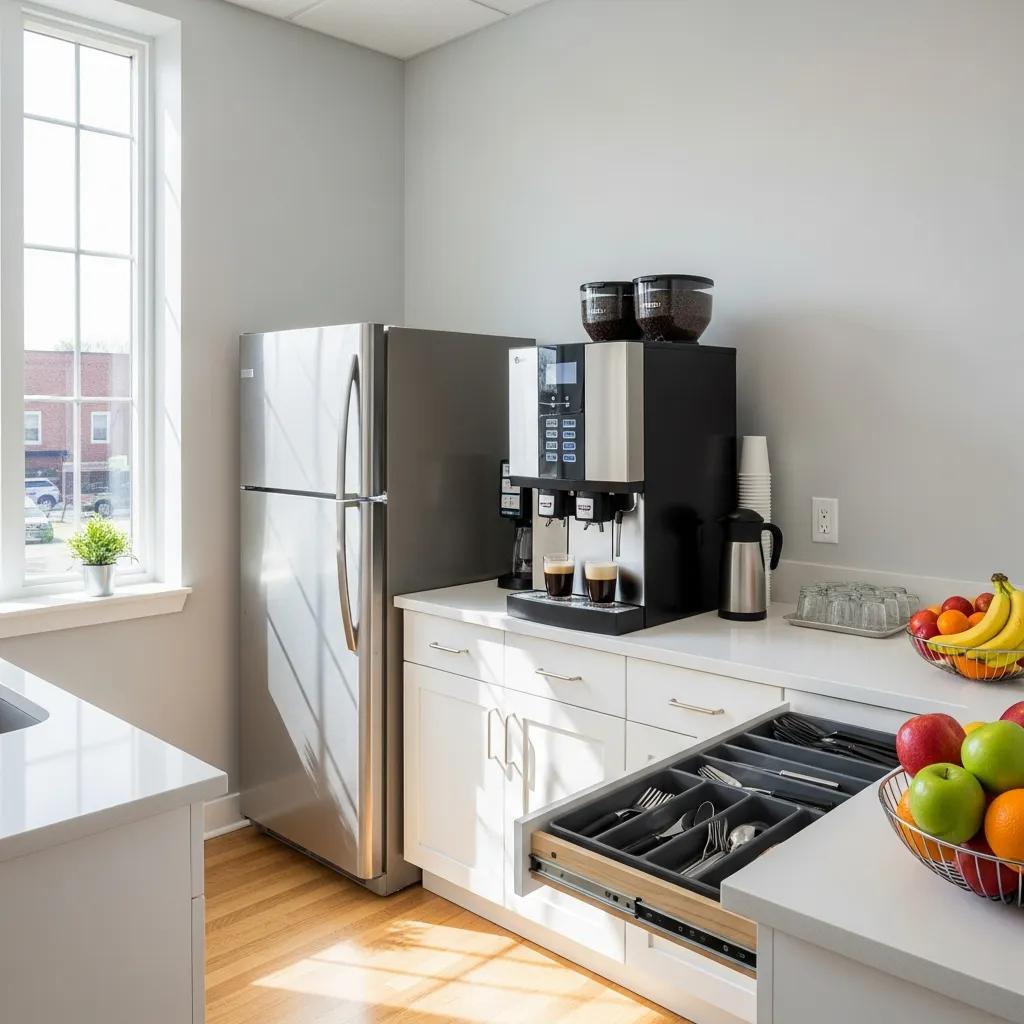
Breakroom Sanitation: A Practical Guide to Office Hygiene and Cleaning
Keeping a commercial breakroom sanitary means using coordinated cleaning routines and simple rules to cut germs, prevent cross-contamination, and keep food-handling safe in shared kitchens and lounges. This guide explains why breakroom sanitation matters, highlights priority zones, and gives clear daily, weekly, and monthly cleaning steps for modern offices and employee lounges. Facility managers and office admins will find practical checklists, product and equipment comparisons, food-storage and waste rules, plus decision cues for escalation—like when to schedule fogging or call in a professional deep clean. We cover health impacts, high-touch cleaning, step-by-step checklists, food safety, equipment recommendations, and tips for choosing a cleaning partner. The goal is a healthier, more productive workplace through consistent, easy-to-follow practices.
Why commercial breakroom sanitation matters for workplace health
Sanitation in the breakroom reduces microbes and foodborne risks by interrupting common transmission paths—surfaces, hands, and shared appliances—so fewer people get sick and operations run smoother. Good sanitation delivers three clear benefits: healthier staff, fewer sick days, and documented cleaning that supports safety and reputation. Public health guidance shows routine disinfection of high-touch areas limits outbreaks and helps businesses stay open. Clear protocols also reduce liability by showing regular care. With those benefits in mind, the next section calls out the surfaces and zones that deserve priority attention and the frequencies and products that work best.
Use these points to justify investment in cleaning routines and supplies. The next section lists the exact areas to target during daily and periodic cleaning.
Breakroom sanitation delivers measurable workplace benefits:
- Fewer illness transmissions: Regular disinfection lowers bacterial and viral load on contact surfaces, cutting sick days.
- Better productivity: Cleaner shared spaces support morale and focus, which reduces workflow interruptions.
- Regulatory and reputational protection: Consistent, recorded cleaning aligns with guidance and shows operational responsibility.
What health risks come from poor breakroom hygiene?
When breakrooms are neglected, shared appliances and communal storage become vectors for pathogens and foodborne illness. Norovirus, Salmonella, and common surface bacteria spread via refrigerator handles, microwave buttons, and faucet taps when hands or utensils are contaminated. Microbes hide in gasket seals, drain traps, and under drip pans where residue builds up and biofilms form. A single contaminated item in a shared fridge can cause multiple illnesses if not spotted and removed, so routine inspection and timely disposal are essential. Knowing these risk spots helps you focus the cleaning steps in the checklist that follows.
How sanitation affects employee well-being and productivity
Perceived cleanliness matters: when employees see regular cleaning and clear food policies, they feel safer and are more likely to follow hygiene rules. That reduces risky behaviors like leaving unwrapped perishables out. Fewer illness-related absences translate to measurable productivity gains, especially for small teams. Employers who track cleaning and absentee trends can show a return on investment for enhanced sanitation programs, which makes it easier to justify ongoing supplies or professional help. Those outcomes point back to the specific areas that should be prioritized to protect health and productivity.
Prioritizing High-Touch Surfaces for Effective Breakroom Cleaning
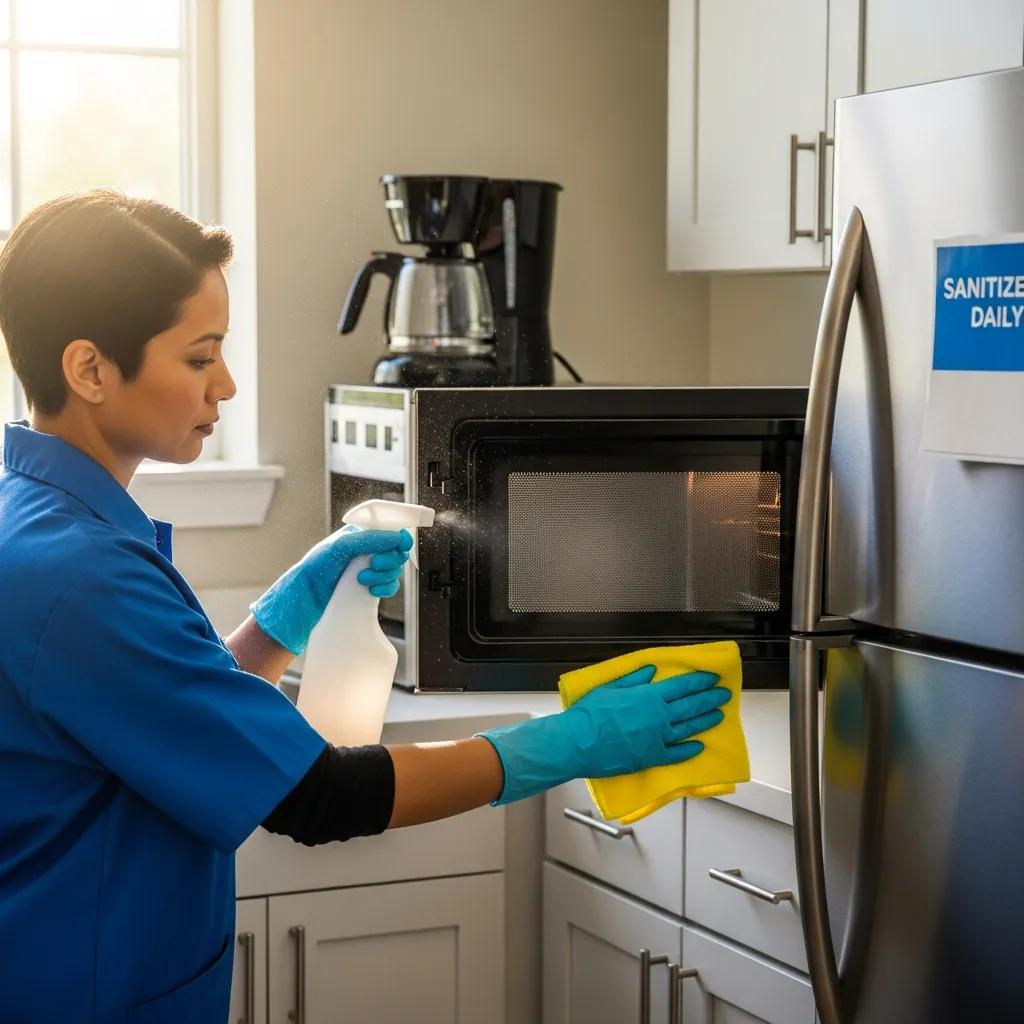
Target high-touch surfaces and food-contact zones first—this gives the biggest risk reduction for the time spent. Priority areas include refrigerator interiors and handles, microwave buttons and interiors, coffee machine touchpoints, faucet handles and drains, countertops, tables, chair arms, and light switches. Clean based on risk: wipe high-touch points multiple times daily, sanitize food-contact counters daily, and run weekly or monthly deep cleans for refrigerators and upholstery. Focusing efforts where contamination and exposure overlap keeps staff time and supplies effective. The list below gives recommended frequency to help schedule tasks.
High-touch surfaces and recommended cleaning frequency:
- Refrigerator handles and interior shelves: Inspect and clean weekly; wipe handles daily.
- Microwave buttons and interiors: Wipe daily; deep-clean weekly or as needed.
- Coffee machine touchpoints and dispenser nozzles: Wipe daily; descale monthly.
- Faucet handles, sink basins, and drains: Disinfect daily; clear buildup weekly.
- Tables, chair arms, and light switches: Wipe or disinfect multiple times per day in high-use areas.
Which items are considered high-touch in office kitchens and lounges?
High-touch items see repeated contact and are the likeliest carriers of microbes: refrigerator doors and shelves, microwave buttons and handles, coffee brewer buttons and steam wands, sink faucets and soap dispensers, shared utensils, table surfaces, chair arms, vending buttons, and light switches. Use a detergent-then-disinfect method for food-contact areas, and alcohol- or EPA-registered disinfectants for nonporous touchpoints. Multiple quick wipes a day for handles and buttons plus scheduled deep cleaning for interiors will reduce reservoirs and prevent cross-contamination. Start here to make broader cleaning tasks more efficient.
How should floors, furniture, and appliances be maintained?
Materials and use patterns dictate maintenance: hard floors need daily spot cleaning and scheduled scrubbing, upholstered seating benefits from weekly vacuuming and quarterly deep cleaning, and appliances follow manufacturer service and descaling schedules. Sweep or vacuum hard surfaces daily, damp-mop with a neutral cleaner, and periodically scrub for grout and stubborn soils. Vacuum upholstery with HEPA-filter vacuums and treat stains promptly; consider professional steam or dry cleaning quarterly depending on traffic. Appliances—fridges, microwaves, coffee machines—need interior cleaning, drip-tray upkeep, gasket checks, filter changes, and monthly descaling to avoid microbial niches. Following these routines reduces vectors and the need for reactive deep cleans.
What are the step-by-step sanitation protocols for commercial breakrooms?
Use a tiered cadence—daily, weekly, monthly—with clear tasks, assigned responsibility, and the right tools. The effective routine removes soils, applies the correct cleaners, and respects disinfectant contact times to inactivate pathogens. Below are practical procedures ready to implement, followed by a concise checklist that assigns frequency, responsibility, and tools. These steps cut cross-contamination risk and create a repeatable rhythm operations can audit and refine.
- Daily Tasks: Wipe and disinfect high-touch surfaces, empty trash, clean sinks, spot-mop floors, and restock soap and paper supplies.
- Weekly Tasks: Deep-clean microwave interiors, clean refrigerator handles and check temperature logs, detail-clean coffee machines, and vacuum upholstery.
- Monthly Tasks: Clean refrigerator interiors and discard expired items, descale appliances, deep-scrub floors, and schedule HVAC or vent checks if applicable.
These steps build a predictable hygiene baseline. If you lack in-house capacity, a professional provider can implement and tailor these protocols to your size and usage.
Here’s a practical checklist that assigns tasks, frequency, and responsible party/tools for quick reference.
| Task | Frequency | Responsible Party / Tools |
|---|---|---|
| Wipe high-touch surfaces (handles, switches, tables) | Multiple times daily | In-house staff or janitorial crew — microfiber cloths, EPA-registered disinfectant |
| Empty trash and sanitize bins | Daily | Custodial staff — liners, disinfectant spray |
| Clean microwave interior and turntable | Weekly | Facilities staff — mild detergent, non-abrasive cloth |
| Refrigerator interior cleaning and discard expired items | Monthly | Designated staff or contractor — gloves, neutral cleaner |
| Vacuum upholstery and spot-treat stains | Weekly | Janitorial staff — HEPA vacuum, upholstery cleaner |
| Floor damp-mop and spot scrub | Daily/Weekly | Cleaning crew — microfiber mop, neutral floor cleaner |
What should be on the daily cleaning checklist for office kitchens?
A short daily checklist keeps routine tasks reliable and quick, minimizing disruption. Core actions: wipe counters and tables with detergent then disinfectant, clean sink basins and faucets, empty and sanitize trash, check refrigerator fronts for spills, and spot-mop obvious floor soils. For a small office breakroom, expect 10–25 minutes depending on traffic. Assign after-shift maintenance or a daily janitorial visit to keep things consistent. Wear gloves when handling waste or concentrated chemicals, and always follow product contact times. A steady daily routine prevents buildup and makes weekly and monthly deep cleaning simpler.
How often should deep cleaning and disinfection be done?
Deep cleaning uses longer contact times, stronger steps, and often powered equipment to remove entrenched soils and biofilms that regular cleaning misses. Recommended cadences: weekly appliance deep-cleans, monthly refrigerator interior sanitation, quarterly upholstery and carpet work, and annual or event-driven floor machine scrubs for heavy-traffic areas. Extra disinfection is warranted after illness outbreaks, post-construction turnover, or high-use events like all-staff gatherings. For escalation—fogging or hospital-grade disinfection—hire professionals with the right equipment and documented procedures. These rules help balance routine maintenance with periodic intensive intervention.
How can food safety and waste management be optimized in employee lounges?

Good food safety and waste handling reduce spoilage, deter pests, and lower cross-contamination risk by using clear labeling, organized storage, and scheduled trash routines. The idea is simple: limit lingering perishables, separate waste streams, and clean receptacles so organic matter doesn’t fuel microbes or pests. Best practices include standard labeling, zones for raw versus ready-to-eat items, fridge temperature checks, and routine bin cleaning and liner replacement. The table below lays out disposal methods and frequencies for common waste types so operations can set clear contracts with waste handlers and keep bins sanitary. These measures cut odors, prevent overflows, and keep the breakroom healthier.
Key food-storage and waste practices include:
- Label and date communal food with name and open date, and discard after a set timeframe.
- Separate raw and ready-to-eat items in the fridge to prevent drips and cross-contamination.
- Use covered, lined bins and empty them daily with weekly deep-cleaning.
- Post clear signage for recycling and compost streams to reduce contamination.
Intro to table: The following table outlines common waste streams, recommended disposal methods, and operational tips to support hygiene and compliance.
| Waste Stream | Disposal Method | Frequency / Compliance Tip |
|---|---|---|
| Food waste (perishables) | Secure bin to organics/compactor or sealed trash | Daily pickup or refrigerated storage until removal; label perishable discards weekly |
| Recyclables (paper/plastic) | Sorted recycling bin with clear signage | Collected per local schedule; keep clean to avoid contamination |
| Compostable food scraps | Compost bin or municipal organics program | Empty and clean weekly; line with compostable bags if allowed |
| Liquid waste (coffee grounds, sink residue) | Strain and dispose; clean drains weekly | Use sink strainers and clean drains to reduce odor and buildup |
| Hazardous small items (batteries, electronics) | Store separately until proper disposal | Do not mix with regular waste; follow workplace disposal policies |
What are best practices for food storage and labeling?
Simple labeling prevents accidental consumption of spoiled food and reduces cross-contamination. Use a basic label—name and date opened—so items can be checked during weekly fridge inspections. Adopt a rule like “discard items older than 5–7 days” for communal food. Store raw items on lower shelves and ready-to-eat foods above to prevent drips. Keep refrigerators at safe temperatures and consider monitoring where feasible. Encourage sealed containers to limit odors and spills, and schedule a monthly full clean of fridge interiors to remove residues. Clear labeling and organization cut disputes and make upkeep straightforward.
How should waste and recycling be managed to keep hygiene high?
Good waste management depends on regular pickup, clean bins, and clear signage. Use liners in all bins and replace daily in high-traffic areas; disinfect bin interiors and exteriors weekly to remove residue and smells. Work with waste handlers to match pickup frequency to usage—shorten intervals during peak times to avoid overflow. For recycling, use pictorial signs to lower contamination and run periodic audits of recycling streams. These operational steps reduce pest risk and keep the space sanitary between deeper cleans.
Which cleaning products and equipment work best for breakroom sanitation?
Pick products and tools that balance effectiveness, safety, and environmental impact. Sanitizers break down soils, disinfectants kill pathogens, and the right tools make application consistent and respect contact times. Eco-friendly cleaners are great for daily work because they limit chemical exposure and odor, while hospital-grade disinfectants are useful during outbreaks or when broader kill claims are needed. Tools—microfiber cloths, HEPA vacuums, floor scrubbers, and fogging units—boost efficiency by removing soils and reducing particle resettlement. The table below compares product classes and tools to help you decide what to stock and when to escalate to powered equipment. Choosing the right mix supports both daily upkeep and higher-risk responses.
Different product classes and tools have distinct use-cases and trade-offs:
- Eco-friendly cleaners are ideal for daily maintenance and are gentler on finishes and air quality.
- Hospital-grade disinfectants are reserved for outbreaks or when regulations demand broader pathogen coverage.
- Microfiber systems and HEPA vacuums improve particle removal and lower cross-contamination risk.
Intro to product/tool comparison: The table below summarizes disinfectants and tools, with effectiveness, typical frequency, and practical notes for breakroom use.
| Product / Tool | Type / Use-Case | Effectiveness / Frequency / Notes |
|---|---|---|
| Eco-friendly multi-surface cleaner | Daily maintenance for counters and tables | Effective for soil removal and gentle on finishes; use daily |
| Hospital-grade disinfectant | Outbreak response and deep disinfection | Broad-spectrum efficacy when used with proper contact time; use as needed |
| Microfiber cloths | Surface wiping to remove soils and microbes | High pickup efficiency; launder regularly |
| HEPA vacuum | Upholstery and floor particulate removal | Reduces airborne resettlement; use weekly or as needed |
| Fogging/decontamination unit | Rapid room decontamination after confirmed exposure | Use by trained professionals; follow safety protocols |
Why use both eco-friendly and hospital-grade disinfectants?
Eco-friendly and hospital-grade products serve different, complementary roles. Eco-friendly cleaners minimize chemical exposure and odors for everyday use, while hospital-grade disinfectants offer validated contact times and broader pathogen coverage for outbreak response or regulatory needs. Use eco-friendly products for routine upkeep and reserve hospital-grade disinfectants for targeted events—always follow manufacturer instructions for contact time and PPE. A layered approach balances safety, environmental impact, and effectiveness.
Which tools improve cleaning efficiency?
Microfiber systems, HEPA vacuums, commercial dishwashers, floor machines, and fogging units improve efficiency by combining mechanical removal with chemical action. Microfiber traps and holds soils better than cotton, reducing cross-contamination when laundered properly. HEPA vacuums capture fine particulates that could resettle on surfaces. For larger or busy breakrooms, powered floor scrubbers and extractors save time and give deeper soil removal; fogging units help during escalation but require trained operators and safety planning. Match tools to training, safety requirements, and schedules so routine maintenance and deep cleans are both safe and effective. Proper equipment choices lower long-term costs by protecting assets and improving hygiene outcomes.
Why hire professional breakroom cleaning services?
Professional cleaning services offer consistent quality, trained staff, and access to equipment many in-house teams don’t have. Outsourcing reduces admin burden, provides predictable scheduling, and lowers liability by using trained people who follow safety protocols, correct contact times, and PPE. Providers scale services—from daily upkeep to deep cleans and event-driven decontamination—so you can match cleaning intensity to occupancy and risk. Local, community-rooted providers often respond faster and tailor plans to regional needs. Knowing these advantages helps facility managers decide whether to support or replace in-house routines with professional help.
What advantages do janitorial services like McCoy Maintenance offer?
McCoy Maintenance is family-owned and community-focused, serving Macomb County, Oakland County, and greater Metro Detroit. We offer customizable cleaning plans with a satisfaction guarantee to support consistent breakroom sanitation. Our teams are professionally trained, background-checked, and use industry-grade equipment with eco-friendly options on request. That helps businesses keep reliable daily and deep-clean routines without reallocating internal resources. We document checklists, maintain logs, and adjust frequency to match occupancy and risk. Local providers like us also respond quickly to escalation requests or event-driven needs.
How do local Metro Detroit services address specific sanitation needs?
Local cleaners tailor plans to regional usage, building types, and climate factors like seasonal pests or holiday staffing changes. Community-rooted providers offer faster scheduling, local supplier knowledge, and help coordinating logistics—after-hours access, rapid event cleanups, or construction turnover—without long lead times. Facilities in Macomb and Oakland counties benefit from customized plans based on office size and traffic, with options from routine maintenance to fogging or construction cleanup. A site assessment and customized quote are common first steps for organizations seeking professional support.
For businesses that want a streamlined solution—from regular kitchen sanitation to commercial carpet and upholstery cleaning—McCoy Maintenance provides tailored plans, flexible scheduling, and a 100% satisfaction guarantee to help maintain healthy shared spaces. Facility managers can request an assessment to align cleaning cadence and product choices with operational needs and occupancy.
Frequently Asked Questions
What are the signs that a breakroom needs deep cleaning?
Look for visible grime buildup, lingering odors, pest sightings, or repeated reports of illness. If food spills and residues aren’t being handled during routine cleaning, that’s another sign. Regular inspections catch problems early and keep the breakroom safe and welcoming.
How can employees help keep the breakroom clean?
Employees can help by cleaning up after themselves, labeling and storing food, and disposing of waste correctly. Encourage a culture of shared responsibility and ask staff to report maintenance or cleanliness concerns so issues are fixed quickly.
What should a breakroom sanitation training program include?
Training should cover basic cleaning techniques, proper product use, high-touch areas, food safety, and waste handling. Include hands-on demos so staff understand correct contact times, PPE use, and practical routines they can follow daily.
How can technology improve breakroom sanitation?
Technology helps through automated equipment like robotic vacuums and floor scrubbers, and by using monitoring systems to track cleaning schedules and compliance. Apps can assign tasks and let staff report issues, making sanitation more consistent and easier to manage.
What are the best eco-friendly cleaning products for breakrooms?
Look for biodegradable multi-surface cleaners, plant-based disinfectants, and non-toxic degreasers. Certifications like Green Seal or EPA Safer Choice are useful markers. Eco-friendly options clean effectively while reducing chemical exposure and environmental impact.
How does breakroom layout affect sanitation?
Layout matters: clear zones for food storage, waste, and cleaning supplies reduce clutter and make cleaning easier. Ensure high-touch surfaces are reachable and place bins and supplies where they’re convenient—good design supports better hygiene behaviors.
Conclusion
Consistent breakroom sanitation protects employee health, cuts absenteeism, and helps you meet safety expectations. Prioritize high-touch surfaces, set clear cleaning routines, and use the right products and tools for your space. If you prefer, partner with a professional cleaning service to keep standards high and adapt programs to your needs. Contact McCoy Maintenance to discuss tailored plans that fit your facility and schedule.