
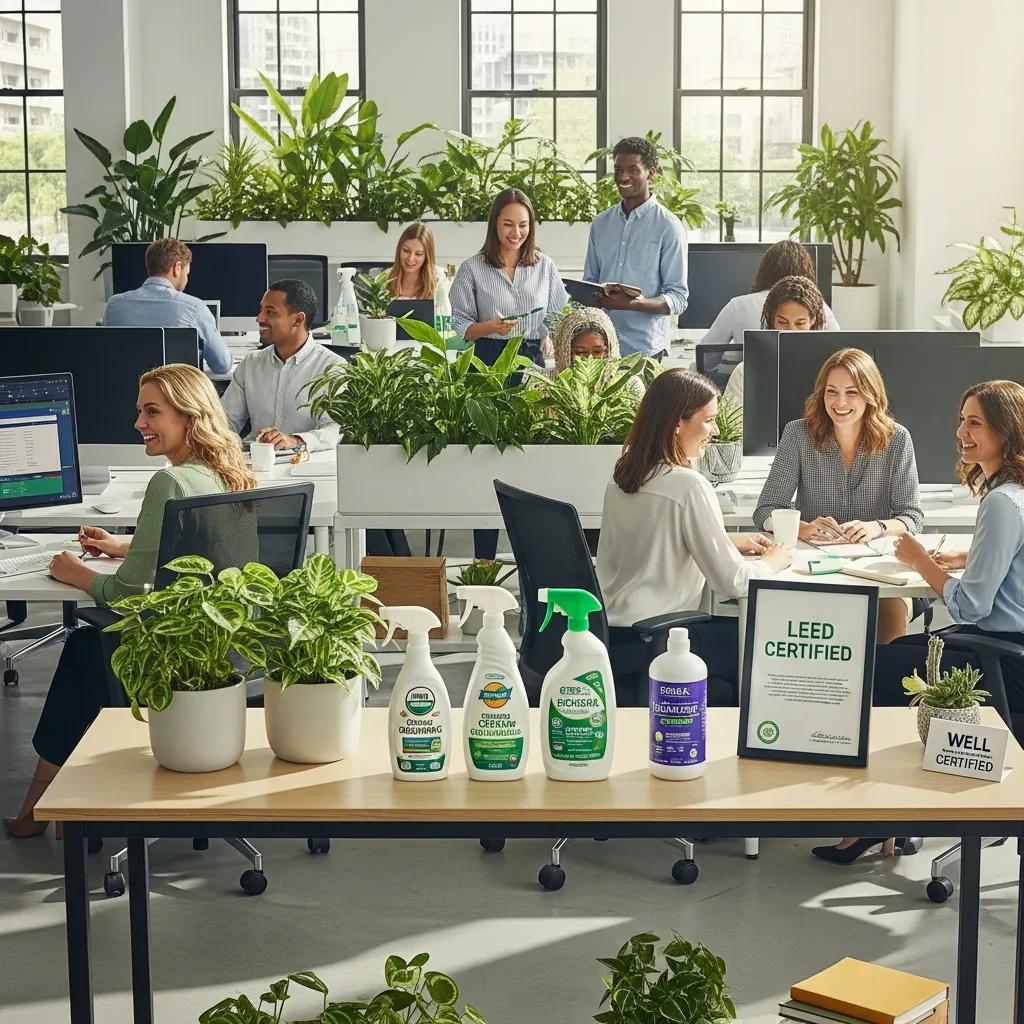
How Metro Detroit Businesses Can Earn Green Cleaning Certifications
Getting a green cleaning certification proves your cleaning program meets verified standards for health and sustainability — from product choices and procedures to staff training and performance. This guide walks Metro Detroit businesses through the options (Green Seal GS-42, LEED O+M credits, ECOLOGO, ISSA CIMS Green Building) and gives clear steps for assessment, product selection, training, recordkeeping, and audit readiness. Facility managers and property owners who want to protect indoor air quality, meet procurement rules, and show measurable sustainability gains will find a practical roadmap here. We compare certifications, outline an audit-ready plan, and call out the janitorial practices that support long-term compliance — plus local tips for Metro Detroit and how a qualified regional provider can help. Read on for checklists, comparisons, and action steps to prepare your facility for certification and ongoing green cleaning success.
Why Green Cleaning Certifications Matter for Your Business
Green cleaning certifications are independent confirmations that your cleaning program reduces chemical risks, improves indoor air quality, and follows clear sustainability standards. They require specific products, staff training, and documented procedures so results are repeatable and verifiable. Pursuing certification improves occupant and employee health by limiting exposure to VOCs and irritants, reduces operational risk with documented processes, and helps meet procurement and regulatory expectations. Certifications also give you a credible story to tell tenants, clients, and public buyers — useful when sustainability is part of a leasing or purchasing decision. Knowing these practical benefits helps facility teams choose the right certification path for their goals.
Key, measurable benefits include:
- Health and safety gains from lower toxic exposures and better indoor air quality.
- Smaller environmental footprint through reduced chemical use, water savings, and better waste handling.
- Stronger procurement and brand positioning by meeting RFP requirements and showing environmental responsibility.
- Consistent operations and easier audits thanks to documented policies, training, and performance tracking.
Those outcomes give facility managers clear metrics to monitor. Next we look at how certifications directly improve health and safety.
How Certifications Improve Health and Safety
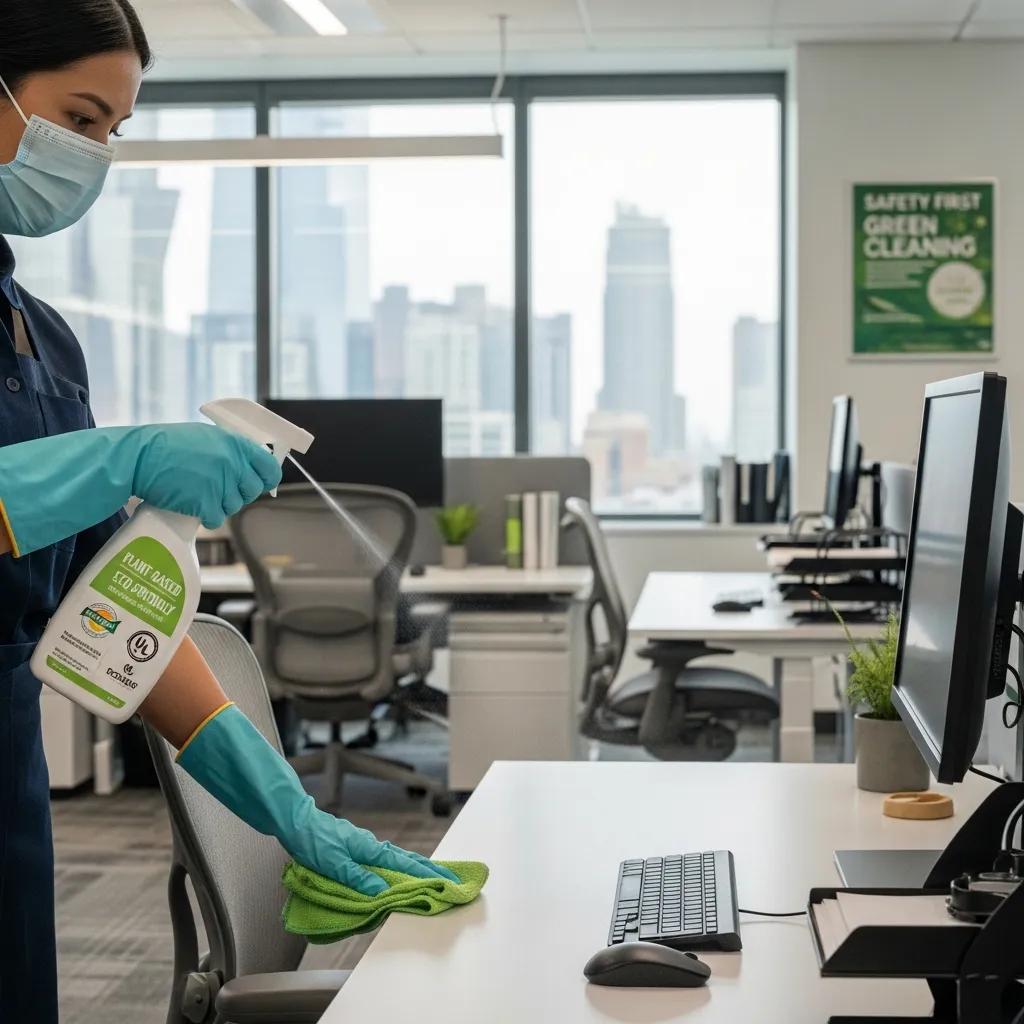
Certifications lower health and safety risks by requiring safer chemistries, approved application methods, and documented operator training that reduce exposure for staff and occupants. Certified programs favor low‑VOC products, EPA Safer Choice or equivalent lists, and safe work practices like correct dilution, PPE, and secure storage to prevent spills and accidental exposures. Equipment standards — microfiber systems and HEPA vacuums, for example — reduce particulate re‑entrainment and support better indoor air quality, which often means fewer respiratory complaints and less absenteeism. Those operational changes translate to measurable benefits for employee well‑being, occupant comfort, and reduced liability.
Using certified product lists also improves incident response records and training documentation — both important during audits and procurement reviews. Next we cover the environmental and brand advantages that go hand in hand with better health and safety.
What Environmental and Brand Benefits Come With Certification?
Certified cleaning programs help lower a building’s environmental impact by encouraging choices that save water and energy, reduce hazardous waste, and boost recycling and reuse. Many programs require tracking waste diversion, product lifecycle impacts, and conservation efforts so you can show measurable improvements in CSR reports and tenant communications. From a branding standpoint, certification signals credibility to tenants, clients, and procurement officers who increasingly prefer verified environmental performance. Those advantages can lead to higher tenant retention, stronger RFP responses, and clearer differentiation from providers using conventional practices.
Documented environmental metrics also feed long‑term planning: selecting ECOLOGO products or adopting microfiber systems becomes a measurable KPI facility managers can present to leadership. With that context, the next section compares the main green cleaning certifications commercial teams consider.
Which Green Cleaning Certifications Matter for Commercial Cleaning?
Several well‑recognized programs cover different parts of the green cleaning picture. Green Seal GS‑42 focuses on cleaning program products and procedures; LEED O+M can award building‑level points for verified green cleaning; ECOLOGO certifies low‑impact products; and ISSA CIMS Green Building evaluates program management, training, and performance. Comparing these programs helps you decide whether to target product certification, program-level accreditation, or whole‑building points.
Below is a quick comparison of scope and core requirements for each leading certification:
| Certification | Scope / Coverage | Key Requirements |
|---|---|---|
| Green Seal GS-42 | Standards for commercial custodial programs | Approved product lists, staff training, written procedures, performance monitoring |
| LEED O+M (cleaning credits) | Building operations and maintenance | Verified cleaning program, IAQ measures, waste diversion tracking, occupant engagement |
| ECOLOGO | Product-level environmental certification | Ingredient transparency, lower toxicity, lifecycle impact criteria |
| ISSA CIMS Green Building | Program management and operations | Management systems, training documentation, performance metrics, third‑party audit |
Some certifications emphasize products, others focus on operations or whole‑building performance. Which to pursue depends on your goals and procurement drivers. Below we unpack GS‑42 and how LEED ties cleaning into building performance.
What’s Involved with Green Seal GS-42?
GS‑42 sets product and procedure standards for commercial cleaning services. It requires written protocols, staff competency records, and proof that approved low‑toxicity products are used correctly. During an audit you’ll be asked for product ingredient lists, training logs, dilution and equipment maintenance procedures, and evidence of performance improvements such as fewer complaints. Vendors aiming for GS‑42 must standardize work plans, keep site‑level documentation, and show ongoing compliance during third‑party reviews. Because GS‑42 covers both products and procedures, it’s a strong choice for janitorial providers proving program‑level sustainability and safety.
Getting audit ready for GS‑42 means organizing procurement records and staff files — the same documentation can also support LEED O+M credits, which we cover next.
How LEED O+M Uses Cleaning to Reward Building Performance
LEED O+M includes cleaning‑related credits that reward verified green cleaning programs, improved indoor air quality, and sustainable purchasing. Buildings earn points by showing implemented cleaning policies and measurable outcomes. LEED credits often map to actions like using low‑emitting materials, maintaining HVAC filtration, tracking product procurement, and demonstrating occupant satisfaction or IAQ gains. Facilities seeking LEED points must document procedures, use ECOLOGO or equivalent products when called for, and participate in measurements that verify IAQ and occupant comfort. Aligning cleaning operations with LEED typically requires coordination between facility teams, cleaning vendors, and sustainability staff to gather the evidence needed for O+M submittals.
Because LEED rewards systemwide performance, cleaning providers that emphasize documentation and measurable impacts are valuable partners for O+M goals. Next we outline a practical roadmap for achieving certification.
How to Build an Audit‑Ready Path to Certification
Certification works best when treated as a phased project: assess gaps, implement changes, verify performance, and maintain results. Start with a baseline audit to identify shortfalls in products, equipment, training, and records. Prioritize fixes — product swaps, equipment upgrades, retraining — then formalize procurement specs and SOPs. Pilot the updated program to collect performance data, prepare your application materials, and support the audit. After certification, keep monitoring and documenting to stay compliant for renewal cycles.
The roadmap below breaks the effort into phases with practical actions and expected deliverables to help teams plan resources and timelines.
This phase roadmap outlines typical actions and deliverables for audit readiness.
| Phase | Actions | Deliverables / Timeframe |
|---|---|---|
| Assessment | Baseline audit of products, procedures, and training | Gap report, prioritized action list (2–4 weeks) |
| Implementation | Product substitution, equipment upgrades, training rollout | Updated policies, procurement specs, training records (1–3 months) |
| Application & Audit | Prepare documentation and submit for third-party review | Application packet, audit schedule, remediation plan (4–8 weeks) |
| Maintenance | Ongoing monitoring, reporting, retraining | Performance reports, renewal evidence (ongoing) |
Following a phased plan helps teams manage timelines and budgets. Local providers with audit experience can speed assessment and documentation steps.
Steps to Prepare for Certification
Preparation starts with a thorough audit that inventories products, equipment, SOPs, and training, then turns that inventory into a prioritized action plan. Update procurement specs to require low‑VOC and ECOLOGO‑ or equivalent products; upgrade or retrofit equipment for filtration and efficiency; and design a training program that records competency and safe handling. Pilot changes in one or more buildings to collect IAQ results, chemical usage data, and staff competency scores, then assemble the documentation into an application package. Common hurdles include incomplete procurement records, spotty staff documentation, and scope creep — addressing these early reduces audit delays and builds a stronger program.
A clear timeline and deliverables improve your odds of success. Many teams accelerate readiness by partnering with an experienced local provider — next we describe how McCoy Maintenance can help.
How McCoy Maintenance Supports Certification Work
McCoy Maintenance offers consultation, training, implementation, and documentation support for organizations pursuing green cleaning certification — with local experience tuned to Metro Detroit expectations. As a family‑owned cleaning company established in 1984, we provide office cleaning, janitorial services, commercial and residential carpet and upholstery cleaning, floor care, fogging, and construction cleaning across Macomb, Oakland, and the Metro Detroit area. We stand behind a 100% satisfaction guarantee and use trained, insured teams with eco‑friendly options. Our process typically starts with a gap analysis, then we advise on low‑toxicity procurement, train staff in certified procedures, and compile audit‑ready records to streamline application and inspection. Working with a provider who implements procedures, maintains records, and demonstrates measurable outcomes reduces your administrative load and improves the chance of a successful certification.
That operational support turns planning into evidence. The next section covers the core janitorial practices that underpin certification and business value.
Sustainable Janitorial Practices That Support Certification

Operational practices are the foundation of any credible certification program: thoughtful product selection, equipment standards, waste reduction, water‑ and energy‑saving procedures, plus regular training and measurement. These practices cut chemical hazards, lift indoor air quality, and create the metrics auditors need — while also lowering absenteeism, extending equipment life, and improving tenant satisfaction. Consistent implementation across sites requires aligned procurement, clear SOPs, and monitoring systems that track the right KPIs. The table below maps common practices to operational attributes and expected benefits so you can prioritize actions that deliver measurable value.
Operational mapping: practices, attributes, and typical metrics to monitor.
| Practice | Operational Attribute | Expected Benefit / Metric |
|---|---|---|
| Microfiber systems | Less chemical use, higher cleaning efficiency | Reduced chemical consumption (%), time per cleaned area |
| Waste diversion programs | Recycling and composting integration | Waste diversion rate (%), landfill tonnage reduced |
| Low-VOC / ECOLOGO products | Safer chemistries with ingredient transparency | VOC reduction, lower occupant complaints |
| HEPA-filter vacuums | Improved particulate capture | IAQ particulate counts, allergen complaint rates |
That mapping helps teams pick interventions that offer certification evidence and business impact. Next we dive into waste reduction tactics and product/equipment standards, including how a local vendor can implement them.
How Waste Reduction and Resource Conservation Help
Cutting waste and conserving resources reduces disposal costs, shrinks environmental footprint, and produces measurable data that certification programs accept as proof of performance. Practical steps include switching to reusable microfiber cloth systems to cut disposable wipe waste, improving recycling signage and pickup schedules, reducing single‑use plastics in deliveries, and using low‑flow or targeted cleaning methods to lower water use. Baseline waste audits and ongoing tracking of diversion rates, water usage, and product consumption let you demonstrate year‑over‑year gains. Those metrics support certification, strengthen RFP responses, and help justify investments in reusable systems.
Regular tracking also enables continuous improvement and supports claims in sustainability reports. Next we explain how safe chemical handling and modern tools fit into certification goals.
Safe Chemical Handling and the Value of Modern Technologies
Safe chemical practices and effective technologies reduce health risks and improve the measurable outcomes certification programs evaluate — lower VOC emissions, accurate dilution control, and verifiable operator competency. Choose low‑toxicity products with clear ingredient disclosures, and adopt storage and handling protocols with secondary containment, labeling, and spill response plans to meet auditor expectations. Technologies like electrostatic sprayers for targeted disinfection, microfiber systems for better surface cleaning, and HEPA vacuums for particulate removal boost results and often cut overall chemical use. Training staff on both chemical safety and equipment operation ensures consistent performance and creates the documentation auditors expect.
When procurement prioritizes certified products and proven equipment, facilities build a defensible record of safer operations that auditors and stakeholders recognize. That brings us to the business case for certification.
Business Benefits of Green Cleaning Certifications
Green cleaning certifications create a practical business case: stronger positioning in procurement and leasing, healthier and more productive occupants, lower compliance and liability risk, and potential long‑term savings through reduced chemical spend and better equipment maintenance. Certified programs produce measurable KPIs — VOC reductions, waste diversion rates, documented training hours — that fit ESG reporting and tenant communications. As buyers and tenants expect verifiable environmental performance, certified cleaning programs help meet that demand and provide a clear market advantage. Overall, certification is a strategic investment in reliable operations and market differentiation.
To make benefits tangible, facility managers should prepare short, data‑driven talking points and metrics for RFP responses and tenant outreach. The sections below offer examples of competitive advantage and cost implications.
Competitive Advantage and Regulatory Alignment
Certifications give you verifiable proof points to use in RFPs, lease negotiations, and sustainability reporting — a meaningful differentiator when decision‑makers prioritize occupant health or regulatory alignment. For procurement, certification reduces the need for repeated verification and reassures buyers that program execution is consistent across sites. Certifications also help align cleaning operations with guidance on indoor air quality and chemical safety, lowering compliance risk and strengthening contractor credibility. Simple, procurement‑friendly talking points — documented training hours, certified product lists, IAQ improvements — translate technical performance into language decision‑makers use.
These advantages often speed the vetting process and support tenant retention. Next we address whether certification saves money over time.
Do Certifications Save Money?
There are upfront costs — training, product swaps, equipment upgrades, and certification fees — but many programs deliver long‑term savings through lower chemical use, decreased waste disposal fees, and extended equipment life from proper maintenance. For example, microfiber systems and concentrated dispensing reduce product cost per square foot, while trained staff work more efficiently and safely. Health‑related savings — fewer sick days and improved productivity — can be modeled into a straightforward ROI that compares absenteeism and output before and after program changes. Track unit metrics like chemical spend per square foot, diversion rates, and IAQ complaints to estimate payback and show financial value to leadership.
Setting KPIs at the project outset helps quantify both operational and people‑related returns. The final section points Metro Detroit businesses to regional support for implementation and certification.
Where Metro Detroit Businesses Find Green Cleaning Expertise
Local businesses can work with regional providers that combine everyday janitorial operations with certification know‑how — assessment, implementation, documentation, and ongoing maintenance tuned to area needs. When choosing a partner, look for firms that provide formal training programs, eco‑friendly product options, and the ability to deliver audit‑ready evidence. A good initial consultation should include a gap analysis, a prioritized action plan, and transparent cost estimates so you can compare providers and timelines. Local partners with capacity to pilot and scale solutions reduce logistical friction and respond quickly to audit requests or corrective actions.
If you need hands‑on regional support, consider a full‑service firm that covers assessment, implementation, and documentation to shorten your path to certification.
Why Work with McCoy Maintenance for Certification Support?
McCoy Maintenance combines local operations experience with practical services that support certification readiness and sustained green cleaning performance across Metro Detroit. Family‑owned since 1984, we provide office cleaning, janitorial services, commercial and residential carpet and upholstery cleaning, floor maintenance, fogging, and construction cleaning across Macomb, Oakland, and the greater Metro Detroit area. We offer a 100% satisfaction guarantee and use trained, insured teams with eco‑friendly options. Our services include staff training in certified procedures, low‑toxicity product substitution, documented work plans, and ongoing performance records auditors require. For facility teams who want hands‑on implementation and documentation support, a local provider with these capabilities can shorten the certification timeline while maintaining daily service quality.
Those operational strengths pair readiness with local responsiveness. The next section explains our service area and how to request an assessment.
How McCoy Maintenance Serves Macomb, Oakland, and Metro Detroit
McCoy Maintenance serves Macomb, Oakland, and the broader Metro Detroit region with on‑the‑ground cleaning and janitorial services that adapt to certification needs and audit documentation. Family‑owned and established in 1984, we offer office cleaning, janitorial work, commercial and residential carpet and upholstery cleaning, floor maintenance, fogging, and construction cleanup. We back our work with a 100% satisfaction guarantee, eco‑friendly options, and trained, insured staff. Facility managers can request an assessment to get a baseline audit, a recommended action plan, and a phased proposal to meet specific certification standards. The best first step is scheduling a site visit so we can review current practices and prepare an audit‑ready roadmap tailored to your building.
Frequently Asked Questions
What are the costs associated with obtaining green cleaning certifications?
Costs vary by certification, facility size, and how many changes are needed. Upfront expenses typically include staff training, eco‑friendly product purchases, equipment upgrades, and certification or audit fees. Many organizations recover those costs over time through reduced chemical use, lower waste fees, and improved productivity tied to better indoor air quality.
How long does the certification process typically take?
Certification timelines range from a few months to over a year depending on the chosen standard and your starting point. The process usually includes an initial audit, implementation of changes, and preparation for the application and audit. Organizations that prepare documentation and address gaps quickly can shorten the timeline. Ongoing monitoring is required to maintain certification.
Can small businesses also benefit from green cleaning certifications?
Yes. Small businesses benefit from better workplace health, clearer sustainability messaging, and potential cost savings from efficient practices. Certification can attract environmentally conscious customers or tenants and strengthen competitive positioning. Even scaled‑down certification efforts can deliver measurable operational improvements for smaller properties.
What role does employee training play in achieving certification?
Training is essential. Staff must know how to use low‑toxicity products, follow dilution and safety procedures, operate equipment correctly, and document work. Proper training ensures consistent quality and creates the records auditors expect. Well‑trained teams also work more efficiently and safely, improving program outcomes.
How can businesses measure the effectiveness of their green cleaning practices?
Use KPIs like chemical spend per square foot, waste diversion rate, IAQ test results, occupant satisfaction surveys, and recorded training hours. Regular audits and performance reviews help identify gaps and track progress. These metrics provide the evidence certification bodies and stakeholders want to see.
What are the common challenges businesses face when pursuing certification?
Common challenges include incomplete documentation, inconsistent staff records, and resistance to change in established routines. Initial investments in products and equipment can also be a barrier. Overcoming these issues usually requires clear communication, a phased plan, and, when helpful, a partner with local experience to guide implementation and documentation.
Conclusion
Green cleaning certification gives Metro Detroit businesses a clear path to better health, safety, and sustainability — and it strengthens brand trust and procurement standing. By learning the certification landscape and adopting sustainable janitorial practices, organizations can create measurable results that align with operational goals. Working with a qualified local provider can simplify the process and keep you audit‑ready. Ready to take the next step? Contact us to schedule an assessment and start your certification roadmap.