
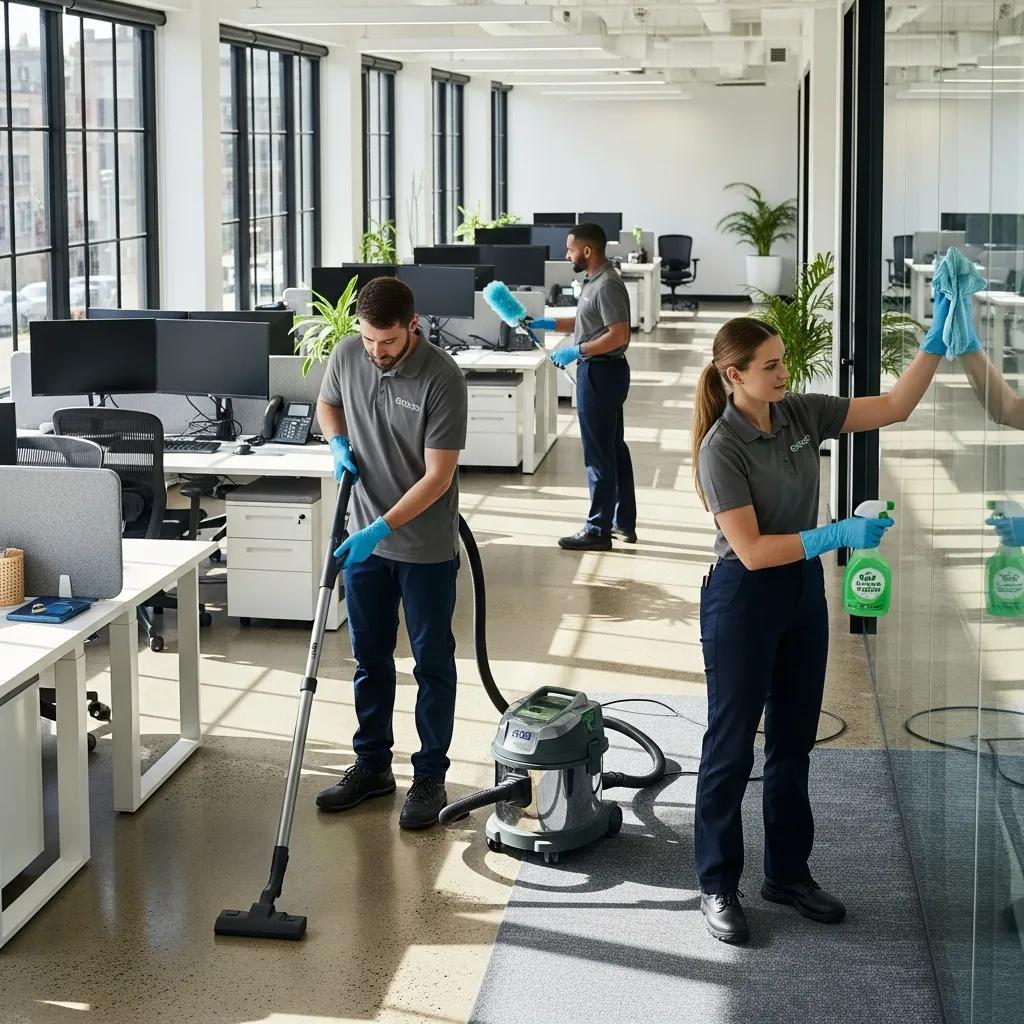
Frequently Asked Questions — Answers from McCoy Maintenance
How do I evaluate whether a cleaning product is truly eco-friendly?
Start by checking for recognized certifications like Green Seal or EPA Safer Choice — those show the product meets established environmental standards. Review Safety Data Sheets (SDS) to see ingredients and any hazards. Pay attention to VOC (volatile organic compound) levels; lower VOCs help indoor air quality. Also ask about the cleaning methods used (for example, microfiber systems) since better techniques can reduce chemical use while keeping results high. For comprehensive commercial cleaning services in Metro Detroit, consider McCoy Maintenance.
How can I make sure a commercial cleaning service fits my facility's needs in Sterling Heights or Warren?
Ask for a customized cleaning plan that spells out tasks, frequencies, and who is responsible for each area. Talk through your site’s specific needs — high-traffic zones, sensitive areas, or after-hours access — and ask how they adjust staffing and schedules. Agree on clear communication channels for feedback and changes, and consider a short trial period so you can see performance before committing long term.
What value does a detailed cleaning checklist provide?
A detailed checklist removes guesswork: it lists exact tasks, how often they should be done, who is accountable. That clarity improves consistency, helps train staff, and makes inspections straightforward. Checklists also create a paper trail for quality control, so you can track issues, train to standards, and measure client satisfaction over time.
How should I evaluate the training and qualifications of cleaning staff?
Ask about hiring and verification practices — background checks, reference checks, and any screening protocols. Request details on training: safety, equipment operation, chemical handling, and task-specific procedures. Where applicable, ask for copies of certificates or proof of completed training. Regular refresher courses and on-the-job coaching are good signs the company invests in consistent, reliable service.
What steps should I take if the cleaning service falls short?
If you’re unhappy, tell the vendor right away and give clear examples of the issues. Reputable companies will have a complaint resolution process and corrective actions. Check your contract for performance guarantees or service-level terms that outline remedies. If problems continue, document your concerns and explore contract termination or other providers who can meet your expectations.
How can sustainability requirements be written into a cleaning contract?
Specify eco-friendly practices and products directly in the scope of work. Ask the vendor for a list of green products they use along with any certifications that back up their claims. Require use of low-VOC and biodegradable options where feasible, and include language that encourages waste reduction and energy-saving practices. Add metrics for measuring sustainability, such as tracking green-product usage and monitoring indoor air quality impacts.
What Key Questions Should You Ask a Commercial Cleaning Company Before Hiring in Macomb County or Oakland County?
A concise set of vetting questions reveals a provider’s reliability, scope, and fit for your facility in Royal Oak or Troy. Focus on experience, insurance, and quality-control processes. Ask about references, certifications, and how they customize plans for different building types and traffic levels — these answers predict consistency and responsiveness. Clear details about equipment, supplies, and green options show operational readiness and compatibility with your systems. Finally, confirm their communication, supervision, and escalation procedures so day-to-day issues are tracked and fixed promptly. Covering these topics helps you compare bids and negotiate contract terms that align with your cleanliness and safety goals.
During due diligence, look for concise, verifiable answers on experience, references, and scheduling flexibility; those reduce onboarding risk. Request recent references from similar facilities and sample schedules that show availability for after-hours or weekend work. Verify insurance and bonding, and ask how often supervisors inspect sites. Review how the vendor documents performance and resolves problems to confirm a commitment to continuous improvement and client satisfaction.
How Do You Verify a Commercial Cleaning Company's Experience and Reputation?
Confirm experience by asking for recent, facility-specific references and checking review patterns rather than single ratings. Seek references from clients with similar square footage, occupant types, or cleaning complexity and ask for contact names and brief descriptions of work performed. Look for consistent praise (responsiveness, reliability) and watch for recurring complaints (missed tasks, schedule issues). Verify any certifications or trade affiliations by asking for certificate names and how to confirm them. A practical request to include in your RFP is: “Please provide two references for facilities like ours, a copy of your insurance declarations, and one recent inspection report.”
What Services and Customization Options Should You Inquire About for Your Office Cleaning Company in Novi or Rochester Hills?
Confirm the provider offers the specific commercial cleaning services you need — such as office janitorial services for your Royal Oak or Troy facility, commercial carpet cleaning, floor maintenance, post construction cleaning, and any specialty work — and clarify what’s included versus available as an add-on. Ask whether they own or lease specialized equipment (HEPA vacuums, auto-scrubbers, fogging units) and how they choose products for sensitive environments like medical or childcare settings. Request a sample customized plan that aligns with your traffic patterns, hours, and compliance needs so you can see how they allocate time and resources. Also ask how they handle change orders and peak cleaning demands so you understand flexibility and pricing beyond the base bid.
For facilities that need carpet care, ask specifically about their “residential and commercial carpet cleaning” procedures and whether they include scheduled maintenance, spot-treatment protocols, and traffic-lane protection in recurring plans. That clarifies expectations for routine upkeep and restorative work.
What Should You Look For in a Commercial Cleaning Service Checklist for Your Wayne County Business?
A strong cleaning checklist lays out daily, weekly, and deep tasks, assigns responsibility, and sets inspection criteria so performance can be measured and improved. A clear checklist reduces ambiguity, supports training, and becomes the basis for service-level agreements and corrective actions. Make sure it includes high-touch surfaces, restrooms, breakrooms, floors, carpets, and windows to cover health, appearance, and asset care. Quality checkpoints — supervisor audits, client feedback loops, and documented corrective actions — create accountability and steady improvement.
The table below compares common tasks by frequency and who typically performs them to help you design a checklist that fits your facility and staffing model.
| Area / Task Category | Frequency | Typical Responsible Party |
|---|---|---|
| Trash removal & liners | Daily | Service provider |
| Restroom sanitization & restock | Daily | Service provider |
| High-touch disinfection (handles, switches) | Daily | Service provider |
| Dusting & horizontal surfaces | Weekly | Service provider |
| Vacuuming & spot carpet cleaning | Weekly | Service provider |
| Floor mopping & spot tile cleaning | Weekly | Service provider |
| Carpet shampooing / restorative cleaning | Deep / Monthly-Quarterly | Provider or specialist |
| Floor stripping & waxing | Deep / Periodic | Specialist provider |
| Window washing (interior/exterior) | Deep / Periodic | Provider or subcontractor |
This table helps you assign responsibilities clearly to reduce scope creep and prevent disputes. Use it as the basis for a downloadable checklist that maps tasks to frequencies, inspection points, and acceptance criteria.
A short, practical checklist aligns operations staff and vendors on priorities and measurable outcomes:
- Daily core tasks: Empty trash, sanitize restrooms, disinfect high-touch surfaces, and keep entryways tidy.
- Weekly maintenance: Dust, vacuum, mop, and check replenishments.
- Deep/periodic tasks: Carpet restoration, floor finishing, window cleaning, and HVAC-access cleaning.
Which Cleaning Tasks Are Essential for Daily, Weekly, and Deep Cleaning by Your Office Cleaners?
Daily work protects health and appearance: trash removal, restroom sanitizing, high-touch surface disinfection, and prompt spill response to limit infection risk and maintain a professional look. Weekly maintenance prevents buildup: dust vents and ledges, vacuum all floor areas, mop hard floors, and spot-clean carpets to extend surface life. Deep cleaning restores and preserves assets: carpet shampooing, floor stripping and waxing, high dusting above 8–10 feet, and full window cleaning to remove embedded soils and renew finishes. Clear task frequencies reduce ambiguity in bids and make KPI tracking meaningful.
Use these distinctions when purchasing services: daily work stabilizes hygiene, weekly work preserves appearance, and deep work protects long-term asset value — together they lower lifecycle costs.
How Do You Evaluate Quality Control and Eco-Friendly Practices?
Ask for documented inspection processes, sample KPI reports, supervisor visit frequency, and records of corrective actions to evaluate quality control. Effective vendors run regular audits, use checklists tied to client acceptance criteria, and provide easy-to-read reports showing completed work, issues found, and remediation steps. For eco-friendly practices, request product lists, certifications (for example, Green Seal or EPA Safer Choice), and Safety Data Sheets to confirm low-VOC, biodegradable, or certified disinfectant use. Also ask whether they use HEPA-filter vacuums and microfiber systems that reduce chemical reliance and improve indoor air quality. Those items show whether green claims translate into measurable facility improvements.
A short checklist you can use during vendor selection:
- Request sample inspection reports and the audit schedule.
- Ask for documentation of any green product certifications and SDS sheets.
- Verify supervisor-to-site ratios and escalation procedures.
How Do Commercial Cleaning Contracts and Pricing Work for Businesses in Detroit or Eastpointe?
Understanding pricing models and contract clauses helps you compare bids by scope and value, not just price, and prevents surprises when scope or special projects arise. Contracts should define scope of work, frequencies, payment terms, insurance and indemnification, performance metrics, notice and termination periods, and remedies for missed service. Look for clear inclusions versus exclusions, a documented change-order process, and specified inspection and reporting routines to support accountability. Evaluate proposals by checking both price model and scope completeness plus any service guarantees.
Below is a comparison of common pricing models to help match approach with your facility needs.
| Pricing Model | What It Covers | Pros / Cons & Typical Use-Case |
|---|---|---|
| Hourly | Labor time on-site | Pros: Flexible for variable tasks. Cons: Monthly cost may fluctuate; best for small or unpredictable scopes. |
| Per-square-foot | Set rate by area | Pros: Predictable for large, uniform spaces. Cons: May obscure task inclusions; watch minimums. |
| Flat-rate / Program | Defined scope and schedule | Pros: Predictable budget and clear deliverables. Cons: Less flexible; requires a well-defined scope. |
What Are Common Pricing Models and Payment Terms?
Typical pricing models are hourly (variable work), per-square-foot (uniform spaces), and flat-rate programs (defined scope and schedule). Payment terms usually include monthly invoicing, net payment windows (commonly net 30), and clauses for late payments or adjustments tied to change orders. When comparing quotes, check what each model includes — supplies, equipment, supervision, consumables — and ask how overtime, weekend, or emergency services are billed. Request a sample invoice and a breakdown of inclusions to avoid scope gaps that drive up long-term costs.
Quick checklist for evaluating quotes:
- Confirm inclusions: supplies, equipment, and supervisor time.
- Clarify change-order process: how extra work is approved and billed.
- Request sample invoices and contract language: for full transparency.
What Contract Terms and Guarantees Should You Expect from Commercial Cleaning Companies?
Look for contract clauses that spell out duration, renewal terms, termination notice periods, liability and insurance requirements, and performance guarantees tied to measurable KPIs. Require proof of insurance and bonding and check indemnification language against your institution’s risk profile. Include service-level metrics like inspection frequency, corrective action timelines, and remedies for missed service, and make sure dispute resolution and escalation paths are clear. Negotiate periodic scope reviews and price adjustments tied to documented changes in service levels or building footprint.
Prefer vendors that commit to documented corrective action and a clear satisfaction guarantee that specifies remediation steps and timelines rather than vague promises. That protects your organization and aligns vendor incentives with steady performance.
As a local, family-owned example, McCoy Maintenance Inc., based in Eastpointe, MI, emphasizes customized cleaning plans and a 100% satisfaction guarantee. Their proposals focus on tailoring frequencies and inspection checkpoints to client needs, and they supply trained, background-checked staff for reliable execution. Serving Macomb County, Oakland County, and Metro Detroit, a local operator like this can simplify on-site supervision and responsiveness for facilities in the area. Learn more about our commitment to quality and read reviews on our McCoy Maintenance Google Business Profile.
How Are Employees Vetted and Trained in Commercial Cleaning Services for West Bloomfield and Northville?
Vetting and training directly affect quality, safety, and liability. Standard vetting includes background and reference checks and screening policies that match client risk. Training should cover onboarding, safety (including OSHA basics), equipment handling, chemical use and SDS awareness, infection-control protocols, and client-specific procedures. Ongoing coaching, supervisor oversight, and retention programs (career paths, recognition) help stabilize service delivery and reduce variability.
The table below maps common vetting and training measures to their purpose and what they indicate about reliability.
| Vetting / Training Measure | Purpose | What It Indicates About Reliability |
|---|---|---|
| Background checks | Reduce security and theft risk | Shows basic screening and lower liability |
| Reference checks | Verify past performance | Confirms consistent attendance and quality |
| Safety & OSHA training | Reduce workplace incidents | Indicates lower risk profile and regulatory compliance |
| Equipment handling certification | Proper machine use | Reduces damage and improves efficiency |
| Ongoing refresher training | Maintain standards | Shows commitment to continuous quality improvement |
What Background Checks and Certifications Are Standard?
Background checks commonly include identity verification and criminal-record screening scaled to facility risk — ask which checks the vendor runs and how often they repeat them. For higher-risk sites, request deeper verification such as prior-employment checks. Staff certifications (floor care, chemical handling, equipment operation) show competence in specialized tasks and reduce the chance of damage or misuse. Ask to see sample certificates and the training provider’s name to confirm authenticity. A clear, documented vetting policy signals that the company prioritizes site security and dependable staffing.
How Does Staff Training Impact Cleaning Quality and Safety?
Training reduces rework, improves efficiency, and supports compliance with safety and infection-control standards by ensuring consistent procedures. Trained staff know correct dilution and application of disinfectants, PPE usage, and safe operation of machines like floor buffers and HEPA vacuums — all of which lowers accident risk and surface damage. Regular refresher courses and competency checks create repeatable performance and better client scores. Supervisory coaching and periodic audits turn training into measurable KPIs such as fewer complaints and faster corrective actions.
These outcomes show that investing in onboarding and continuous education delivers predictable improvements in both quality and safety across a facility’s lifecycle.
Why Choose Eco-Friendly Commercial Cleaning and What Are Its Benefits for Your Grosse Pointe or St. Clair Shores Business?
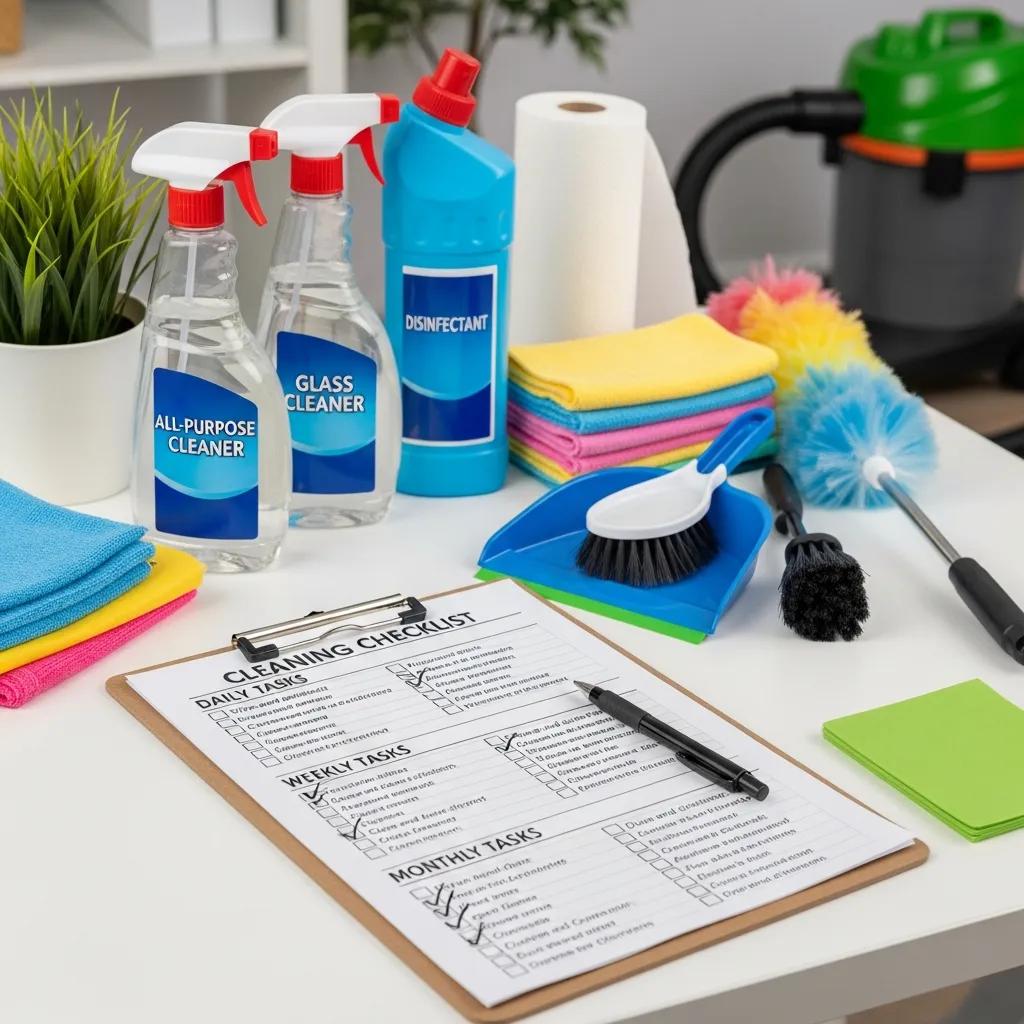
Eco-friendly commercial cleaning reduces occupants’ exposure to harsh chemicals, improves indoor air quality, and supports corporate sustainability goals — often without losing cleaning performance. Green practices favor low-VOC, biodegradable products, microfiber systems that cut chemical use, HEPA filtration to capture particulates, and procedures that limit wastewater impact. Those practices can mean fewer respiratory complaints, lower absenteeism, and alignment with procurement policies or certifications like LEED. Always verify green claims by reviewing product certifications, SDS documents, and performance evidence compared to conventional products.
Positioned as part of a workplace health strategy, green cleaning can show measurable ROI when paired with IAQ monitoring and absenteeism tracking. For organizations in Metro Detroit, working with a local provider that offers eco-options can simplify coordination and support community sustainability goals.
McCoy Maintenance Inc. includes eco-friendly choices in its service menu and presents them within customized cleaning plans so clients can balance sustainability with operations. Ask a prospective vendor how green options change frequencies, materials, and inspection checkpoints to understand practical impacts on cost and outcomes for your office cleaning company needs.
What Are the Advantages of Green Cleaning Products and Practices?
Green products usually have low-VOC formulas, biodegradable surfactants, and fewer irritants, which lowers respiratory and skin irritation for occupants and staff. Operational benefits include reduced chemical exposure for employees, potential extension of surface and finish life when compatible products are used, and alignment with sustainability reporting. Microfiber and HEPA technologies often remove soil as well or better with less chemical reliance, and certified products give procurement transparency. Demand for verified green products is growing among institutions focused on health and corporate responsibility.
When vetting claims, ask for certification names, SDS documents, and before/after performance data to make sure green solutions meet your facility’s cleaning and durability needs.
How Does Eco-Friendly Cleaning Improve Workplace Health and Sustainability?
Green cleaning improves workplace health by lowering airborne irritants and reducing dermal exposure for occupants and cleaning staff, which can translate to fewer sick days and greater comfort. Sustainability gains include reduced environmental loading from hazardous chemicals and alignment with CSR reporting. To measure impact, track indoor air quality indicators (particulate counts, VOC measurements) and absenteeism before and after implementing a green program. Pair those metrics with lifecycle cost analyses for flooring and upholstery to show that green cleaning supports both health and asset preservation.
When tied to clear KPIs and documented inspections, a green cleaning program delivers measurable results — it’s both a health strategy and a stewardship decision.
- Reduced chemical exposure: Lowers respiratory and skin irritants for occupants and staff.
- Improved IAQ: HEPA vacuums and low-VOC products cut particulates and gaseous pollutants.
- Sustainability alignment: Supports reporting and procurement policies.
These benefits underscore why facility managers should require documentation to substantiate environmental claims and measure results.
Conclusion
Choosing eco-friendly practices improves indoor air quality and supports sustainability goals while protecting occupants and assets. Select a provider that can document green products, trained teams, and inspection routines so you get both health benefits and reliable results. Ready to explore greener cleaning for your facility in Macomb County, Oakland County, or Wayne County? Contact us to discuss options that balance sustainability, cost, and performance.
Related McCoy Maintenance Services
Hiring questions should cover service scope, scheduling, insurance, offices, restrooms, floors, carpets, and specialty cleaning needs.
Local Commercial Cleaning Support
McCoy Maintenance serves Metro Detroit businesses with commercial cleaning, janitorial service, carpet cleaning, floor care, disinfection, and specialty cleaning programs matched to the building and schedule.
Questions To Ask Commercial Cleaner for Local Facilities
For businesses in Metro Detroit and Southeast Michigan, questions to ask commercial cleaner works best when it is matched to the building’s traffic patterns, surfaces, schedule, and health standards. McCoy Maintenance uses this kind of practical facility review to keep offices, clinics, retail spaces, schools, and commercial properties cleaner without disrupting daily operations.
Where questions to ask commercial cleaner has the biggest impact
The right commercial cleaning plan helps control dust, soil, odors, allergens, touch-point buildup, and the visible wear that customers and employees notice first. It is especially important in entry areas, restrooms, shared workspaces, break rooms, conference rooms, carpets, hard floors, and other high-use zones.
What to review before scheduling service
Before choosing a cleaning schedule, facility managers should look at square footage, floor types, staffing levels, visitor volume, seasonal weather, industry requirements, and any problem areas that need extra attention. These details help create a realistic scope of work instead of a one-size-fits-all checklist.
How McCoy Maintenance supports Metro Detroit and Southeast Michigan
McCoy Maintenance provides local commercial cleaning support built around consistent communication, trained crews, documented expectations, and service plans that can scale as a facility changes. For questions about questions to ask commercial cleaner, the team can review the property and recommend the next practical step.