
Why Insurance for Commercial Cleaners Matters: Coverage and Protection Every Business Should Know
Bringing a commercial cleaning crew onto your property creates real third‑party and employee exposures that can turn into expensive claims if the vendor isn’t properly insured. This guide explains why commercial cleaning insurance matters, how the main coverages work, and what procurement teams should check before signing a service agreement. You’ll get a clear look at General Liability, Worker’s Compensation, Bonding, Professional Liability, and Commercial Auto—what each policy covers, how claims typically get handled, and practical steps to verify protection using Certificates of Insurance and endorsements. We also cover the risks of hiring uninsured commercial cleaning companies, verification best practices, and sample contract language to request. By the end, facility managers and property owners will have a simple checklist for vetting providers, understand the value of additional insured endorsements, and see a local example of how insured providers deliver continuity and protection for clients across Macomb County, Oakland County, and Wayne County.
What Types of Insurance Should Commercial Cleaning Companies Have?
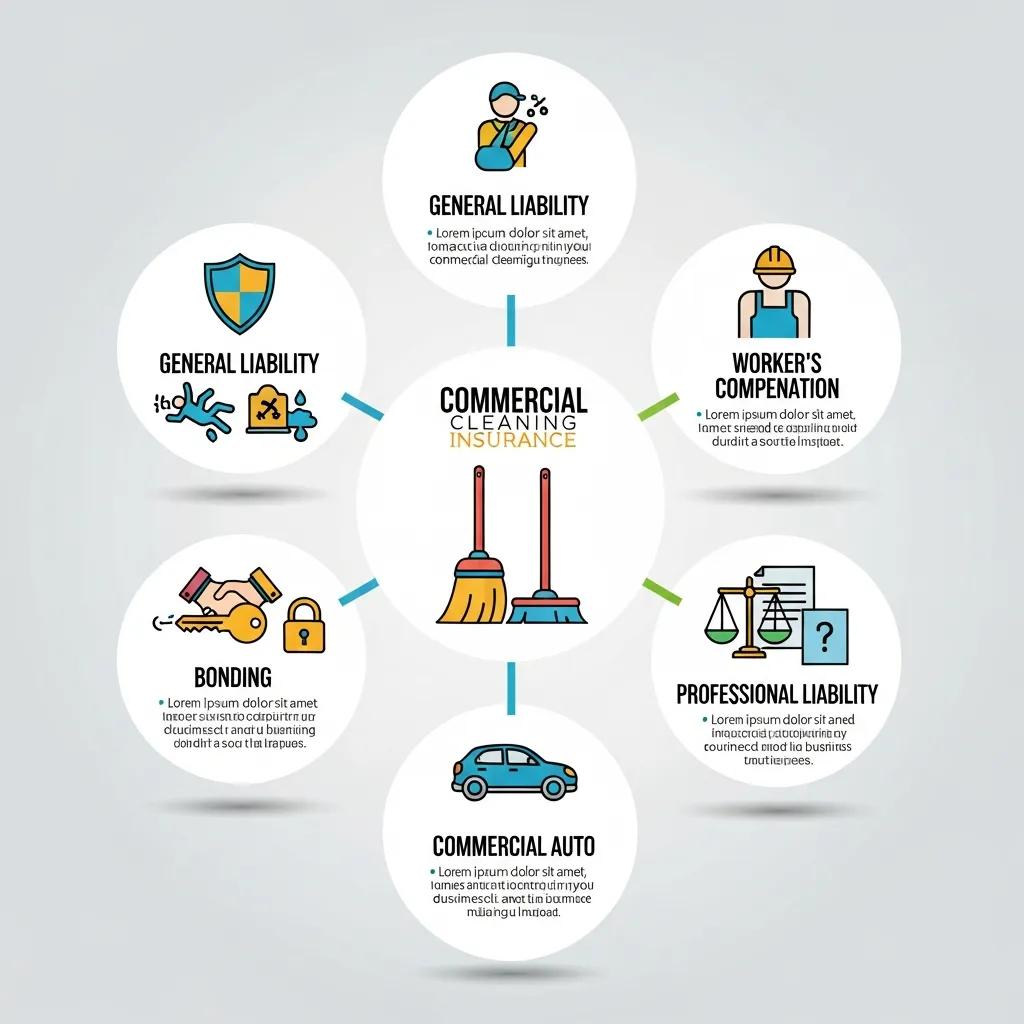
Commercial cleaning firms should carry a set of core policies that shift third‑party and employee risk to insurers. These protections cover bodily injury, property damage, employee medical care, theft, and mistakes in service. General Liability handles slips, falls and accidental property damage; Worker’s Compensation covers employee injuries and wage replacement; bonding protects against theft or dishonesty; Professional Liability (E&O) addresses negligent performance; and Commercial Auto covers vehicles and equipment in transit. Procurement and risk teams should pay attention to policy limits, who is named insured, whether additional insured endorsements are present, and policy effective dates. The table below compares each policy, what it commonly covers, and typical limits so you can spot gaps when reviewing vendor documents. For businesses seeking a reliable office cleaning company or comprehensive janitorial services in areas like Royal Oak or Sterling Heights, understanding these coverages is crucial.
This table summarizes each policy and the practical limits you should expect from reputable vendors.
| Policy Type | Typical Coverage | Common Policy Limits |
|---|---|---|
| General Liability | Third‑party bodily injury, property damage, completed operations, and legal defense | $1M per occurrence / $2M aggregate commonly requested |
| Worker’s Compensation | Medical care for injured employees, wage replacement, and employer liability protections | Statutory limits vary by state; employer liability typically included |
| Bond (Surety) | Losses from employee theft, dishonesty, or fidelity claims | Bond amounts depend on contract; small jobs commonly $5K–$50K |
| Professional Liability (E&O) | Claims from negligent performance, missed services, or errors in scope | $250K–$1M depending on contract and risk level |
Using a layered set of coverages reduces residual risk for businesses that hire cleaners. Knowing typical limits helps set procurement thresholds and guides which endorsements to require on a Certificate of Insurance.
What Does General Liability Insurance Cover for Commercial Cleaners?
General Liability protects the hiring business from third‑party claims tied to cleaning work—things like bodily injury or property damage that happen during or after service. If a cleaner breaks a fixture or an employee slips on a wet floor, a GL policy usually pays damages and handles legal defense, limiting exposure for the client. GL commonly includes completed operations coverage, which matters when damage shows up after the crew has left. Note that GL doesn’t cover employee medical claims—that’s Worker’s Compensation—or intentional criminal acts. When you review a vendor’s Certificate of Insurance, confirm policy limits, whether coverage is occurrence‑ or claims‑made, and whether your organization is named as an additional insured to extend protection. This is especially important for office cleaners operating in busy commercial environments.
That leads directly into why Worker’s Compensation is a necessary complement to GL for complete risk transfer.
How Does Worker’s Compensation Protect Cleaning Business Employees?
Worker’s Compensation offers no‑fault benefits for employees hurt on the job—covering medical treatment, temporary or permanent disability benefits, and a portion of lost wages—while also limiting employer liability. In cleaning work, common injuries include ladder falls, chemical exposure, and repetitive strain. Worker’s Compensation ensures these claims are handled through the vendor’s insurer instead of turning into lawsuits against the hiring company. States set different rules, so verify the vendor’s policy meets local statutory requirements and that the COI shows coverage for the states where services are performed. Asking for proof of active Worker’s Compensation and confirming insurer contact details on the COI helps prevent a situation where an injured worker looks to the contracting company for recovery.
Understanding Worker’s Compensation clarifies how hiring fully insured providers strengthens operational security.
What Are the Benefits of Hiring Insured Commercial Cleaning Services?
Hiring insured commercial cleaners provides direct financial protection, lowers contractual and regulatory risk, and preserves reputation and operations through insurer‑backed remediation and legal defense. When an incident occurs, insured vendors shift costs—medical bills, repairs, or legal fees—to their carriers, reducing the chance the client will pay out of pocket. Required insurance also satisfies many procurement and lease requirements, streamlining contract execution and reducing administrative delays. The table below shows how specific insurance attributes map to business outcomes so decision‑makers can compare value versus cost.
The table links policy elements to the protections they provide and the business impact you can expect.
| Insurance Attribute | What It Protects | Business Impact |
|---|---|---|
| Worker’s Compensation | Employee medical expenses and wage replacement | Prevents injured workers from suing the hiring business and lowers operational liability |
| General Liability Limits | Third‑party bodily injury and property damage | Insurer covers claims and defense, protecting company finances and cash flow |
| Bonding Status | Theft or dishonesty by staff | Reimburses losses from employee theft and increases confidence in secure sites |
| Additional Insured Endorsement | Extends vendor’s policy protection to the client | Directly protects the hiring organization against claims caused by the vendor |
These mappings show insured vendors deliver measurable risk reduction that often outweighs slightly higher fees and helps keep operations running smoothly.
Many businesses prefer local providers that combine strong service standards with proper insurance. For example, McCoy Maintenance is a family‑owned commercial cleaning company serving Macomb County, Oakland County, and Wayne County, including cities like Royal Oak, Troy, Sterling Heights, Warren, Clinton Township, and Detroit. They provide office cleaning, janitorial services, commercial carpet cleaning, upholstery cleaning, floor maintenance, fogging, and construction cleaning—services that pair with robust insurance programs to give clients both quality results and documented coverage. To learn more about their services and commitment to client protection, visit the McCoy Maintenance Google Business Profile. Using a local, insured provider illustrates how coverage and services work together, but procurement teams should always verify policy details before engagement.
Next, we walk through how to confirm insurance and bonding with concrete steps and a documentation checklist.
What Risks Do Businesses Face When Hiring Uninsured Cleaning Companies?

Hiring uninsured commercial cleaning companies exposes your business to financial loss, legal liability, and reputational damage that can far exceed any short‑term savings. Without vendor insurance, a single severe incident—such as a major slip‑and‑fall with hospital treatment or significant equipment damage—can lead to costly litigation, repair bills, and downtime while claims are resolved. Uninsured subcontracting also clouds indemnity: responsibility can shift between client and vendor, delaying remediation and raising legal costs. The list below highlights the main risk categories to help procurement teams prioritize verification when evaluating low‑cost vendors, especially for office janitorial needs in areas like West Bloomfield or Novi.
- Financial Exposure: The hiring company may end up paying claims if the vendor lacks coverage.
- Legal Liability: Injured workers or third parties might sue the client when vendor insurance is absent.
- Operational Disruption: Damage or theft can pause business operations and require costly cleanup or replacement.
These risks underscore why contracts need clear insurance requirements and why verification matters.
What Financial and Legal Liabilities Can Arise from Uninsured Cleaners?
If a cleaning vendor has no insurance, the hiring business can become responsible for third‑party claims, repair costs, and legal defense—expenses that can escalate quickly with litigation. Courts or insurers may assign liability to the client based on premises control or if the client directed cleaning methods or provided equipment. Without the vendor’s Worker’s Compensation, injured cleaners can pursue claims against the hiring company, and without bonding, theft losses may have no remedy. Contract terms—indemnification, hold harmless language, and explicit insurance requirements—help, but they only work if the vendor actually has the stated policies and the client enforces COI verification before work starts.
This exposure reinforces the need for a straightforward verification process to confirm coverage and required endorsements.
How Can Uninsured Cleaning Services Impact Business Reputation and Operations?
Incidents tied to uninsured cleaning services can harm customer trust and brand reputation—especially in public or client‑facing spaces where mistakes or safety events become visible. Theft or ongoing poor performance can trigger customer complaints, lost contracts, and expensive remediation that distracts operations teams from core work. Reputation damage compounds financial loss when tenants or customers see weak vendor oversight and choose competitors. Implementing strict vetting, ongoing monitoring, and clear contract language reduces reputational risk and helps keep operations uninterrupted.
Understanding these stakes motivates a structured verification workflow. The next section gives practical steps and a COI checklist you can use.
How Can Businesses Verify a Commercial Cleaning Company's Insurance and Bonding?
Verify a cleaning company’s insurance and bonding with a simple process: request a Certificate of Insurance (COI), check policy dates and limits, confirm endorsements (additional insured, primary/non‑contributory), and contact the insurer to validate authenticity. Ask for the COI before work begins and ensure it names your organization as certificate holder when required. Review insurer names, policy numbers, effective/expiration dates, and coverage limits to confirm they meet your procurement standards. The table below is a short document/field‑checklist you can use during onboarding and for audit retention.
Use this entity‑attribute‑action checklist as a quick reference during procurement and contract reviews.
| Document/Field | What to Check | Action / Example |
|---|---|---|
| Certificate of Insurance | Policy limits, effective/expiration dates, insurer name | Request the COI and confirm insurer contact details for independent validation |
| Additional Insured Endorsement | Whether the client is listed as additional insured | Ask the vendor for the endorsement and have them add the client as additional insured |
| Worker’s Compensation | Coverage for the states where services are performed and correct employee classes | Verify the policy covers the jurisdiction where services will be delivered |
| Bonding | Bond number, surety name, and limit | Request surety details and confirm the bond is active for the contract value |
This checklist creates a compact due‑diligence workflow that reduces ambiguity and speeds vendor approval. After verification, set calendar reminders to re‑check at policy renewal or expiration so coverage remains continuous.
What Is a Certificate of Insurance and How to Request It?
A Certificate of Insurance is a standard document from an insurer or broker summarizing the insured’s policy types, limits, effective dates, and endorsements—serving as proof of coverage for third parties. When you request a COI, ask the vendor to include policy numbers, insurer contact information, and any endorsements (additional insured, waiver of subrogation). Consider requiring the COI at least one week before service start and an updated COI on renewal. To verify authenticity, contact the insurer using a verified phone number or email—not only the vendor‑provided contact—to confirm policy status and that the COI accurately reflects coverage. Keep a copy of the COI in vendor files and log renewal dates to trigger re‑verification.
Understanding COIs leads into a due‑diligence routine that helps ensure policies stay valid over the life of the contract.
What Are Key Steps in Due Diligence for Cleaning Service Insurance Verification?
A repeatable due‑diligence checklist keeps verification consistent: obtain the COI, confirm endorsements (additional insured, primary/non‑contributory), validate Worker’s Compensation coverage, confirm bonding details, and document verification actions with dates and the verifier’s name. Best practice is to verify coverage before the first scheduled service and re‑check at each policy renewal or contract extension. Maintain an audit trail with the COI copy and insurer confirmation for compliance reviews. Assign roles clearly—procurement requests COIs, risk management validates insurers, and facility managers keep documentation on site—to streamline responsibility and enforcement. These steps protect your organization from unexpected coverage gaps and give you leverage to enforce insurance requirements when needed.
With that verification framework in place, you can decide when bonding or professional liability are necessary and how to document them in contracts.
What Is Bonding and Professional Liability Insurance for Commercial Cleaners?
Bonding and Professional Liability cover different but complementary exposures. Surety bonds protect clients against employee theft and dishonest acts, while Professional Liability (Errors & Omissions) covers claims from negligent service delivery or failure to meet agreed standards. A surety bond lets claimants file against the bond for validated losses; the surety investigates and reimburses up to the bond limit, then seeks reimbursement from the vendor. Professional Liability matters for specialty work—delicate upholstery cleaning or restoration—where improper methods can cause consequential loss beyond physical accidents. Both tools add protection for higher‑risk sites or contracts and should be requested when service complexity or asset value is high.
How Does Bonding Protect Against Theft and Dishonesty?
A surety bond provides a financial guarantee the vendor will compensate clients for covered losses from employee theft, fraud, or dishonest acts. It’s not insurance for the vendor but a third‑party guarantee backed by a surety. When a valid theft claim is filed, the surety investigates and—if the claim is covered—reimburses the claimant up to the bond limit, then seeks repayment from the bonded vendor. Bonding is often required for sensitive sites or roles with access to cash, valuables, or restricted areas because it creates a clear remediation path and signals vendor financial accountability. To confirm bonding, request the bond number, surety company name, effective dates, and claims process details, and include bonding verification in your onboarding checklist.
Knowing how bonds work helps you decide when to require them and how to record the guarantee in contracts and COIs.
What Does Professional Liability Cover in Cleaning Services?
Professional Liability (E&O) covers claims arising from negligent performance of contracted services—such as using the wrong solvent that damages a finish or failing to follow specified cleaning protocols—that cause financial harm to the client. Unlike General Liability, which covers bodily injury and physical property damage, E&O addresses errors in the scope or quality of professional services and the resulting economic loss. For higher‑risk jobs like post construction cleaning or specialized carpet remediation, require Professional Liability and confirm limits, retroactive dates, and whether coverage is claims‑made or occurrence. Specifying required E&O limits in your contract helps ensure vendors carry protection proportional to potential loss from negligent performance.
With these verification and coverage concepts covered, teams can confidently request documentation and enforce insurance‑related contract terms.
McCoy Maintenance is an example of a local provider that pairs practical services with professional standards: a family‑owned commercial cleaning company operating in Macomb County, Oakland County, and Wayne County since 1984, offering office cleaning, janitorial services, commercial and residential carpet cleaning, upholstery cleaning, floor maintenance, fogging, and construction cleaning. Requesting their COI and confirming additional insured endorsements demonstrates the verification workflow described above and shows how insured vendors provide both service and documented risk transfer. For businesses in Rochester Hills, Northville, or Grosse Pointe seeking reliable post construction cleaning or ongoing office janitorial services, McCoy Maintenance offers peace of mind.
If you need help confirming COIs, requesting endorsements, or getting quotes for office and carpet cleaning from an insured local provider, ask vendors for their certificate and proof of endorsements. Confirming a current COI, correct policy limits, and additional insured status will help protect your business from the exposures covered in this guide.
- Request a COI: Ask for the certificate before work begins and require insurer contact details for validation.
- Confirm Endorsements: Verify additional insured, primary/non‑contributory, and waiver of subrogation as required.
- Document and Re‑check: Store COIs and set renewal reminders to maintain continuous verification.
Follow these steps to complete a procurement‑ready checklist and ensure cleaning services support operational continuity while protecting business assets.
Frequently Asked Questions
What are the potential costs associated with hiring uninsured cleaning services?
Hiring uninsured cleaners can create major financial exposure. If property is damaged or someone is injured, your company may be on the hook for medical bills, repairs, and legal fees—costs that can rise quickly if litigation follows. You may also face downtime while matters are resolved, which hits revenue and adds administrative work. In short, the short‑term savings from a cheaper, uninsured vendor can lead to much larger long‑term costs.
How can businesses ensure compliance with insurance requirements when hiring cleaning services?
Make verification part of onboarding. Require a Certificate of Insurance that lists coverage types, limits, and effective dates—and confirm you’re added as an additional insured when needed. Verify insurer contact details independently, keep COIs on file, and set calendar reminders for renewals. Regular audits and a documented process will help ensure insurance remains in force throughout the contract.
What should businesses do if a cleaning service fails to provide adequate insurance documentation?
If a vendor can’t or won’t provide proper insurance documentation, act quickly. Request the missing documents and give a deadline. If the vendor still can’t comply, consider suspending or terminating the contract and find an alternative provider. Protecting your business from liability should take priority over short‑term convenience.
What role does bonding play in the insurance coverage for cleaning services?
Bonding protects clients from employee theft or dishonest acts by providing a path to reimbursement through a surety. It’s especially important at sites with cash, valuables, or sensitive access. Requiring a bond gives you a clearer remediation route and adds a layer of financial accountability on top of insurance.
How can businesses assess the risk levels of different cleaning service providers?
Assess risk by reviewing insurance coverage, bonding status, and claims history. Ask for COIs with limits and endorsements, check references and client testimonials, and consider the vendor’s experience with similar properties. Background checks or reviewing past incidents can also reveal patterns that affect your decision.
What are the implications of not having additional insured endorsements in contracts with cleaning services?
Without additional insured endorsements, your organization may not be covered under the vendor’s policy for claims arising from the vendor’s work. That can leave you responsible for defense costs and damages. Requiring additional insured status is a practical way to extend vendor coverage to your organization and reduce your exposure.
Conclusion
Insurance for commercial cleaners is a critical part of managing risk. Understanding coverages like General Liability and Worker’s Compensation, and verifying Certificates of Insurance and endorsements, helps protect your assets, operations, and reputation. Prioritizing insured vendors meets procurement and lease requirements while giving you the confidence to focus on running your business. Take the next step: require proper documentation, verify coverage, and work with reputable, insured cleaning providers to keep your facility safe and operational.
Related McCoy Maintenance Services
Vendor evaluation should include insurance along with cleaning scope, offices, floors, carpets, restrooms, and quality checks.
Local Commercial Cleaning Support
McCoy Maintenance serves Metro Detroit businesses with commercial cleaning, janitorial service, carpet cleaning, floor care, disinfection, and specialty cleaning programs matched to the building and schedule.
Insurance For Commercial Cleaners for Local Facilities
For businesses in Metro Detroit and Southeast Michigan, insurance for commercial cleaners works best when it is matched to the building’s traffic patterns, surfaces, schedule, and health standards. McCoy Maintenance uses this kind of practical facility review to keep offices, clinics, retail spaces, schools, and commercial properties cleaner without disrupting daily operations.
Where insurance for commercial cleaners has the biggest impact
The right commercial cleaning plan helps control dust, soil, odors, allergens, touch-point buildup, and the visible wear that customers and employees notice first. It is especially important in entry areas, restrooms, shared workspaces, break rooms, conference rooms, carpets, hard floors, and other high-use zones.
What to review before scheduling service
Before choosing a cleaning schedule, facility managers should look at square footage, floor types, staffing levels, visitor volume, seasonal weather, industry requirements, and any problem areas that need extra attention. These details help create a realistic scope of work instead of a one-size-fits-all checklist.
How McCoy Maintenance supports Metro Detroit and Southeast Michigan
McCoy Maintenance provides local commercial cleaning support built around consistent communication, trained crews, documented expectations, and service plans that can scale as a facility changes. For questions about insurance for commercial cleaners, the team can review the property and recommend the next practical step.