
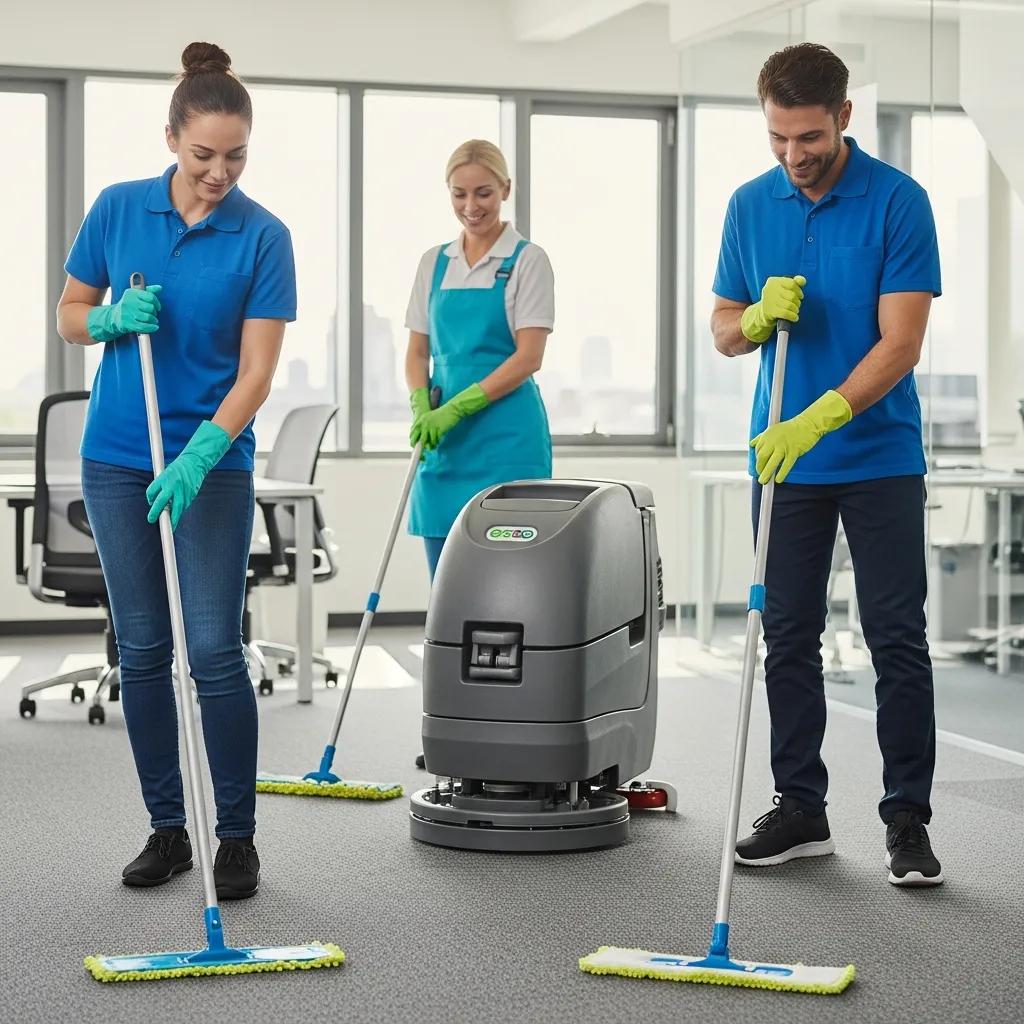
Smart Water‑Saving Strategies for Commercial Cleaning: Practical Techniques and Eco‑Friendly Solutions
Conserving water in commercial cleaning means using less fresh water and producing less wastewater—without sacrificing hygiene or appearance. That balance comes from choosing the right tools, products, and routines so you can measure real savings. This guide explains how common water‑saving methods work, how they cut operating costs and environmental impact, and how facilities can implement a reliable conservation plan. You’ll find practical equipment options (microfiber systems, automatic scrubbers), product strategies (concentrated and waterless cleaners), and procedural approaches (low‑moisture carpet methods and audits). We also map a simple implementation roadmap—audit, plan, train, monitor—so facility teams can turn strategy into steady practice. Finally, the guide describes how a local commercial cleaning partner can help design and run a water‑efficient program while keeping the focus on technical, measurable results.
Why Is Water Conservation Crucial in Commercial Cleaning?
Cutting water use in cleaning eases resource pressure, lowers utility and chemical costs, and improves operations by shortening drying times that otherwise create slip risks and rework.
The idea is straightforward: reduce high‑volume rinses and extractions by using low‑moisture technologies and metered dispensing so fewer gallons are used per task while cleanliness stays the same.
For facility managers, that adds up to measurable savings, fewer interruptions for drying, and reduced wastewater handling.
Those operational gains also support corporate sustainability goals and tenant satisfaction—so water efficiency is both smart maintenance and good business.
Below are three core benefits facility teams should consider when planning water‑smart cleaning.
- Environmental stewardship: lower freshwater withdrawals and reduced wastewater loads that ease strain on municipal systems.
- Direct cost savings: reduced water and energy bills from less hot‑water use and fewer chemicals thanks to accurate dosing.
- Operational improvements: quicker dry times, fewer slip hazards, and less corrective cleaning—saving labor and minimizing disruptions.
These benefits translate directly into environmental and financial outcomes teams can measure and report.
What Are the Environmental and Cost Benefits of Reducing Water Use?
Using less water cuts both freshwater demand and the energy needed to heat that water, which lowers greenhouse gas emissions tied to building maintenance. In many cases, swapping traditional mop‑and‑bucket routines for microfiber systems and metered dosing can cut water and chemical use by roughly 30–50%, depending on current practices. Those reductions can produce utility savings and lower wastewater surcharges—especially where water pricing is tiered or discharge rules are strict. Facility managers can estimate potential savings with a simple baseline: gallons per task × tasks per month, then prioritize the highest‑volume areas for change. Showing these numbers helps justify equipment upgrades and process improvements to procurement and leadership.
Once quantified, those savings also strengthen a company’s sustainability story and stakeholder reporting.
How Does Water Efficiency Enhance Business Sustainability and Reputation?
Lowering water use creates measurable metrics facilities can include in ESG disclosures, tenant communications, and procurement documents—helping buildings stand out to sustainability‑minded clients. Third‑party certifications like LEED, Green Seal, or WaterSense provide independent validation and make sustainability claims more credible. For property owners and managers, verified water reductions can improve tenant retention and support sustainability conversations during lease or vendor negotiations. Local examples and verifiable data turn operational changes into compelling, trustable sustainability stories for stakeholders.
Next, we’ll look at the equipment choices that make these operational and reputational wins possible.
What Are the Most Effective Water‑Saving Cleaning Equipment Options?
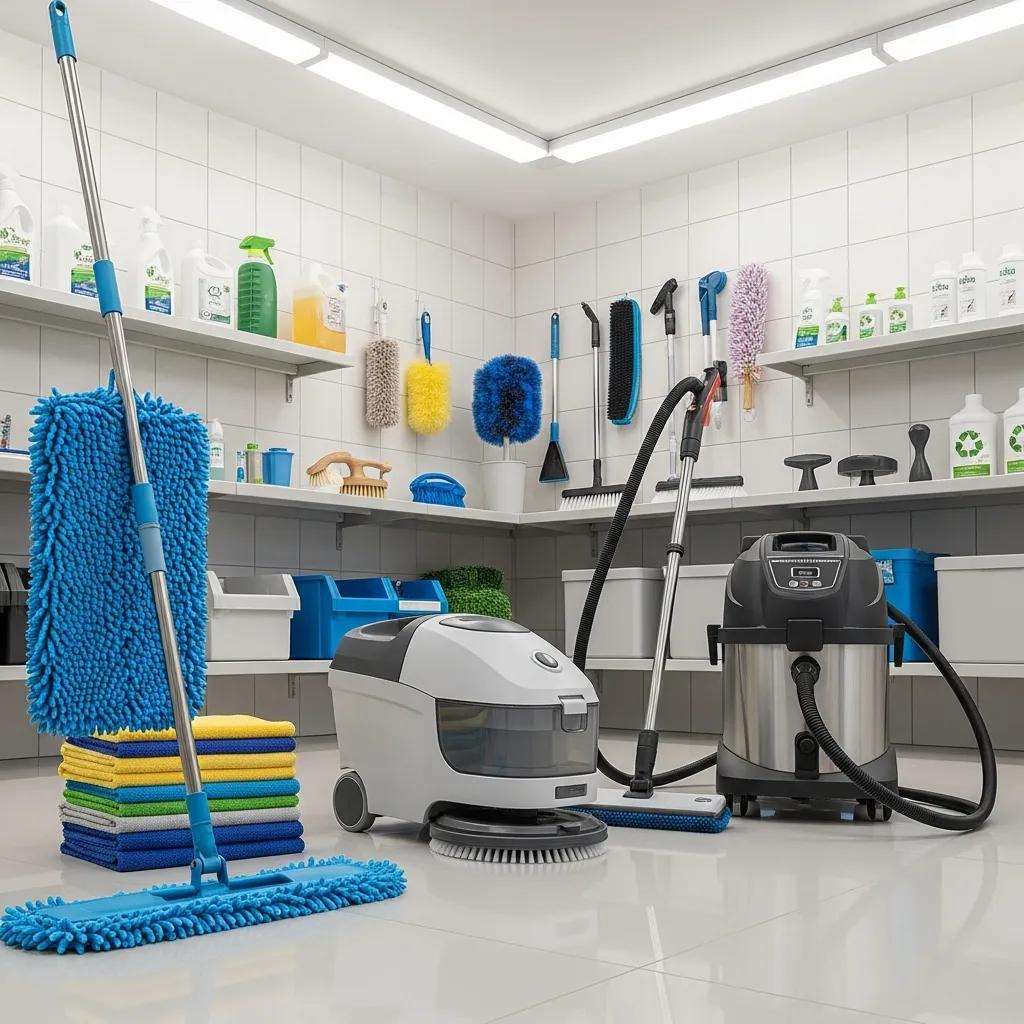
Right equipment reduces water at the source by controlling flow, improving soil capture, and—on some machines—recovering and reusing solution. Core categories include microfiber systems, automatic scrubbers and orbital floor machines, and dry‑vapor steam cleaners. Each saves water in a different way: microfiber by absorption, scrubbers by metered dispensing and recovery, and steam cleaners by using heat with very little liquid. Choose tools based on surface type, traffic, and your labor model so you get the biggest water savings without sacrificing cleanliness. When evaluating purchases, consider total cost of ownership—water and chemical savings, labor time reductions, and recovery capabilities matter as much as sticker price.
Use the table below to compare typical water impacts and common use cases for these equipment categories.
| Equipment | Typical Water Use (per 1,000 sq ft) | How It Saves Water | Typical Use Cases |
|---|---|---|---|
| Microfiber mops & systems | 5–15 gallons | Higher soil pickup, less wringing & rinsing | Daily office cleaning, high‑touch surfaces |
| Automatic scrubbers (with recovery) | 10–30 gallons | Metered flow, onboard recovery and reuse | Large hard‑floor areas, retail, lobbies |
| Dry‑vapor steam cleaners | 1–5 gallons | Heat and vapor dislodge soils with minimal rinse | Restrooms, kitchens, spot sanitizing |
This overview helps teams match equipment to facility priorities; next, we’ll focus on how microfiber technology delivers consistent water savings.
How Do Microfiber Technologies Reduce Water Consumption?
Microfiber relies on dense, fine fibers that trap and hold soil instead of pushing it into a liquid slurry that needs repeated rinsing. The capillary action within the fibers captures particles so technicians use less water and detergent per pass—often eliminating full rinses. Case studies show microfiber setups can cut water and chemical use roughly 30–50% compared with cotton mop systems, while also saving labor because there are fewer wringing cycles. To keep that performance, facilities need regular laundering schedules and inventory rotation so worn heads get replaced before efficiency drops. Proper microfiber maintenance is essential for long‑term water savings.
From there, powered machines add precise water control and recovery features to further reduce consumption.
What Are the Benefits of Automatic Scrubbers and Orbital Floor Machines?
Automatic scrubbers and orbital machines precisely meter solution flow, capture dirty solution in recovery tanks, and deliver consistent mechanical action—reducing repeat passes and unnecessary rinses. Many machines have adjustable flow rates and pressure settings to match floor finish and soil levels, so operators use only the amount of solution needed.
In large or high‑traffic spaces, orbital machines shorten cleaning cycles and cut repeat work, compounding water savings over time. Surface compatibility and machine noise should be considered, but overall these machines lower gallons‑per‑clean and improve labor efficiency across large cleaning programs.
Next we’ll cover product strategies that reduce water through smarter chemistries and application methods.
Which Eco‑Friendly Cleaning Products Support Water Reduction?

Product choice matters: concentrated chemistries, waterless cleaners, and bio‑enzymatic formulas reduce water needs by improving soil lift and cutting rinsing frequency. Concentrates rely on dosing systems to avoid over‑dilution; waterless sprays use surfactants and solvents made for low‑moisture removal; bio‑enzymatics use enzymes to break down soils over time. Match product type to surface and task to keep spaces clean while lowering water use and chemical waste. The quick comparison below can help procurement and operations teams decide.
| Product Type | Water Impact | Use Method | Benefits / Limitations |
|---|---|---|---|
| Concentrated cleaners (dosed) | Low | Dilution‑control dispensers | Lower transport footprint and accurate dosing; requires dispenser setup |
| Waterless / low‑moisture sprays | Minimal | Direct spray & microfiber wipe | Quick for spot cleaning; not ideal for very heavy soils |
| Bio‑enzymatic cleaners | Low | Applied to organic soils, allow dwell time | Reduces repeat wet‑clean cycles; slower acting, suited to drains/restrooms |
Understanding formulations and application methods helps teams reduce overall water demand; next we explain how concentrated and waterless products perform in everyday use.
How Do Concentrated and Waterless Cleaning Solutions Work?
Concentrates cut water and packaging by delivering active ingredients in a compact form that’s precisely dosed at the point of use. Waterless cleaners suspend and emulsify soils so they can be wiped away without a rinse. Dosing systems—pump or gravity‑fed—ensure correct dilution, preventing chemical and water waste from overuse.
Operationally, success depends on training technicians in dilution protocols and using color‑coded containers to prevent errors. These behavior changes are as important as the chemistry for realizing savings.
Logistically, concentrates reduce storage needs and transport emissions—another source of operational efficiency that complements onsite water reductions.
What Role Do Bio‑Enzymatic and Green Certified Products Play?
Bio‑enzymatic products use enzymes to break down organic soils into forms that are easier to remove with little or no rinsing, reducing repeat wet‑clean cycles in restrooms and food prep zones. Green‑certified products, verified by third parties, offer assurances on biodegradability and lower ecotoxicity—often reducing the need for aggressive rinsing required by some conventional chemistries.
These products can lower contaminant loads in wastewater and support procurement policies tied to sustainability. To maximize benefits, pair enzyme‑based cleaners with low‑moisture methods appropriate to the task.
What Low‑Water Floor and Carpet Cleaning Methods Are Recommended?
Low‑water methods use minimal moisture while keeping soils and appearance standards under control. For carpets, encapsulation and dry compound cleaning remove and encapsulate soils for vacuum removal instead of relying on hot‑water extraction. Hard floors benefit from dust mopping, spray‑and‑wipe, and dry stripping that avoid full rinses. Each approach trades moisture for dwell time, mechanical action, or chemical encapsulation; choose techniques based on soil load, traffic, and available downtime. The table below compares common methods so managers can pick the right approach for each zone.
| Method | Water Use | Dry Time | Best Surfaces |
|---|---|---|---|
| Encapsulation carpet cleaning | Very low | Short (30–60 min) | Commercial carpet tiles, office carpeting |
| Dry compound carpet cleaning | Minimal | Short (vacuum after dwell) | Low‑pile carpets, periodic maintenance |
| Hot‑water extraction (optimized) | High | Moderate (hours) | Deep soil, periodic restoration |
This comparison shows when low‑moisture methods are appropriate and when extraction is still the right choice.
How Does Encapsulation and Dry Compound Carpet Cleaning Save Water?
Encapsulation uses polymers that surround dirt and harden into vacuumable residues, while dry compound cleaning applies absorbent powders that attract soils for mechanical removal—both avoid large rinse volumes. These techniques reduce the need for frequent hot‑water extraction, allowing regular maintenance with very low moisture. Typical dwell times are 30–60 minutes for encapsulation and shorter for dry compounds; after vacuuming, carpets return to service quickly. For high‑traffic commercial areas, these methods lower downtime and water use while keeping appearance standards high.
What Are Best Practices for Dust Mopping, Spray and Wipe, and Dry Stripping?
Start with dust mopping or microfiber dry‑dusting to remove loose soils before any damp cleaning—this prevents unnecessary wet passes. Use spray‑and‑wipe with small‑volume trigger sprays and microfiber to clean without flooding surfaces. For stripping, apply concentrated strippers in low‑moisture doses, agitate mechanically, and limit rinsing to avoid excess water. Best practices include standardized dilution, controlled spray volumes, scheduled microfiber replacement, and verification checks like visual inspections and moisture measurements. Pair these procedures with the right tools and products to minimize water use without compromising hygiene or appearance.
How Can Facilities Implement Water Management and Conservation Plans?
A clear water management plan turns equipment and product choices into measurable results through a repeatable sequence: audit, plan, train, implement, and monitor. The process starts with baseline water‑use metrics, selects targeted low‑water interventions, and tracks change with KPIs such as gallons per 1,000 sq ft and cleaning cycle frequency. A formal plan reduces operator variability and supports data‑driven capital decisions like scrubbers or dosing systems. Below is a practical sequence facility managers can use to start conserving water systematically.
- Conduct a baseline water audit to quantify gallons per task and identify high‑volume areas.
- Select interventions (equipment, products, procedures) and create a phased implementation roadmap.
- Train staff on new methods and track adherence with checklists and supervisor spot checks.
- Monitor KPIs, report savings, and iterate on processes for continuous improvement.
This stepwise approach prepares the organization to adopt specific audit tools and training curricula.
What Are Effective Water Auditing and Employee Training Strategies?
Effective audits mix meter‑level data (when available) with per‑task observations to estimate gallons used for each cleaning activity. Auditors sample typical tasks over a week and scale the results monthly. A concise audit checklist should capture task, current method, gallons used, chemical volumes, frequency, and dry time to form a usable baseline. Training should cover dilution control, microfiber care, machine operation, and behavior‑change techniques—like time‑and‑motion demos—that reinforce correct dosing and low‑water practices. Tie audit findings to targeted training modules so staff understand why procedures change and how those changes affect both environmental performance and daily work.
With standard procedures and training in place, facilities can pursue recycling options and certifications to lock in savings.
How Do Water Recycling Systems and Green Certifications Support Conservation?
Some automatic scrubbers include onboard recovery and filtration to reuse captured solution and reduce freshwater intake. At a facility level, greywater strategies can repurpose low‑risk rinsates for non‑potable uses where regulations allow. Certifications like LEED or Green Seal provide frameworks and verification that recognize reduced water use and encourage sustainable procurement. The link is simple: recycling features lower measured water use, and certifications validate those results to tenants and stakeholders. Pursuing certification can strengthen internal accountability and make conservation results visible in sustainability reports.
When facilities are ready to act, partnering with a local provider can help scope and run an effective water‑efficient program.
How Does McCoy Maintenance Demonstrate Commitment to Water‑Efficient Commercial Cleaning?
McCoy Maintenance Inc. provides commercial cleaning and janitorial services across Macomb, Oakland, and Metro Detroit, with eco‑friendly cleaning options available on request. We design customized cleaning plans and invest in quality equipment so we can deliver low‑water approaches—microfiber programs, metered dosing, and low‑moisture carpet methods—tailored to each client. Our teams are professional, background‑checked, and scheduled to minimize disruption while putting water‑smart processes into practice.
By aligning service delivery with client sustainability goals, McCoy helps achieve measurable reductions in water and chemical use as part of broader facility maintenance programs.
What Customized Water‑Saving Cleaning Plans Does McCoy Offer?
Our customized plans begin with an on‑site assessment to identify high‑water tasks and opportunities to switch to low‑moisture methods. From there we recommend methods, allocate equipment, and train staff to match your schedule. Core elements include a baseline audit, selection of tools (microfiber kits, scrubbers), dosing systems for concentrated chemicals, and monitoring protocols that track gallons per task and service quality. We offer flexible service frequencies and method options to meet client priorities, backed by a 100% satisfaction guarantee to ensure standards are met. The result is a tailored program that balances water savings with the cleanliness your facility requires.
Below are examples of how measurable outcomes are captured and validated.
Are There Case Studies Showing Measurable Water Reduction Results?
Typical case studies present baseline audits, interventions deployed, and measured results—percentage reductions in gallons per month, changes in labor hours, and shifts in chemical use. A useful case‑study format lists client type, baseline metrics, interventions (equipment, products, procedures), measured savings, and lessons learned so others can replicate the approach. For managers who want verification, request a case study with methodology and data. Piloting changes in a single building is often the fastest way to produce documented, scalable savings.
This guide connects strategy, tactics, and measurable outcomes so facility teams can implement lasting water conservation across cleaning programs.
Frequently Asked Questions
What are the key steps in developing a water management plan for commercial cleaning?
Start with a baseline water audit to quantify current usage and spot high‑volume tasks. Next, select targeted low‑water interventions and build a phased rollout plan. Train staff on new methods, then monitor KPIs to track progress. Regular reporting and iterative adjustments keep the plan effective over time.
How can facilities measure the effectiveness of their water conservation efforts?
Measure outcomes with KPIs like gallons per cleaning task, cleaning cycle frequency, and overall water use. Regular audits and data collection track trends. Comparing utility bills before and after changes gives tangible proof of savings, and involving staff in monitoring increases accountability.
What role does employee training play in successful water conservation initiatives?
Training is essential. Staff need hands‑on instruction in proper equipment use, dilution control, and low‑water techniques. Demonstrations and clear procedures build confidence and consistency—so the new methods become standard practice, not occasional exceptions.
What are some common challenges facilities face when implementing water conservation strategies?
Common hurdles include resistance to change, limited training, and budget constraints for new equipment. Measuring water use can also be hard without the right systems. Overcoming these obstacles requires leadership, clear communication of goals, targeted training, and phased investments that show quick wins.
How can technology enhance water conservation in commercial cleaning?
Technology helps through advanced equipment and smart systems: scrubbers with recovery systems reuse solution, dosing systems ensure accurate chemical use, and analytics reveal water‑use patterns to target improvements. These tools boost cleaning efficiency while supporting sustainability goals.
What are the benefits of partnering with a local commercial cleaning service for water conservation?
Local providers bring practical experience in eco‑friendly methods and can customize solutions for your facility. They supply appropriate equipment and products, understand regional regulations, and can run pilots to demonstrate measurable savings. That partnership makes implementation faster and more reliable.
Conclusion
Adopting water‑conservation strategies in commercial cleaning lowers operating costs and strengthens environmental performance without compromising cleanliness. Using the right equipment and eco‑friendly products, combined with training and measurement, delivers tangible water savings. Partnering with a knowledgeable local provider can simplify the transition and help you reach your conservation goals. Contact us to learn how a tailored plan can reduce water use at your facility.
Related McCoy Maintenance Services
Water-saving cleaning works best when it is tied to floor care, restroom service, carpet cleaning, and recurring janitorial routes.
Local Commercial Cleaning Support
McCoy Maintenance serves Metro Detroit businesses with commercial cleaning, janitorial service, carpet cleaning, floor care, disinfection, and specialty cleaning programs matched to the building and schedule.
Water Conservation Commercial Cleaning for Local Facilities
For businesses in Metro Detroit and Southeast Michigan, water conservation commercial cleaning works best when it is matched to the building’s traffic patterns, surfaces, schedule, and health standards. McCoy Maintenance uses this kind of practical facility review to keep offices, clinics, retail spaces, schools, and commercial properties cleaner without disrupting daily operations.
Where water conservation commercial cleaning has the biggest impact
The right commercial cleaning plan helps control dust, soil, odors, allergens, touch-point buildup, and the visible wear that customers and employees notice first. It is especially important in entry areas, restrooms, shared workspaces, break rooms, conference rooms, carpets, hard floors, and other high-use zones.
What to review before scheduling service
Before choosing a cleaning schedule, facility managers should look at square footage, floor types, staffing levels, visitor volume, seasonal weather, industry requirements, and any problem areas that need extra attention. These details help create a realistic scope of work instead of a one-size-fits-all checklist.
How McCoy Maintenance supports Metro Detroit and Southeast Michigan
McCoy Maintenance provides local commercial cleaning support built around consistent communication, trained crews, documented expectations, and service plans that can scale as a facility changes. For questions about water conservation commercial cleaning, the team can review the property and recommend the next practical step.
Water Conservation Commercial Cleaning Guide
This section adds clear context for water conservation commercial cleaning and how it connects to commercial cleaning, office cleaning, facility maintenance, carpet care, floor care, and local service planning.
Water Conservation Commercial Cleaning Planning Notes
Business owners should compare scope, schedule, traffic level, service frequency, surface needs, and local cleaning experience before choosing a cleaning provider.