Advanced Commercial Floor Care for Long Life: Practical Strategies and Maintenance Solutions
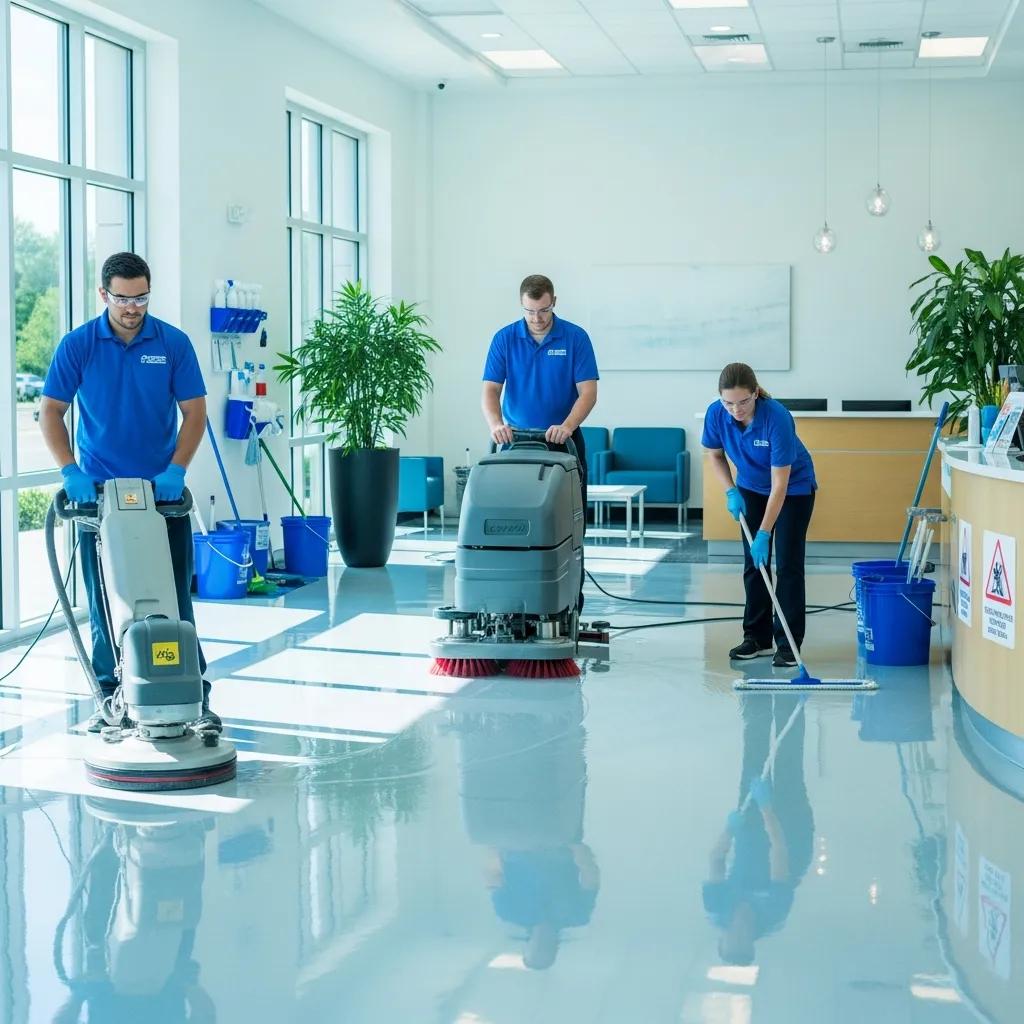
Professional floor care extends service life, improves safety, and lowers lifecycle costs when restoration, protective coatings, mechanical refinishing, and routine preventative programs work together. This guide breaks down how advanced approaches—like VCT stripping and waxing, concrete polishing and sealing, and industrial cleaning protocols—protect surfaces from abrasion, chemicals, and heavy traffic. Facility teams will get clear step-by-step procedures, equipment and product choices, greener alternatives, and sample schedules that cut long‑term expense while preserving appearance and slip resistance. We also show how a local provider, McCoy Maintenance, implements these programs for Macomb, Oakland, and Metro Detroit facilities, including businesses in Royal Oak, Troy, and Sterling Heights, so you can compare in‑house versus outsourced options. Ahead you’ll find practical guidance on stripping and waxing, concrete sealing and polishing, VCT maintenance plans, industrial cleaning methods, sustainable practices that protect indoor air quality, and how McCoy Maintenance can support tailored floor care programs. With this information, facility managers can prioritize the right interventions to maximize floor life with minimal disruption.
Key Advanced Techniques for Commercial Floor Stripping and Waxing
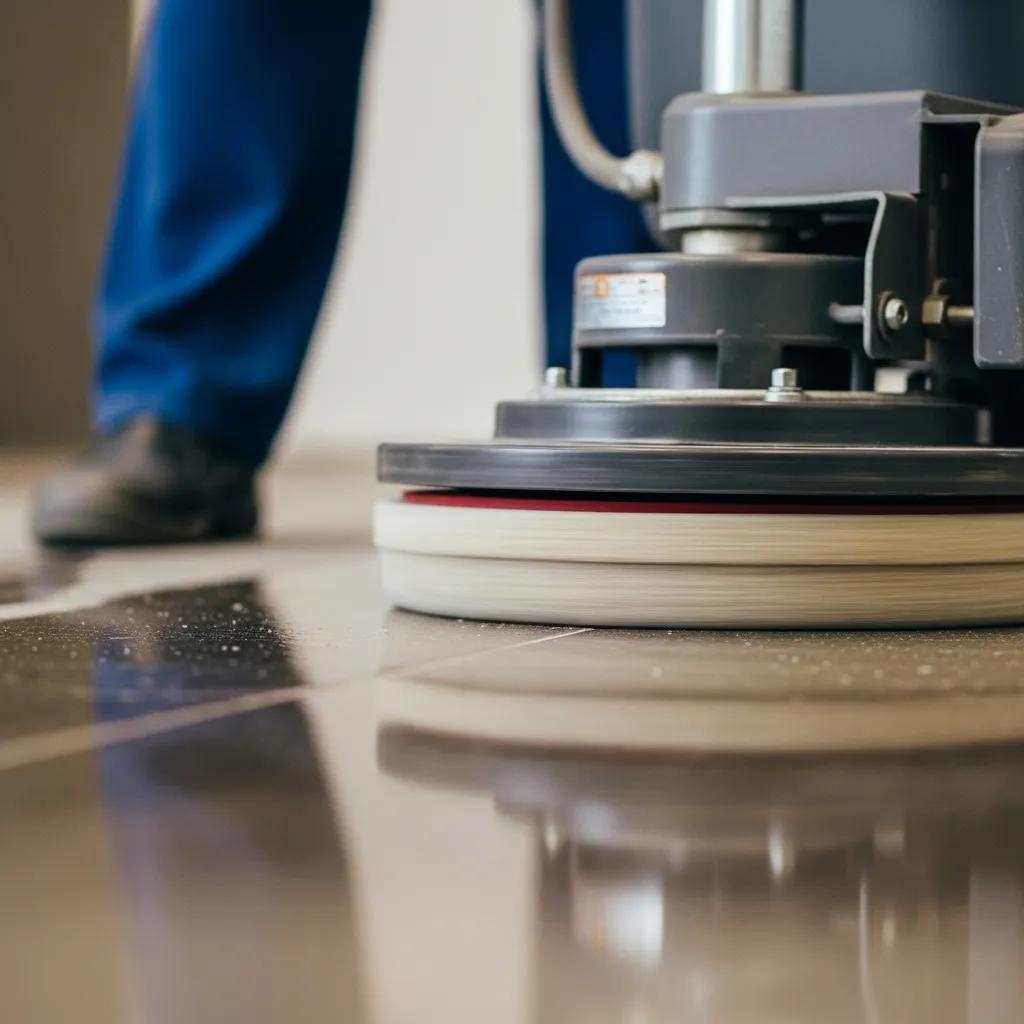
Stripping and waxing at an advanced level combines chemistry and mechanical action to remove degraded polymer finish, prepare the substrate, and apply a controlled protective film that restores gloss and durability. Technicians use alkaline or solvent strippers to break down aged acrylic or urethane finishes, then agitate and extract residue so the new finish bonds to a clean surface. Done correctly, this improves traction, reduces scuffing, and lengthens recoat cycles—because new coats adhere to the substrate, not to trapped contaminants. Below we cover critical steps, safety controls, pad and machine choices, and common mistakes to avoid when restoring finished floors. Once teams master stripping mechanics and proper finish application, the focus shifts to maintenance routines that preserve that protective layer between restorative services.
How Floor Stripping Removes Old Wax and Prepares Surfaces
Stripping works by chemically breaking polymer chains and emulsifying the old finish so mechanical agitation and extraction can lift residue from the substrate. Most strippers are alkaline and need proper dwell time to penetrate films; a low‑ to medium‑speed floor machine with a stripping pad then agitates the surface to release the finish. Thorough two‑pass extraction, rinsing, and neutralization remove residues that would interfere with sealer adhesion, and the floor must be fully dry before applying any finish. Always follow controlled dilution, PPE, sufficient ventilation, and clear signage to protect occupants and crews. Understanding how the chemistry and mechanics interact leads directly to best practices for applying waxes and sealers.
Quick comparison of stripping and finish options for facility managers.
| Technique | Key Tools/Chemicals | Outcome/Benefit |
|---|---|---|
| Stripping (alkaline) | Floor machine, stripping pad, alkaline stripper | Removes aged polymer finish, restores porosity for bonding |
| Recoating (light) | Microfiber mop, maintenance finish | Refreshes gloss without full strip in low-traffic areas |
| Burnishing/Buffing | High-speed burnisher, appropriate pad | Restores shine, compacts finish, extends recoat intervals |
This table shows how each method supports preparation and protection, helping you pick the right procedure based on finish condition and traffic patterns.
Best Practices for Applying Floor Wax and Sealers
Start by choosing the right finish chemistry—acrylics for easy maintenance, urethane blends where higher abrasion and chemical resistance are needed—then apply using controlled techniques and cure protocols. Use even, thin coats with a finish mop or applicator, allow surface flash‑dry between coats, and avoid puddles that trap solvents and cause adhesion issues. Typical practice is two to four light coats per manufacturer guidance, with final cure time observed before returning heavy traffic; premature use of the floor is a common cause of early failure. Use low‑lint applicators and the correct pad grade for burnishing to improve appearance and durability. These application steps set the foundation for maintenance intervals and equipment choices that preserve the protective finish.
How Concrete Floor Sealing and Polishing Improve Durability
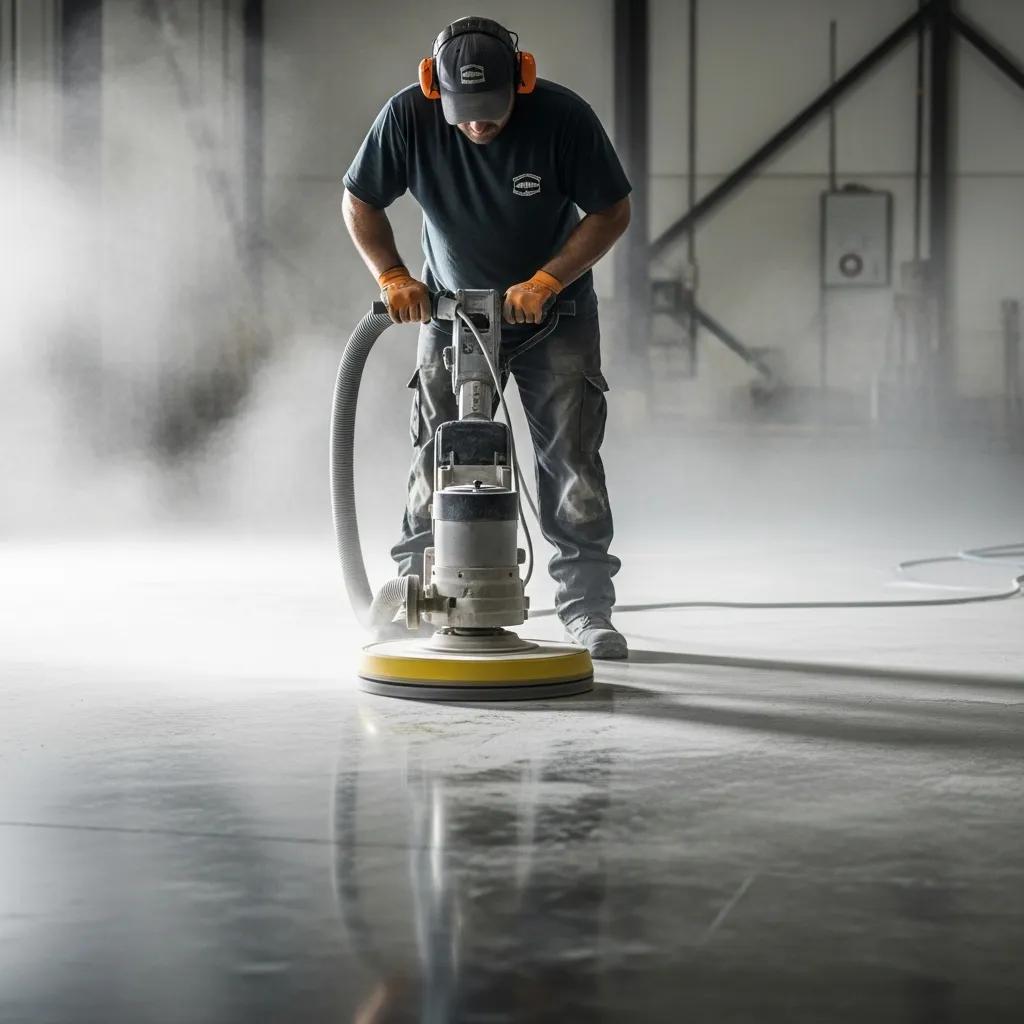
Sealing and polishing concrete protect porous slabs from stains and abrasion while increasing surface hardness via densification—lowering lifecycle maintenance and improving appearance. Penetrating sealers block liquid ingress and salts, topical coatings serve as sacrificial wear layers, and densifiers chemically react with cement hydrates to boost hardness. Polishing uses progressively finer abrasives and densifiers to create a low‑maintenance, high‑durability surface that often removes the need for topical films in industrial and retail settings. The sections that follow outline the service sequence for sealing and explain how polishing mechanics translate into measurable longevity gains. With that perspective, teams can match treatments to traffic levels, chemical exposure, and aesthetic goals.
Steps for Concrete Floor Sealing Services
Sealing begins with proper surface prep: cleaning, degreasing, crack repair, and moisture testing to confirm compatibility and adhesion. For heavy contamination, technicians use mechanical cleaning or shot‑blasting, then repair spalls and address cracks before confirming vapor drive is within acceptable limits. Application varies—roller or sprayer for penetrating sealers, trowel or squeegee for epoxies—followed by manufacturer cure times and light final polishing if a gloss finish is desired. Environmental controls like temperature and humidity are monitored to avoid film defects and ensure full polymerization. Thorough prep and inspection matter because poor substrate condition is the top cause of sealer failure and will guide whether to choose a topical system or densification instead.
Sealer types, best uses, resistance profiles, and typical cost ranges.
| Sealer Type | Best Use Case | Longevity/Resistance | Typical Cost Range |
|---|---|---|---|
| Penetrating sealer (silane/siloxane) | Exterior concrete, stain prevention | Long; resists water and salts | Moderate |
| Topical acrylic/urethane | Interior retail, high-gloss aesthetic | Moderate; sacrificial wear layer | Low–Moderate |
| Densifier (sodium/lithium) | Polished concrete for industrial wear | Long; increases hardness and abrasion resistance | Moderate–High |
| Epoxy/urethane coating | Chemical/impact-prone areas | High chemical and impact resistance | High |
This comparison helps decision‑makers balance performance and budget when selecting a protection strategy.
How Polishing Extends Concrete Longevity and Improves Appearance
Polishing refines concrete with a staged abrasive sequence—grinding, honing, polishing—combined with densifiers that chemically harden the surface and reduce wear and dusting. Diamond pads move from coarse to fine grits to smooth micro‑roughness and close pores so the densifier can form a hardened matrix. The end result is a gloss level maintained with routine dust control and periodic low‑speed burnishing instead of repeated topical coating cycles. Compared to sealed concrete, polished floors typically need less stripping and fewer VOC‑emitting products during upkeep, making polishing attractive for showrooms, warehouses, and lobbies where longevity and minimal disruption matter.
Effective Maintenance Strategies for Commercial VCT Floor Care
Maintaining VCT (vinyl composition tile) well requires a balance of daily cleaning, mechanical restoration, and scheduled restorative services like strip‑and‑wax. Daily work should use neutral pH cleaners, microfiber damp mops, and entrance matting to limit grit. Periodic mechanical actions—low‑speed scrubbing and high‑speed buffing—preserve gloss between restorative cycles. A tiered schedule tied to traffic intensity keeps interventions timely: proactive care prevents deep wear and cuts down on full strip‑and‑recoat frequency. Below are practical frequency recommendations and an equipment/chemical overview to help implement and buy the right tools. Consistent routines reduce downtime and total cost of ownership.
How Often to Strip, Wax, and Buff VCT Floors
Restorative frequency depends on traffic and visible wear. High‑traffic zones need more frequent attention to maintain appearance and slip resistance. For example, lobbies and main corridors typically require weekly burnishing and a strip‑and‑wax every 3–6 months; medium‑traffic areas often benefit from weekly buffing and stripping every 6–12 months; low‑traffic areas can be maintained with monthly buffing and an annual strip‑and‑wax. Watch for loss of gloss, scuffs that resist buffing, and finish delamination as triggers for restorative work. Clear monitoring protocols reduce reactive repairs and let you schedule restorative services during off‑hours to keep disruption low.
Frequency recommendations by traffic category.
- High Traffic: Burnish weekly; strip and recoat every 3–6 months.
- Medium Traffic: Buff weekly; strip and recoat every 6–12 months.
- Low Traffic: Buff monthly; strip and recoat annually or as needed.
Use these bands as a scheduling framework; the next section outlines the equipment and chemicals to execute these routines efficiently.
Equipment and Chemicals Used in VCT Floor Maintenance
Core VCT equipment includes low‑ and high‑speed floor machines, burnishers, autoscrubbers, and an assortment of pads, paired with neutral cleaners, strippers, and compatible finish topcoats. Typical machine speeds run 175–300 rpm for scrubbing and 1,500–3,000+ rpm for burnishing; pad selection (stripping, cleaning, buffing, polishing) should match the task to protect the finish and extend pad life. Use low‑foaming neutral detergents for daily cleaning, controlled‑dilution strippers for restorative work, and acrylic or urethane finishes selected for the required durability. Proper storage, handling, and dilution control are essential for worker safety and consistent results; this discipline supports predictable maintenance cycles and more accurate cost forecasting.
Maintenance schedule by traffic level and expected result.
| Traffic Level | Recommended Routine | Frequency | Expected Result |
|---|---|---|---|
| High | Daily neutral cleaning, weekly burnish, 3–6 month strip | Daily/Weekly/Quarterly | High gloss, reduced deep wear |
| Medium | Daily/weekly cleaning, weekly buff, 6–12 month strip | Daily/Weekly/Annual | Sustained appearance, fewer touch-ups |
| Low | Regular dust control, monthly buff, annual strip | Ongoing/Monthly/Annual | Low maintenance, extended finish life |
This schedule helps prioritize resources and align equipment with traffic‑driven needs.
If outsourcing makes more sense than in‑house staffing, McCoy Maintenance offers preventative commercial cleaning programs that bundle scheduled cleaning, periodic restorative services, and performance reporting to reduce long‑term repair costs. As a family‑owned provider serving Macomb County, Oakland County, and Metro Detroit, including areas like Warren, Clinton Township, and Novi, we emphasize trained technicians, quiet industry‑standard equipment, and a 100% satisfaction guarantee to keep your facility running and occupants comfortable. Compare in‑house expenses to an outsourced program to find the best fit for your budget and operations.
Industrial Floor Cleaning Solutions That Maximize Longevity and Safety
Industrial floors need robust cleaning systems and protective finishes that stand up to heavy abrasion, chemical exposure, and impact while preserving slip resistance and worker safety. Advanced options—diamond grinding and polishing, industrial autoscrubbing with reclaim systems, and chemical‑resistant coatings—address heavy‑duty wear and maintain safe walking surfaces. Choosing the right approach requires balancing downtime, capital cost, and long‑term savings: mechanical polishing reduces recurring coating replacement, while specialty coatings deliver targeted chemical and impact protection. The following subsections describe these methods and how preventative maintenance programs lower wear and lifecycle costs.
Advanced Cleaning Methods for High‑Traffic Industrial Floors
Advanced industrial cleaning includes diamond polishing for hard, dust‑free surfaces, high‑capacity autoscrubbing with reclaim to control wastewater, and targeted specialty coatings for chemical or impact resistance. Diamond grinding followed by polishing produces an abrasion‑resistant surface suited to forklift and pallet traffic, while reclaim‑equipped autoscrubbers reduce runoff and disposal needs in large facilities. Epoxy or polyurethane systems are applied in zones with chemical spills, heavy impacts, or where seamless sanitation is required. When mechanical cleaning no longer restores the surface profile or finish breakdown raises slip risk, escalate to restorative services to restore substrate integrity.
Advanced methods and their primary outcomes.
- Diamond polishing: Produces a hard, dust-free, low-maintenance surface.
- Industrial autoscrubbing & reclaim: Improves cleaning efficiency and wastewater control.
- Specialty coatings: Provide chemical, impact, and abrasion resistance where needed.
Choose methods based on traffic type, chemical exposure, and operational priorities to maximize safety and floor life.
How Preventative Maintenance Programs Cut Wear and Costs
Preventative maintenance lowers wear and lifecycle costs by scheduling work before damage accelerates, tracking key performance indicators, and using routine labor to avoid expensive restorative projects. A tiered program includes daily office janitorial services, routine mechanical maintenance, quarterly inspections, and documented restorative cycles, with metrics like gloss retention, slip resistance readings, and pad/machine utilization. Regular inspections spot early signs of delamination, chemical attack, or abrasion so you can make targeted repairs instead of full resurfacing—extending time between disruptive strip‑and‑wax or resurfacing events. Consistent reporting supports data‑driven budgeting and helps justify preventative spend over reactive replacements.
Core components of an effective preventative program.
- Scheduled cleaning and mechanical maintenance: Daily to weekly actions that prevent abrasive buildup.
- Periodic inspections and KPI tracking: Gloss, slip resistance, and wear pattern reporting.
- Planned restorative interventions: Timed strip-and-wax, polishing, or patching before failure.
These elements work together to lower total cost of ownership and improve predictability.
How Sustainable Practices Fit into Advanced Commercial Floor Care
Sustainable floor care blends low‑VOC products, controlled water and chemical use, and microfiber systems to protect indoor air quality (IAQ) while maintaining performance and longevity. Biodegradable or low‑VOC strippers and finishes, paired with dilution‑control systems, reduce emissions and chemical loads without sacrificing cleaning power when combined with correct mechanical action and dwell times. Water‑saving strategies—autoscrubbers with reclaim and microfiber systems—minimize wastewater while effectively removing contaminants. The sections below highlight eco‑friendly products, application techniques, and how green cleaning supports IAQ and long‑term floor health.
Eco‑Friendly Products and Techniques That Support Floor Longevity
Biodegradable alkaline strippers, low‑VOC acrylic finishes, and high‑performance microfiber systems can preserve floors when matched to the right mechanical processes. Microfiber mops and pads capture abrasive particles instead of redistributing them, reducing finish abrasion and extending life. Dilution‑control and metering prevent chemical overuse and residue buildup. Water‑based, low‑VOC finishes provide acceptable durability with lower emissions—especially when combined with proper prep and mechanical application. Test green products in small areas to confirm they meet longevity requirements before full rollout.
Eco‑friendly techniques and their benefits.
- Microfiber systems: Reduce water and chemical usage while improving dirt capture.
- Low-VOC finishes: Lower emissions during application and reduce IAQ impacts.
- Dilution control: Ensures consistent chemical strength and reduces waste.
These approaches preserve protective performance while supporting sustainability and occupant health.
How Green Cleaning Improves Indoor Air Quality and Floor Health
Green cleaning improves IAQ by cutting VOC emissions, minimizing residual chemical films, and lowering airborne particulates that speed finish abrasion and affect occupant health. Using low‑VOC products and ventilating during application reduces solvent off‑gassing, while residue‑free cleaning prevents surface films that attract soils and abrade finishes. Monitor IAQ during and after maintenance, schedule work for low‑occupancy hours, and combine product choice with technician training and process control to protect occupants and extend floor life.
Why Choose McCoy Maintenance for Commercial Floor Care?
McCoy Maintenance builds floor programs around local responsiveness, trained technicians, quality equipment, and plans tailored to your facility goals for longevity and cost control. As a family‑owned commercial cleaning company serving Macomb County, Oakland County, and Metro Detroit, including cities like Royal Oak, West Bloomfield, and Troy, we invest in staff training, quiet industry‑standard machines, and customizable cleaning plans that minimize disruption. Our core services supporting floor longevity include VCT maintenance, concrete sealing and polishing, commercial carpet and upholstery cleaning, and construction cleanup—backed by a 100% satisfaction guarantee. For facility managers who need help implementing preventative maintenance or restorative services, McCoy Maintenance offers site surveys and tailored proposals to match interventions to your operational priorities.
What Makes Our Service Reliable and Satisfactory?
McCoy Maintenance combines family‑owned accountability with certified staff, quality equipment, and a satisfaction guarantee to deliver consistent results. We build customized cleaning plans that fit your schedule and measurable goals—like gloss retention and fewer restorative cycles—so you see the impact. Ongoing training and equipment investment reduce variability in results and keep operations quieter and less disruptive. Those capability pillars let you call one vendor for routine maintenance, restorative projects, or concrete polishing and sealing across a variety of facilities.
How Local Expertise Helps Macomb and Metro Detroit Businesses
Local presence offers faster response, familiarity with regional facility types, and flexible scheduling tuned to Macomb and Metro Detroit business rhythms, serving communities like Sterling Heights, Warren, and New Baltimore. Our local knowledge of traffic patterns, facility layouts, and common wear issues helps prioritize cost‑effective fixes and high‑impact zones. Community relationships make coordination with building managers easier and speed approvals for off‑hour work. When you evaluate providers, a local commercial cleaning company with documented plans and performance reporting simplifies vendor management and supports long‑term strategies that cut total cost of ownership.
Frequently Asked Questions
What are the benefits of using eco-friendly floor care products?
Eco‑friendly products—like biodegradable strippers and low‑VOC finishes—reduce harmful emissions and improve indoor air quality, creating a healthier environment for occupants. They also leave fewer damaging residues that can shorten finish life. Choosing greener options helps facilities meet sustainability goals and green building standards while demonstrating environmental responsibility to clients and staff.
How can I determine the right maintenance schedule for my facility's floors?
Pick a schedule based on traffic, floor type, and visible wear. High‑traffic areas need more frequent work—weekly burnishing and quarterly strip‑and‑wax are common—while low‑traffic zones often manage with monthly buffing and annual restorative services. Track gloss, scuffs, and finish performance to trigger interventions, and use a tiered plan to keep floors in top condition with minimal disruption.
What role does preventative maintenance play in floor care?
Preventative maintenance stops small problems from becoming costly repairs. Regular cleaning and inspections reduce wear, maintain appearance, and lower slip hazards. Tracking metrics like gloss retention and slip resistance lets managers time restorative services effectively, which lowers total cost of ownership and improves operational efficiency.
How do I choose the right equipment for floor maintenance?
Choice depends on flooring type, traffic level, and tasks. Low‑speed machines are best for scrubbing; high‑speed burnishers produce gloss. Match pads and chemicals to equipment and floor material for safe, effective results. Consulting floor‑care professionals helps you select the right machines and consumables for your facility.
What are the signs that my floors need restorative services?
Look for visible wear patterns, loss of gloss, scuffs that won’t buff out, and finish delamination. If cleaning no longer restores appearance or slip resistance declines, schedule restorative work. Regular inspections help you catch those signs early and avoid more extensive repairs.
How can I ensure my floor care practices are sustainable?
Use low‑VOC cleaners and biodegradable strippers, adopt microfiber systems and autoscrubbers with reclaim to cut water waste, and train staff in proper dilution and application. Maintain equipment to run efficiently and periodically review protocols to align with sustainability targets while protecting floor health.
What should I look for in a commercial floor care service provider?
Look for experience, local reputation, trained staff, and a full range of services. Prefer partners who tailor plans to your schedule, use quality equipment, and provide performance metrics. Ask about eco‑friendly options and guarantees so you can measure results and hold the provider accountable.
Elevating Commercial Floors: Advanced Techniques for Extended Lifespan
Applying advanced floor care techniques—stripping, waxing, sealing, and polishing—keeps floors safer, more attractive, and less costly over their lifetime. Following best practices and a proactive maintenance plan preserves appearance and function for years. If you’d like a tailored program, McCoy Maintenance can provide site surveys, custom proposals, and dependable execution to protect your floors and your budget. Contact us to explore services that fit your facility’s needs and schedule.