Your Complete Guide to Post-Construction Cleanup & Site Readiness — Commercial Cleaning Done Right
Post‑construction cleanup is the work that turns an active build into a safe, usable commercial space — removing debris, controlling dust, and sanitizing surfaces so the building is move‑in ready. This guide explains what “site readiness” looks like for commercial properties, why it matters for safety, certificates of occupancy, indoor air quality, and tenant satisfaction, and how a clear cleanup plan cuts delays and punch‑list headaches. You’ll see the typical phases — rough clean, final clean, and touch‑up/sparkle clean — the common tools and techniques like HEPA vacuums and electrostatic sprayers, plus practical checklists that align cleaning with inspections and handovers. We also cover cost and scheduling expectations, OSHA and green‑cleaning practices that protect crews and occupants, and how to coordinate cleaning around construction to avoid rework. Throughout, find actionable lists, side‑by‑side comparisons, and short examples of how a local provider approaches complex commercial jobs to deliver true site readiness.
What Is Post-Construction Cleaning and Why Is Site Readiness Crucial?
Post‑construction cleaning is the systematic removal of leftover materials, dust, adhesives, and other construction contaminants once the trades finish. Site readiness means the space meets safety, cleanliness, and functional standards required for occupancy. A thorough clean restores surfaces, prevents HVAC systems from clogging with dust, lowers health risks from airborne particles, and helps move inspections and certificate‑of‑occupancy steps forward. A properly prepared site shortens tenant fit‑out time and leaves a positive first impression for clients and inspectors — making cleanup a key part of successful project closeout. From these definitions we break down the core tasks and equipment that make site readiness achievable. For comprehensive commercial cleaning services that ensure your property is move-in ready, trust McCoy Maintenance.
Defining Post-Construction Cleaning and Its Key Components
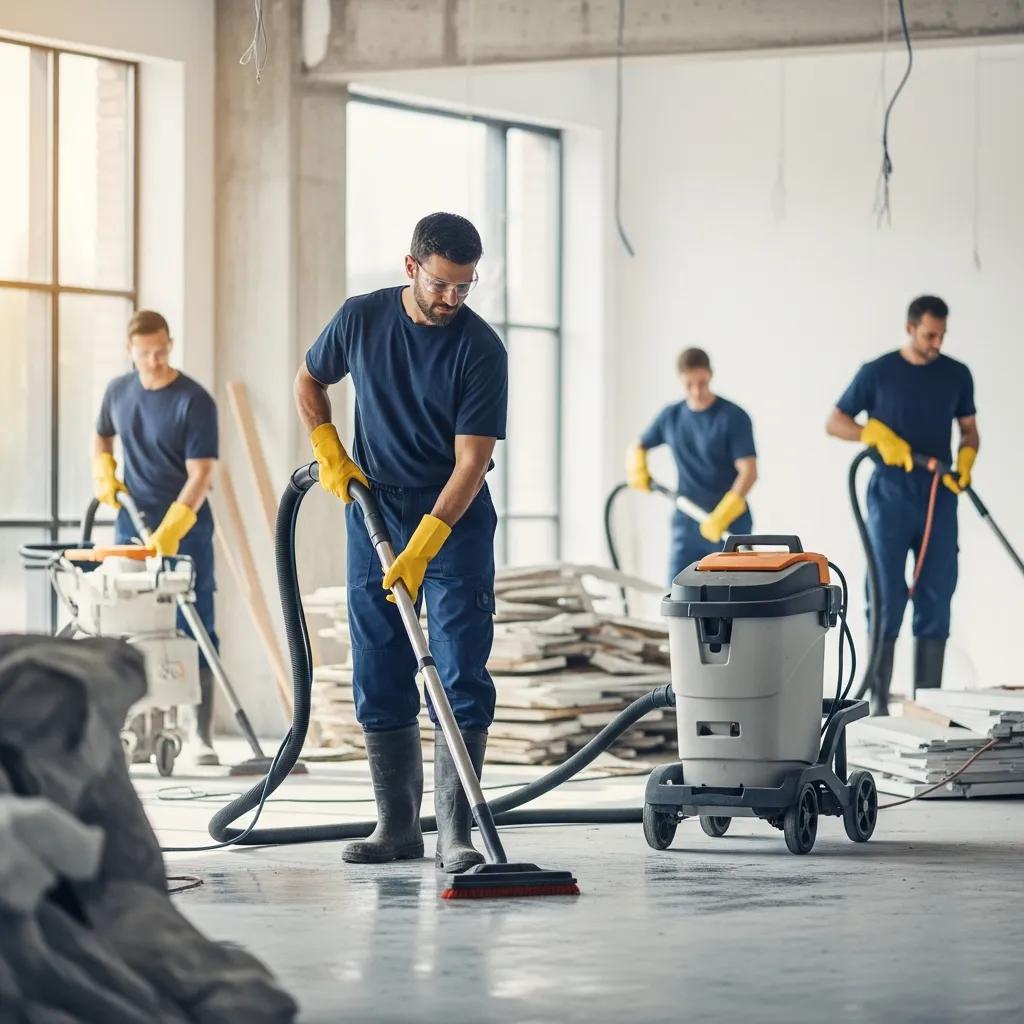
Post‑construction cleaning covers several targeted tasks: debris removal, dust control, detailed surface cleaning, floor care, and window and fixture restoration — each done with the right tools and techniques. HEPA vacuuming pulls respirable dust from crevices and duct openings; floor scrubbers and bonneting remove adhesive residues and prepare finishes on large surfaces. Surface sanitizing often uses low‑VOC, eco‑friendly products paired with microfiber methods to avoid recontamination. New‑build window cleaning typically includes label, mortar, and protective film removal. Sequenced correctly, these components move a site from heavy debris management to fine‑detail polishing in a predictable workflow that supports inspections and occupant safety.
Understanding Site Readiness for Move-In and Occupancy
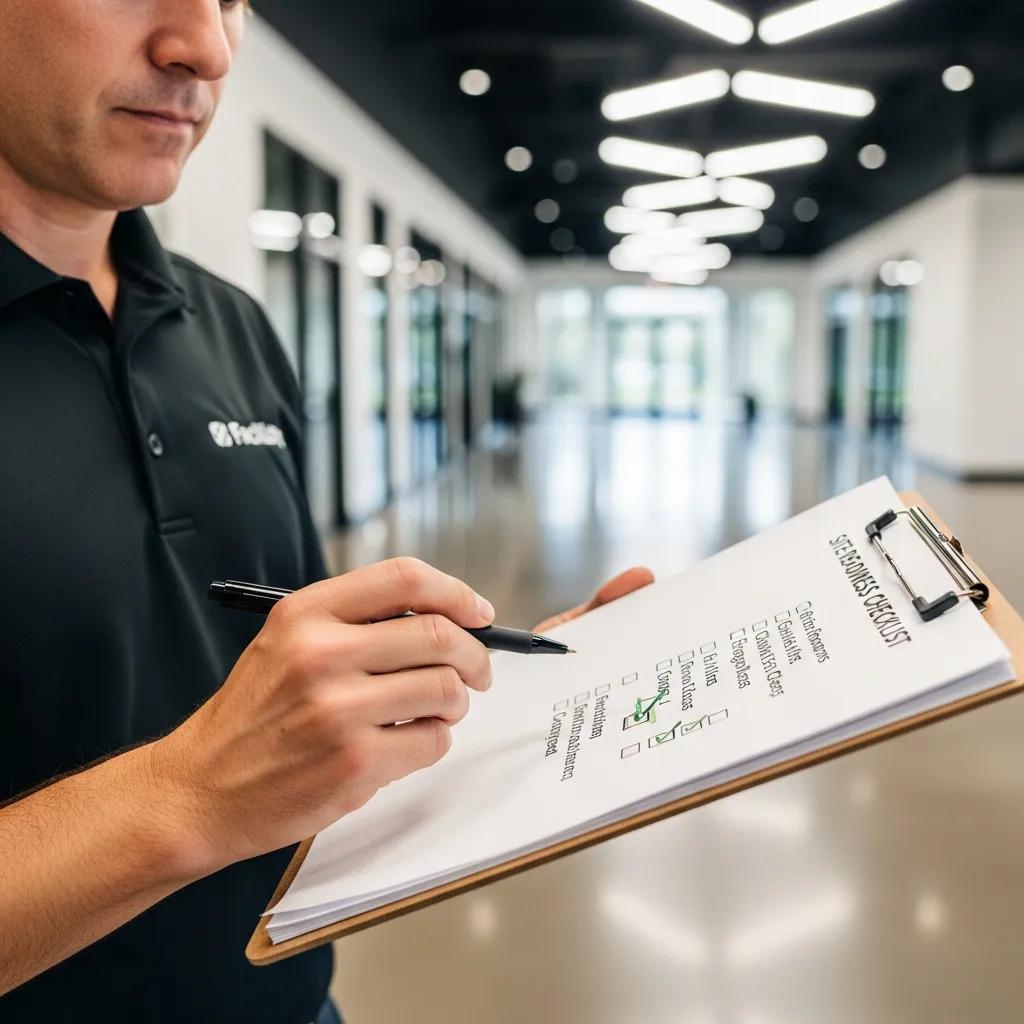
Site readiness for move‑in means the property meets basic health, safety, and operational checks: clear egress, functioning lighting and plumbing, acceptable indoor air quality, and no loose debris that could cause hazards. Inspectors and facility managers commonly use a checklist that includes floors free of dust, sanitized restrooms and break areas, clean HVAC intakes and filters, and wiped light fixtures and windows — meeting these items reduces punch‑list delays. Good site readiness also addresses IAQ: removing fine dust from vents, using HEPA filtration during cleaning, and choosing reduced‑VOC products all improve air quality for incoming occupants. A practical move‑in checklist guides priorities and creates measurable sign‑off criteria for final walkthroughs.
What Are the Phases of Post-Construction Cleanup?
We organize post‑construction cleanup into three scalable phases — Rough Clean, Final Clean, and Touch‑Up/Sparkle Clean — each with distinct goals, tasks, and equipment aligned to construction milestones and inspections. Sequencing the phases reduces rework: remove heavy debris first, follow with detailed dust and surface cleaning, then finish with targeted touch‑ups for handover. Clear phase definitions help teams plan schedules, assign the right machines like HEPA vacuums and floor scrubbers, and set safety rules for crews working near trades or newly installed systems. The numbered list below gives a quick reference for each phase.
- Rough Clean: Clear large debris, packaging, and hazardous waste so trades can work safely and areas are accessible.
- Final Clean: Perform detailed surface cleaning, HVAC intake and vent cleaning, floor care, and window/fixture polishing to prepare the space for move‑in.
- Touch-Up / Sparkle Clean: Complete spot cleaning and polishing after final trades or tenant fit‑out so the space presents perfectly.
Below is a quick comparison to help facility managers choose which phase matches their project timeline and resources.
This EAV table compares the standard phases, typical tasks, and common time/equipment expectations for commercial projects.
| Phase | Typical Tasks | Time & Equipment Required |
|---|---|---|
| Rough Clean (Rough clean phase) | Debris removal, waste sorting, temporary dumpster staging, basic sweeping | Multi‑day for large sites; heavy‑duty vacuums, wheelbarrows, construction dumpsters |
| Final Clean (Final clean phase) | HEPA vacuuming of surfaces, window cleaning, restroom and kitchen sanitation, floor scrubbing | 1–3 days typical; HEPA vacuums, floor scrubbers, microfiber systems |
| Touch-Up / Sparkle Clean (touch-up/sparkle clean) | Targeted polishing, dusting after trades, final inspections and sign-off | Hours to a day; hand tools, polishers, lint‑free cloths |
This phase comparison shows how work steps up from waste management to fine‑detail cleaning, which helps teams forecast equipment and labor at each milestone.
How Does McCoy Maintenance Ensure Effective Post-Construction Cleaning?
McCoy Maintenance starts every post‑construction job with a site assessment that defines scope, cleanliness targets, and a cleaning schedule sized to the handover timeline. We combine proven equipment — HEPA filtration vacuums, floor machines, and electrostatic sprayers — with eco‑friendly product options to control dust, protect indoor air quality, and speed final sanitation. Our crews are trained, insured, and background‑checked; they follow documented quality checkpoints and complete final walkthroughs to confirm punch‑list items are addressed. Thoughtful planning, the right tools, and trained people are how we deliver dependable move‑in results. The next section explains how we build those customized plans.
Customized Cleaning Plans Tailored to Commercial Construction Projects
A customized cleaning plan starts with a walkthrough that records surface types, dust levels, and trade sequencing to decide whether a site needs an intensive rough clean or an expedited final clean. Plans vary by building type — office, retail, or industrial — and prioritize tasks accordingly: heavy floor care for warehouses, meticulous window and façade work for storefronts, and so on. Plans include HVAC intake protection, filter coordination, and a final sign‑off list aligned with owner and inspector expectations so the cleaning scope maps directly to punch‑list items. This assessment‑driven approach dictates the equipment and products we use to meet the schedule efficiently. For specialized construction cleaning in Macomb County, our tailored plans ensure every detail is covered.
Use of Advanced Equipment and Eco-Friendly Products
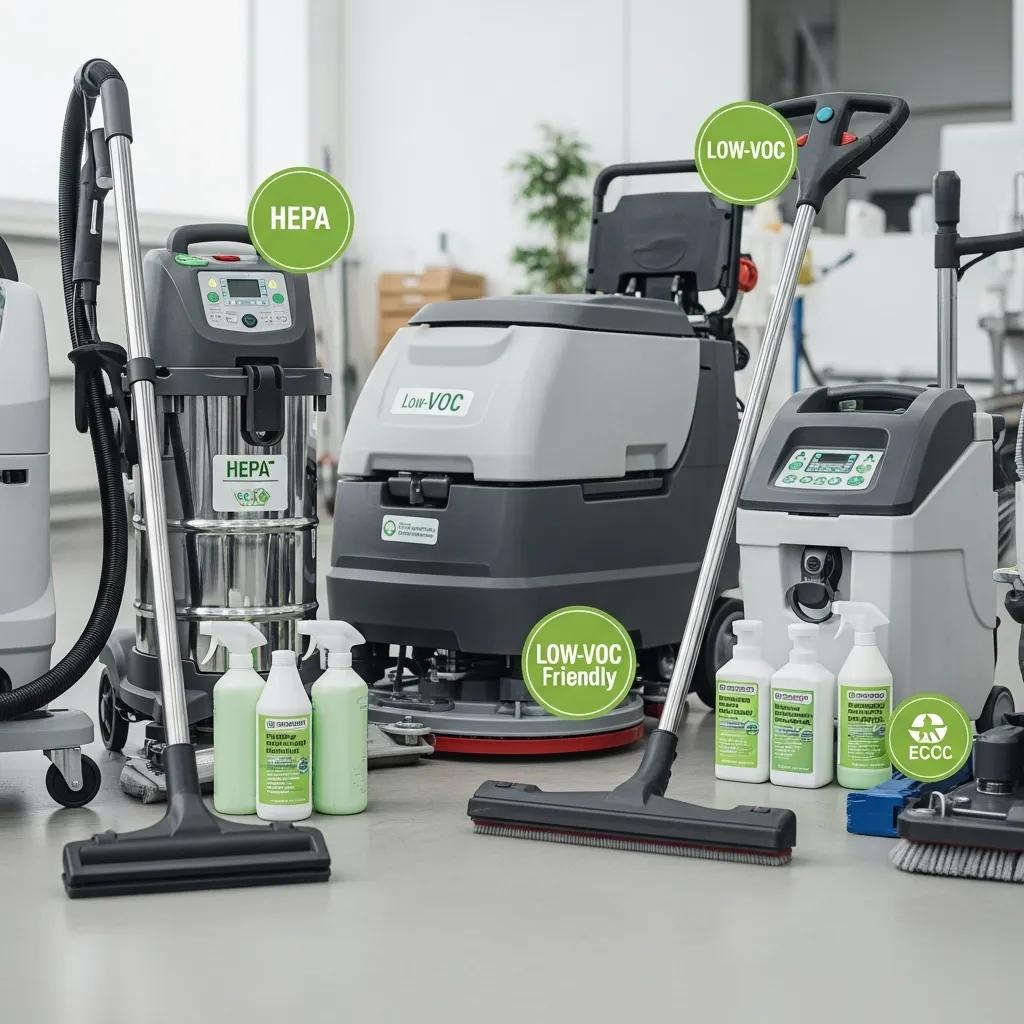
We rely on equipment that improves results and reduces recontamination: HEPA vacuums for particulate control, floor scrubbers for finish prep, and electrostatic sprayers for fast, even surface disinfection. Low‑VOC, eco‑friendly chemistries and microfiber systems help protect indoor air quality while still delivering thorough sanitation. Using these tools together increases efficiency and lowers the risk of rework: HEPA vacuum → fewer airborne particulates; electrostatic sprayer → better surface coverage and disinfection. Properly trained crews operating this gear complete high‑quality cleans faster and safer, which ties directly into the safety and compliance practices that follow.
What Safety and Compliance Standards Guide Post-Construction Cleanup?
Safety and compliance are built on OSHA‑aligned practices, site hazard assessments, and consistent PPE use to protect crews and future occupants. Following established guidance helps prevent incidents and ensures hazardous waste handling, respirator use during high‑dust operations, and confined‑space awareness are managed properly. Environmental and green‑cleaning requirements also influence product choices and waste‑diversion methods, improving indoor air quality and reducing environmental impact. The sections below outline required PPE, training, and practical green‑cleaning steps that protect workers and occupants alike.
OSHA Guidelines and Personal Protective Equipment Usage
OSHA guidance calls for hazard assessments and appropriate PPE when workers face airborne particulates, chemical exposures, or fall risks during cleanup. Typical PPE on post‑construction sites includes respirators or N95 masks for high‑dust work, eye protection when using sprays or mechanical scrubbing, gloves for chemical handling, and high‑visibility clothing around active trades. Training on correct donning, doffing, and maintenance of PPE is essential. Keeping hazard assessments and crew training documented supports consistent safety practices across shifts and subcontractors. Clear safety protocols reduce incidents and help teams implement green‑cleaning measures that further protect indoor air quality.
Implementing Green Cleaning Practices for Health and Sustainability
Green cleaning favors reduced‑VOC products, microfiber materials that capture dust, and waste‑diversion strategies that recycle construction materials when possible — lowering environmental impact and improving occupant health. Choosing eco‑friendly cleaners and HEPA filtration equipment follows a simple logic: eco‑friendly products → lower VOCs → better indoor air quality. Integrating green practices into the cleaning plan can support LEED goals or owner sustainability requirements and be documented for reporting. These steps cut long‑term environmental costs while complementing safety procedures already in place.
How Are Costs and Scheduling Managed for Post-Construction Cleaning Services?
Cost and schedule depend on measurable factors — project square footage, dust and debris levels, surface complexity, and site access — and are best determined through an on‑site assessment. Clear quotes include labor hours, required equipment like HEPA vacuums or scrubbers, disposal logistics, and any specialized services such as duct cleaning or electrostatic disinfection. Scheduling flexibility — night or weekend shifts, phased cleaning tied to punch‑lists, and rapid touch‑ups — reduces business interruption and helps meet handover dates. The table below outlines the main cost drivers and how they typically impact pricing so stakeholders can see what changes scope and price.
This EAV table explains common cost drivers, how they affect pricing, and the typical range of impact so clients can see what increases scope.
| Project Characteristic | Pricing Factor | Typical Range of Impact |
|---|---|---|
| Project size (sq ft) | Labor hours and equipment needs | High — larger sites scale linearly with crew size |
| Dust level / contamination | Specialized filtration & cleaning intensity | Medium–High — heavy dust increases HEPA and labor needs |
| Surface complexity (carpet, stone, glass) | Method-specific equipment and dwell time | Medium — delicate surfaces require slower, specialized care |
| Access & staging constraints | Time for setup and waste removal logistics | Low–Medium — tight sites raise labor and schedule coordination |
This comparison explains why two projects with similar square footage can vary widely in cost depending on finishes, contamination levels, and logistics. On‑site assessments and scheduling choices finalize accurate quotes.
Factors Influencing Pricing for Commercial Construction Cleanup
Pricing drivers include total square footage, particulate contamination levels, the number of specialized surfaces (commercial carpet, stone floors, high windows), and additional services like duct cleaning or electrostatic disinfection. High dust loads require HEPA‑grade filtration and more labor; delicate finishes that need hand polishing increase time per area. Tight access or staging limits add mobilization time and cost. Documenting these variables during an on‑site assessment produces clear, defensible quotes and helps project managers prioritize tasks to control costs without sacrificing readiness. For reliable janitorial services in Oakland County, we provide transparent pricing and flexible scheduling.
Project Timelines and Flexible Scheduling Options
Timelines depend on project size: a small tenant space may need one day for a final clean, while larger commercial builds often require multiple days across rough and final clean phases plus a short touch‑up before turnover. Flexible scheduling — night crews, weekend work, or phased cleaning tied to trade completion — minimizes tenant disruption and meets fixed handover dates. Phased scheduling also enables early occupancy of critical areas like retail fronts or core systems while less critical zones finish later. For exact timing and a tailored quote, request an on‑site assessment or free estimate from McCoy Maintenance so cleaning windows match construction milestones.
Where Does McCoy Maintenance Provide Post-Construction Cleaning Services?
McCoy Maintenance serves commercial and residential clients across Macomb County, Oakland County, and Wayne County, including cities like Royal Oak, Troy, Sterling Heights, Warren, and Detroit, with local teams who understand regional permitting, inspection practices, and common building types. A local presence lowers mobilization time and simplifies coordination with general contractors and property managers; familiarity with area codes helps avoid last‑minute compliance issues. Typical projects in our service area include offices, retail spaces, and industrial facilities where timely site readiness matters for tenant moves and business openings. The section below confirms service coverage and offers short case‑study teasers that show site‑readiness outcomes.
Service Areas: Macomb County, Oakland County, and Metro Detroit
McCoy Maintenance operates throughout Macomb County, Oakland County, and the greater Metro Detroit area, including communities such as West Bloomfield, Novi, Rochester Hills, Clinton Township, and St. Clair Shores, bringing local knowledge to logistics like waste disposal and regional inspection timelines. Being locally owned and operated lets our teams respond quickly to schedule changes and coordinate with nearby subcontractors when staging equipment or hauling large debris. Local providers offer faster response times, established supplier networks, and hands‑on experience with the building types common to each county — a practical advantage for on‑time handovers. If you’re looking for a trusted office cleaning company in Detroit, our local teams are ready to assist.
Local Case Studies Demonstrating Site Readiness Success
Here are two anonymized case teasers using a challenge → action → outcome format to show how organized cleaning produces move‑in readiness. In an office renovation with heavy dust in Royal Oak, we used intensive HEPA vacuuming and multiple final cleans while phasing work to clear core areas first — the project achieved on‑time occupancy. In a retail shell fit‑out in Sterling Heights, focused floor care and window restoration removed adhesives and films, leaving a storefront ready for merchandising within 48 hours of final trade completion. These examples show how assessing contamination, choosing the right equipment, and scheduling targeted phases deliver reliable site readiness.
Why Choose McCoy Maintenance
- Local Expertise: Knowledge of regional inspection processes helps speed approvals for projects across Macomb, Oakland, and Wayne Counties.
- Quality Assurance: Trained crews and documented sign‑off checklists keep results consistent, ensuring your property is handled by a top commercial cleaning company.
- Sustainability Options: Eco‑friendly cleaning choices reduce VOC exposure and support healthier IAQ.
These qualities show how McCoy Maintenance pairs operational capability with client‑focused service to deliver dependable site readiness. To learn more about our commitment to excellence, check out our Commercial Cleaning Company Detroit Google Business Profile.
- Debris Removal Best Practices: Sort materials for recycling and segregate hazardous waste to minimize landfill impact.
- Dust Control Techniques: Use HEPA vacuums and negative‑pressure containment when needed to limit cross‑contamination.
- Final Sign-Off Checklist: Confirm HVAC intake cleaning, restroom sanitation, light fixture wiping, and floor finish inspection to ensure inspector readiness.
These practical procedures and local case examples are steps project teams can adopt to secure timely occupancy.
Your Complete Guide to Post-Construction Cleanup & Site Readiness — Commercial Cleaning Done Right
Frequently Asked Questions
What types of properties benefit from post-construction cleaning services?
Post‑construction cleaning fits a wide range of properties: offices, retail stores, medical suites, warehouses, and industrial facilities. Each property type has different priorities — retail often needs detailed window and floor work for presentation, while industrial sites focus on heavy debris removal and equipment areas. The goal is the same across property types: a safe, clean, welcoming environment ready for occupants.
How can I ensure my post-construction cleaning is environmentally friendly?
Ask for eco‑friendly products with low VOCs, HEPA filtration equipment, and a waste‑diversion plan. Reputable cleaners will offer microfiber systems, reduced‑chemical protocols, and recycling for recoverable construction materials. These choices support sustainability goals and help improve indoor air quality for future occupants. Put green practices in the scope so they’re part of the final sign‑off.
What should I look for in a post-construction cleaning service provider?
Look for experience with commercial projects, the right equipment (HEPA vacuums, scrubbers, electrostatic sprayers), and documented safety practices that follow OSHA guidance. Confirm crews are trained and insured, and ask for references or case studies. Clear communication, a written scope tied to punch‑list items, and a final sign‑off process are signs of a reliable provider.
How long does post-construction cleaning typically take?
Time varies by size and condition. Small tenant spaces may need one day for a final clean, while larger commercial sites can take several days covering rough, final, and touch‑up phases. Dust level, surface types, and access constraints all affect the timeline. An on‑site assessment gives the most accurate estimate.
What are the common challenges faced during post-construction cleaning?
Common challenges include heavy debris removal, controlling dust without recontaminating cleaned areas, and coordinating cleaning with remaining trades. High dust levels require HEPA filtration and more labor; tight access or late change orders can force rework. Early planning and open communication with contractors reduce these risks.
Are there specific safety measures that should be taken during post-construction cleaning?
Yes. Conduct a hazard assessment, require appropriate PPE (respirators or N95s for dusty work, eye protection, gloves, high‑visibility gear), and follow handling procedures for hazardous materials. Ensure proper ventilation during cleaning and document crew training and equipment maintenance. Compliance with OSHA standards keeps everyone safer and supports a healthier final space.
Conclusion
Post‑construction cleanup is the final step that turns a construction project into a safe, welcoming, and code‑ready space. Using the right equipment and green‑minded products improves indoor air quality and speeds occupancy. Knowing the phases of cleanup and what “site readiness” requires helps project teams close out on time and on budget. For tailored cleaning plans that fit your schedule and standards, contact our team — we’ll work with you to get the space ready for move‑in.
**