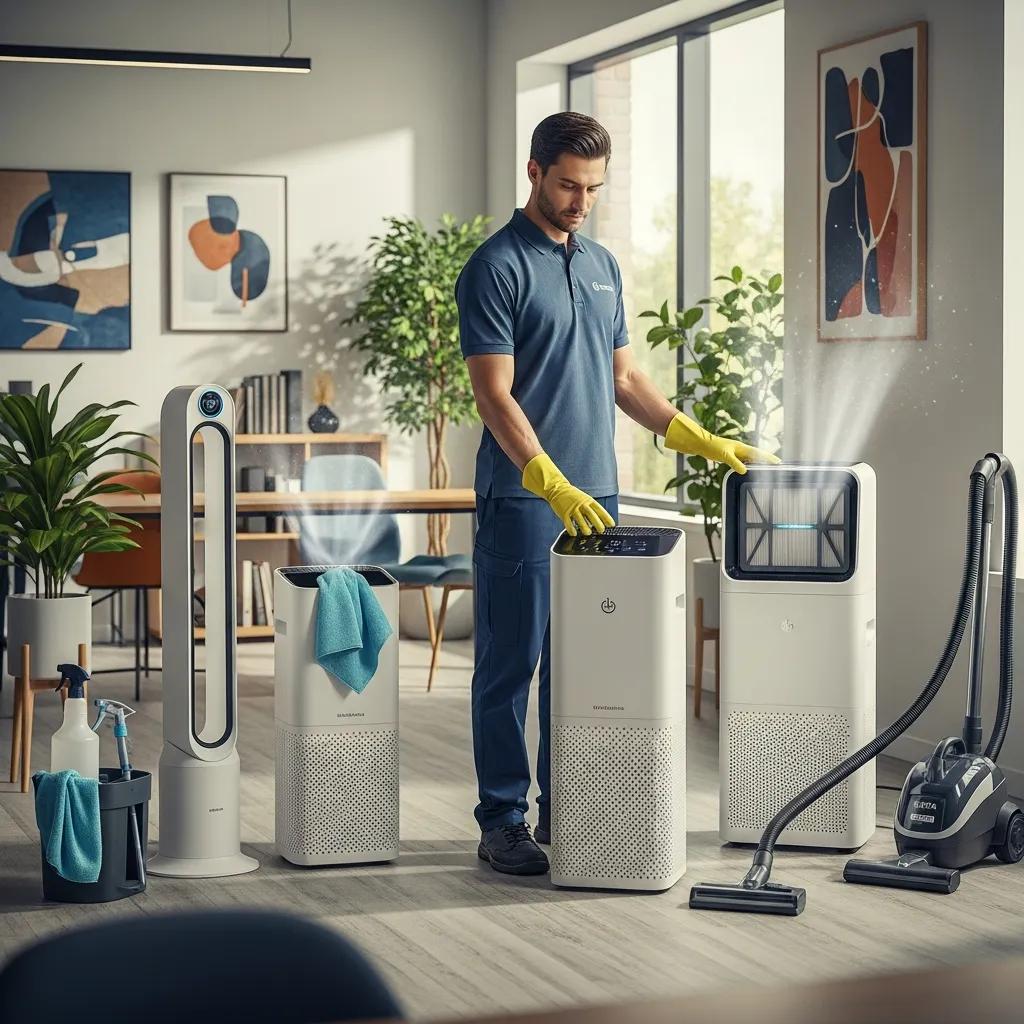
Commercial Odor Removal & Air Purification — Practical, Professional Solutions for Businesses
At McCoy Maintenance, a leading **commercial cleaning company** in Metro Detroit, we combine targeted odor remediation with engineered air-filtration to protect building occupants, preserve your brand’s reputation, and restore comfortable indoor air. This guide walks facility managers and building owners through common commercial smells, why they matter for indoor air quality (IAQ) and productivity, and which technologies and workflows work best. You’ll read how fogging and targeted cleaning tackle stubborn odors, how HEPA, UV-C, and activated carbon address different contaminants, and what operational factors affect cost and scheduling. We also explain how to choose systems, coordinate HVAC interventions, and maintain IAQ long term so your team can reduce complaints and downtime. Finally, learn how McCoy Maintenance supports commercial clients with practical fogging, odor removal, and air-purification recommendations.
Common Commercial Odors and How They Affect Your Space
Most commercial odors come from clear sources and follow predictable paths that can harm indoor air quality, customer perception, and employee focus. Smells usually come from particles, volatile organic compounds (VOCs), microbial byproducts, or trapped gases that cling to HVAC systems and porous materials. Tackling the source and the materials that hold odors—carpets, upholstery, ducts, and HVAC components—gives longer-lasting results than masking smells with fragrances. Properties that remove the root cause see fewer repeat complaints, lower repair costs, and healthier occupants. As experienced **commercial cleaning companies** know, addressing the root cause is key. Below are the most common odor types and the business impacts to help you prioritize fixes.
Typical commercial odor categories include:
- Smoke and tobacco: Particulates and tar embed in fabrics and HVAC parts, leaving long-lasting odor and stains.
- Food and cooking (restaurants/kitchens): Grease and cooking VOCs cling to ducts, hoods, and surfaces and can spread through ventilation.
- Mold and mildew: Microbial VOCs (mVOCs) signal moisture problems and can indicate health and building-damage risks.
- Chemicals / VOCs: Off-gassing from cleaners, paint, or stored products creates sharp, irritating smells that reduce comfort.
- Bio-odors and waste: Restroom and waste-related smells harm perceived cleanliness and can escalate quickly when plumbing or drains fail.
Each of these odor classes can worsen IAQ metrics—particle counts and VOC levels—and often prompts customer complaints or reduced worker concentration. Knowing how a smell behaves in your space helps pick the right cleaning tactics and air-purification tools, which we cover next.
Which Odor Sources Commonly Affect Offices, Restaurants, and Industrial Sites?
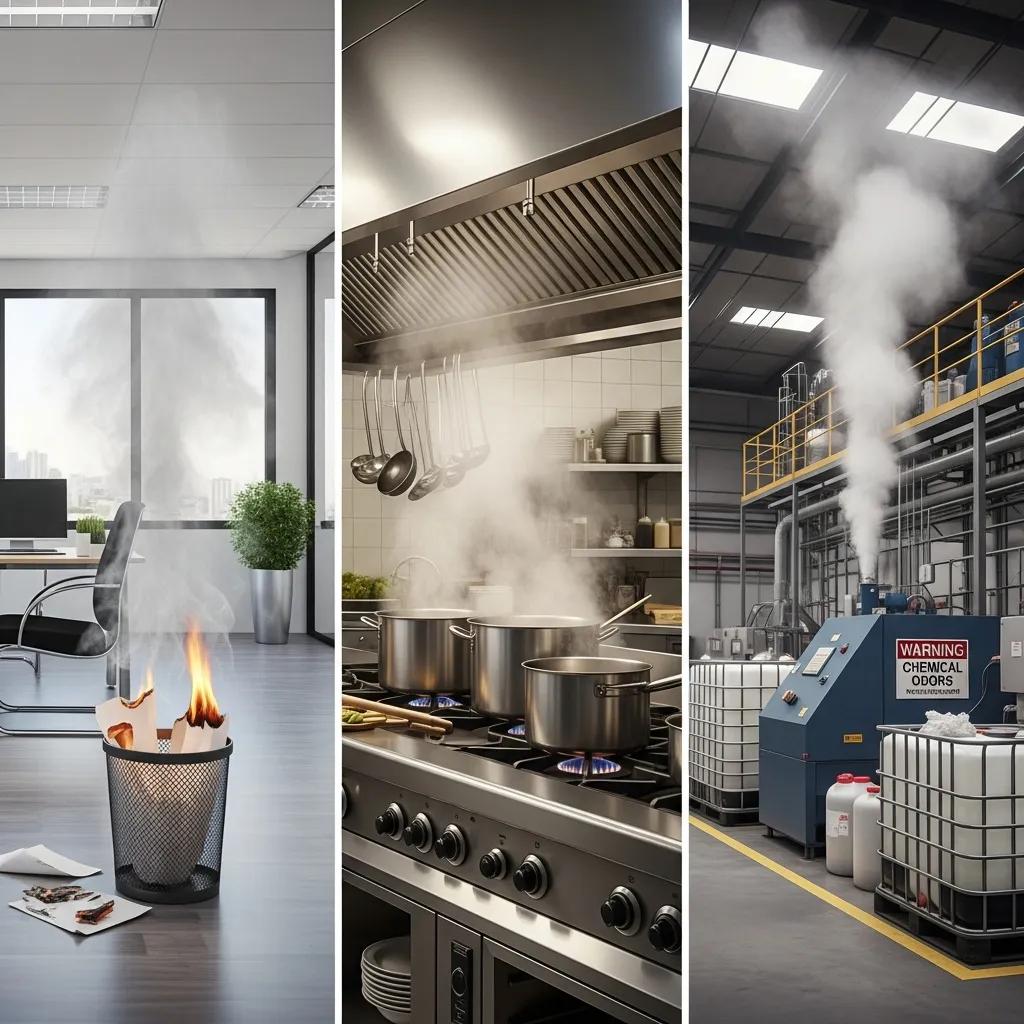
Different industries have different odor drivers, and identifying the main source is the first step in remediation. Offices usually contend with breakroom smells, VOCs from supplies, and recirculated odors from HVAC—solutions here focus on source control, improved ventilation, and targeted filtration. For comprehensive office cleaning in Royal Oak, our team provides tailored solutions. Restaurants deal with grease, smoke, and intense culinary VOCs that settle in hoods, ducts, and dining fabrics—these need hood/duct cleaning, grease extraction, and activated carbon adsorption. Industrial facilities may face chemical off-gassing, solvent smells, or process odors that need containment, specialized air scrubbing, and strict safety measures. Pinpointing the industry-specific source guides whether to prioritize deep cleaning, fogging, HVAC work, or engineering controls. The next section explains how odors translate into IAQ measurements and workplace impact.
How Do Malodors Affect Indoor Air Quality and Worker Performance?
Malodors often come with measurable IAQ decline—higher particulates, elevated VOCs, and more microbial indicators—which affects comfort and health. Strong odors and irritants can trigger headaches, eye and throat irritation, and cognitive strain that lowers focus and productivity. For customer-facing businesses, odors also reduce perceived cleanliness and repeat visits. Persistent smells often point to moisture or contamination problems that, if ignored, damage materials and increase repair costs. Treating both the source and the distribution paths—ducts, fabrics, and porous surfaces—reduces airborne contaminants and restores a stable indoor environment. That’s why remediation plans usually combine fogging, filtration, and targeted cleaning; we’ll outline those approaches next.
How McCoy Maintenance Approaches Commercial Odor Removal
We follow a clear diagnostic-to-verification workflow: find the source, treat affected materials and systems, then confirm the odor is gone. Typical steps include an initial assessment, deep cleaning of surfaces and textiles, HVAC and duct work, fogging or deodorization where appropriate, and a post-service check or client walk-through. We focus on removing the source and restoring materials rather than masking odors, which delivers more durable results for busy commercial spaces. As a trusted **commercial cleaning company**, our service plans are tailored to your operations to limit downtime and keep business running while we eliminate odors and improve IAQ.
The table below compares common odor-removal techniques and how they typically fit different business types to help facility teams choose the right mix of treatments.
| Technique | What It Treats | Typical Business Fit |
|---|---|---|
| Targeted deep cleaning | Residues in carpets, upholstery, and fixtures | Offices, hotels, restaurants |
| Fogging (disinfectant aerosolization) | Airborne and surface contaminants, including odor-causing microbes | Medical offices, retail, shared spaces |
| HVAC interventions (filter changes, duct cleaning) | System-borne odors and recirculated particulates | All facilities with central HVAC |
| Localized deodorization/adsorption | VOCs and grease odors using adsorbent media | Restaurants, labs, chemical storage areas |
Each method has trade-offs: deep cleaning eliminates reservoirs, fogging treats broad airborne and surface contamination, and HVAC work stops recontamination. Together they form a comprehensive remediation plan. Below we explain fogging in more detail and when to combine it with other methods.
What Is Fogging and When Should You Use It?
Fogging disperses a hospital-grade virucidal/bactericidal disinfectant as a fine mist so droplets reach exposed surfaces and airborne particles. It helps reduce odor-causing microbes and some volatile residues, especially where direct cleaning is hard or a quick broad-area sanitize is needed. For professional fogging services in Troy, McCoy Maintenance ensures proper application as part of a staged plan—it doesn’t remove ingrained residues from porous materials—so combine it with source removal and HVAC attention. Proper application matters: follow dwell times, ventilation guidance, and re-entry rules. After fogging, we verify results and complete follow-up cleaning to lock in long-term odor reduction and occupant safety.
Which Specialized Techniques Are Best for Smoke, Pet, Mold, and Restaurant Odors?
Specialized odors require targeted combinations of mechanical cleaning, chemical treatment, and system-level fixes. For smoke: extract textiles, clean surfaces, change HVAC filters, and use fogging to address lingering odor molecules. Our commercial carpet cleaning services in Sterling Heights can effectively remove embedded smoke residues. For pet odors: enzymatic cleaners, spot upholstery treatment, and filtration to remove dander and odor compounds. For mold and mildew: stop the moisture source, use antimicrobial cleaning, and remove or repair affected materials—then verify humidity control. For restaurant odors: degrease hoods and ducts, use activated carbon or catalytic adsorption for VOCs, and increase routine maintenance to prevent grease buildup. When planning work, account for downtime, occupant safety, and HVAC or scrubbing needs to avoid re-depositing contaminants.
Commercial Air Purification Options That Improve IAQ
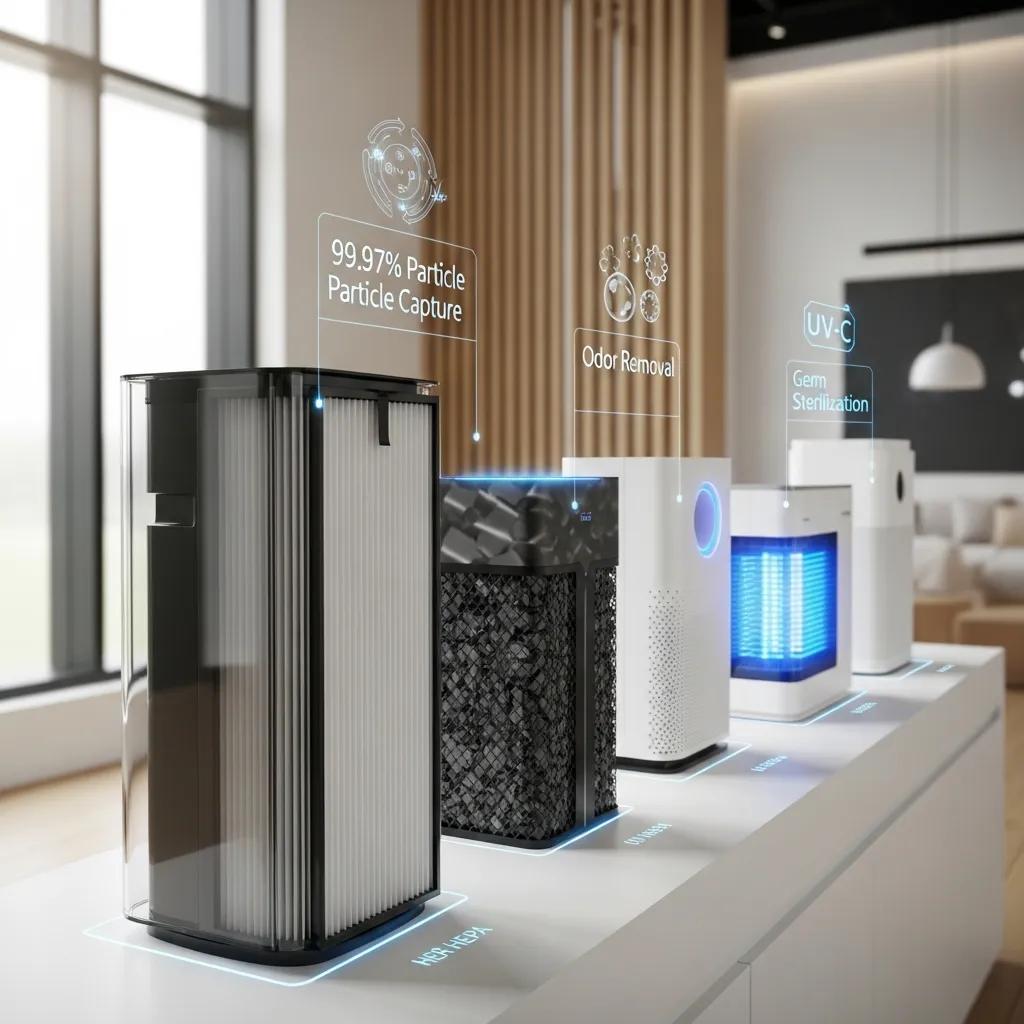
Commercial air-purification technologies tackle contaminants in different ways: filtration, adsorption, UV-C inactivation, and mechanical scrubbing. HEPA filters remove fine particulates like smoke and dust; activated carbon adsorbs VOCs and odors; UV-C inactivates biological contaminants in air or ducts; and air scrubbers combine media with high airflow for post construction cleaning or remediation projects. Integrating solutions with HVAC gives whole-building control, while portable units and local scrubbers target problem areas. Choosing the right system depends on the contaminant profile, airflow patterns, maintenance capacity, and how quickly you need results.
When evaluating systems, facility managers should consider:
- Contaminant type: Are particles, VOCs, or pathogens the main concern?
- Coverage needs: Do you need whole-building HVAC integration or targeted portable units?
- Maintenance cadence: How often can filters, media, or lamps be serviced or replaced?
| Technology | Mechanism | Best-Use Case | Maintenance Cadence |
|---|---|---|---|
| HEPA Filtration | Mechanical capture of particles down to 0.3 µm and smaller | Offices, clinics, smoke-affected spaces | Check or change filters every 3–12 months depending on load |
| Activated Carbon | Adsorption of VOCs and odor molecules | Restaurants, labs, chemical storage areas | Replace or recharge media every 3–12 months |
| UV-C Systems | Germicidal radiation that inactivates pathogens | Healthcare settings, in-duct sterilization, high-occupancy areas | Lamp replacement typically annually; follow safety protocols |
| Air Scrubbers | High-flow filtration and adsorption for heavy loads | Construction sites, remediation projects, events | Inspect before/after projects; replace filters after heavy use |
No single technology fixes every problem—layering HEPA, carbon, and UV-C often gives the best, most resilient IAQ. The next section describes how these technologies perform in everyday business settings and their practical pros and cons.
How HEPA, UV-C, and Activated Carbon Work in Real-World Business Settings
HEPA filters trap airborne particles and reduce PM2.5 and larger particulates that carry smoke and allergens; they work best when sized correctly for a room’s CADR and integrated into HVAC or portable units. UV-C emits germicidal wavelengths that disrupt microbial DNA/RNA, lowering viable pathogens in ducts or upper-room installations—but UV-C doesn’t remove particles or odors on its own, so pair it with filtration. Activated carbon adsorbs VOCs and odor molecules and is the go-to for grease and chemical smells in kitchens and labs. All systems need regular maintenance—filter changes, lamp swaps, and media refreshes—to keep performance steady; budget and access will determine whether portable units, HVAC retrofits, or combined systems fit your needs.
Benefits of HVAC Upgrades and Air Scrubbers
Upgrading HVAC filtration, adding in-duct treatment, or deploying air scrubbers reduces contaminant levels continuously, extends equipment life by cutting particulate load, and improves occupant comfort and perceived cleanliness. HVAC-level changes deliver building-wide improvements and can reduce spot-cleaning frequency and odor complaints, while portable scrubbers are a cost-effective way to handle temporary jobs or problem areas without major system changes. The ROI includes fewer complaints, lower absenteeism from improved IAQ, and reduced emergency remediation costs when contamination events happen. Choosing between HVAC upgrades and portable scrubbers depends on long-term goals, available capital, and how quickly you must restore acceptable air quality—our pricing and planning section outlines those trade-offs.
Why McCoy Maintenance for Odor Elimination and Air Sanitization in Detroit?
Choosing a partner for odor removal and air sanitization should come down to experience, responsiveness, customizable plans, and local presence. McCoy Maintenance is a local, family-operated team serving Macomb, Oakland, and Metro Detroit. For reliable **commercial cleaning services** across Wayne County, including Detroit, we are your trusted partner. Our services include office cleaning, janitorial services, commercial carpet and upholstery cleaning, floor care, hospital-grade fogging, construction cleanup, odor removal, and air-purification recommendations. We focus on tailored plans, flexible scheduling, and insured, background-checked technicians so your operations stay protected and disruptions are minimized. Learn more about our commitment to quality on our McCoy Maintenance homepage. For a closer look at our customer reviews and local presence, visit our McCoy Maintenance Google Business Profile in Detroit.
Key factors businesses should weigh when selecting a provider:
- Customization: Can the provider tailor work to your hours and occupancy?
- Verification: Do they offer post-service checks to confirm odor removal?
- Local footprint: Are they responsive and familiar with local building types and codes?
The next section summarizes McCoy Maintenance’s core value points and service area so you can judge operational fit quickly.
What Sets McCoy Maintenance Apart?
McCoy Maintenance backs services with a 100% satisfaction approach, customized cleaning plans, flexible scheduling, and professional, insured staff. We design plans to reduce disruption—working after hours or in phases when needed—so you can keep serving customers while we fix problems. Our technicians are background-checked and insured to lower liability risk. We also offer hospital-grade fogging as part of our odor-removal toolkit for sites needing wide-area treatment. Those features help clients resolve IAQ and odor issues with proven methods rather than temporary fixes.
Who We Serve and Where
We work with offices, restaurants, medical offices, property managers, and other commercial clients across Macomb County (including Sterling Heights, Clinton Township, and Warren), Oakland County (such as Royal Oak, Troy, West Bloomfield, and Rochester Hills), and throughout Metro Detroit, including Eastpointe, St. Clair Shores, Grosse Pointe, Roseville, and Novi. Our regional focus means faster response times and service plans tailored to local building stock and climate-driven IAQ issues. For multi-site organizations or operations with complex hours, our local experience and flexible scheduling can be a real operational advantage.
How Much Should You Expect to Pay?
Pricing for odor removal and air purification varies with a few predictable factors rather than fixed rates. Costs increase with square footage, severity of contamination (heavy smoke or mold raises scope), the equipment required (HEPA scrubbers, activated carbon, HVAC upgrades), and after-hours work. One-time remediation and recurring maintenance have different pricing models—regular programs spread mobilization and equipment costs over time. A site assessment that documents contaminant types and building systems produces a reliable scope and budget and helps decide if targeted work or capital upgrades are the most cost-effective long-term.
| Service Aspect | Pricing Factor | Example Scope Consideration |
|---|---|---|
| Square footage & access | Labor and equipment hours | Small office vs full-floor restaurant |
| Odor source severity | Cleaning depth and materials | Light cooking odor vs heavy smoke saturation |
| Required equipment | Specialized units and consumables | HEPA scrubbers, activated carbon cartridges |
| Frequency & scheduling | Recurring contracts vs one-off | Ongoing maintenance reduces per-visit cost |
These variables—size, severity, equipment, and schedule—drive cost. A tailored proposal after an inspection gives the best budgeting clarity. Below we outline the specific cost drivers and confirm how we work with your schedule.
Key Factors That Influence Price
Price depends on area layout and size, the odor’s type and persistence, HVAC and duct condition, turnaround time (including after-hours needs), and whether materials must be replaced or restored. A small office with a localized cooking smell will usually cost less than a restaurant with grease-saturated ducts or a building heavily impacted by smoke. Adding in-duct UV-C or filter upgrades raises materials and labor costs, and renting or deploying high-capacity air scrubbers adds to the budget for heavy-load jobs. We start with an assessment that may include air sampling and material inspection so work can be scheduled to minimize disruption.
Do You Offer Customized Plans and Flexible Scheduling?
Yes—custom plans and flexible scheduling are core to how we operate. We phase disruptive tasks for low-occupancy periods, run after-hours shifts when needed, and offer recurring maintenance contracts. Custom plans sequence HVAC work to prevent recontamination and set verification steps that confirm odor elimination before reoccupancy. Flexible scheduling keeps revenue loss to a minimum for high-traffic businesses and lets our team coordinate access with property managers to complete work efficiently.
Frequently Asked Questions
What signals mean my business needs professional odor removal?
If unpleasant smells linger despite regular cleaning, customers complain about air quality, or odors spike during certain activities (cooking, cleaning), it’s time to consider professional help. Employee reports of headaches, eye irritation, or breathing issues tied to odors also indicate underlying problems. Regular inspections and air-quality checks help catch issues early so you can act before they become bigger problems.
How often should businesses maintain air-purification systems?
Maintenance depends on usage and technology. Generally, check HEPA filters every 3–12 months based on load; activated carbon media should be replaced or recharged on a similar schedule depending on VOC exposure; UV-C lamps typically need annual replacement. Establishing a routine makes systems more reliable, extends equipment life, and keeps IAQ steady.
Can air purification help with allergies and asthma in commercial spaces?
Yes. HEPA filtration captures allergens like dust, pollen, and pet dander, which can reduce symptoms for people with allergies or asthma. UV-C can help reduce airborne pathogens that trigger respiratory issues. Proper system selection and maintenance are key to seeing these health benefits.
What should I consider when choosing an air-purification system?
Start by identifying the main contaminants, the size and airflow of the space, and your maintenance capacity. Decide whether whole-building HVAC integration or portable units will work better for coverage and budget. Also consider long-term serviceability and downtime needs. A professional assessment helps match the right system to your specific challenges.
How do I combine odor removal and air purification effectively?
Begin with source identification, then use a layered approach: targeted cleaning to remove reservoirs, HVAC work to stop redistribution, and air-purification systems for continuous control. Regular maintenance, monitoring, and staff training on waste and source control will make these measures more effective and durable.
What health and business benefits come from better indoor air quality?
Improved IAQ can reduce respiratory symptoms and allergies, lower sick days, and boost productivity and morale. For customer-facing businesses, cleaner air and fewer odors improve customer satisfaction and repeat visits. Investing in odor removal and air purification protects your people and your business reputation.
Conclusion
Professional commercial odor removal and air purification make workplaces healthier, more comfortable, and easier to run. By identifying odor sources and using proven techniques—deep cleaning, fogging, HVAC work, and the right air-purification mix—businesses can reduce complaints and downtime. McCoy Maintenance offers local, practical solutions tailored to your schedule and needs, whether you need dedicated **office cleaners** in Novi or comprehensive **commercial cleaning** in Warren. Contact McCoy Maintenance to discuss an assessment and a plan that fits your operation.