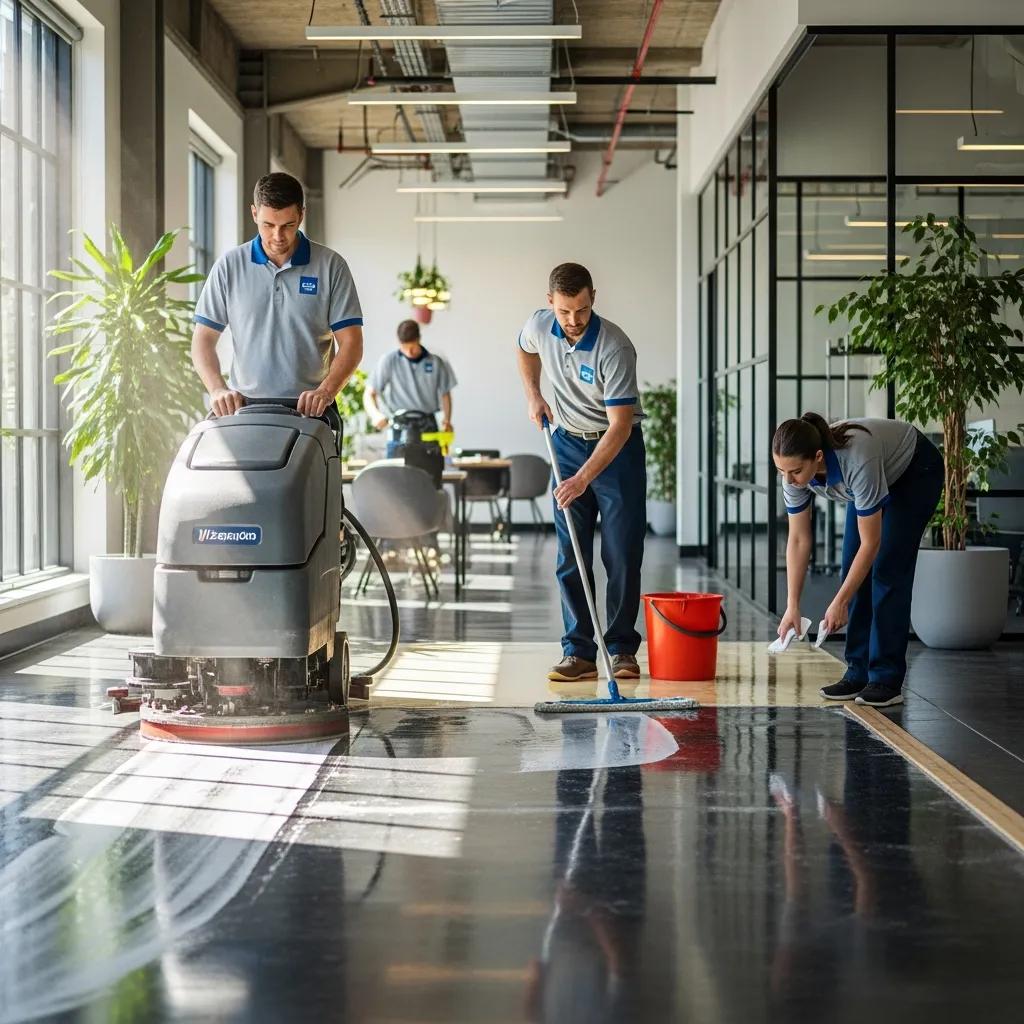
Elevating Detroit's Commercial Floors: Expert Stripping & Waxing
Strip-and-wax services restore worn hard floors, protect them from daily wear, and improve safety and appearance for employees and visitors. For businesses in Detroit, Royal Oak, and throughout Macomb, Oakland, and Wayne Counties, understanding these services is key to maintaining a professional environment. Below you’ll find a clear, practical guide to what floor stripping and waxing involve, why hiring professionals matters, which floor types need special care, and how to plan work to minimize downtime. Facility managers will get straightforward explanations of the chemistry and mechanics behind stripping, a step-by-step waxing workflow, suggested maintenance intervals by material and traffic level, and the cost factors that shape estimates. Helpful lists and comparison tables break down equipment, tools, and per-floor recommendations so you can move from reactive repairs to planned maintenance.
As a family-owned and operated commercial cleaning company, McCoy Maintenance has proudly served businesses across Macomb County, Oakland County, and Wayne County, including cities like Detroit, Sterling Heights, and Troy, since 1983. With over 40 years of experience, our fully trained and insured crews offer flexible scheduling, eco-friendly product options, customized plans, and a satisfaction guarantee to reduce disruption for your business.
What Are Commercial Floor Stripping and Waxing Services?
Commercial floor stripping and waxing are restorative maintenance steps that remove old finish and buildup, then apply a fresh protective coating to hard floors. Stripping uses chemical strippers plus mechanical agitation to lift multiple finish layers and embedded soils so the floor surface can bond with new product. Waxing — often called finishing — adds sealer and finish coats that create a uniform, durable surface with better shine, abrasion resistance, and easier day-to-day cleaning. Common tools include chemical strippers, automatic scrubbers, stripper pads, wet vacuums, burnishers, and multiple finish coats selected for the floor type.
We regularly service VCT, vinyl, linoleum, ceramic, and terrazzo. Our expert floor cleaners in Metro Detroit are adept at handling these diverse materials. Each material needs different prep and finish choices, which affect product selection and number of coats. Understanding these basics helps you schedule maintenance and plan for cure times; next we explain how stripping actually restores the surface.
How Does Floor Stripping Restore Commercial Floors?
Stripping combines solvent chemistry with mechanical scrubbing to remove aged finish layers, soils, and contaminants that hide the original floor. Stripper formulas break the polymer bonds in old finishes while scrubbers and abrasive pads agitate and lift the emulsified finish for extraction with wet vacuums. This uncovers surface issues and removes discoloration or buildup that causes dullness and prevents a new finish from adhering. After stripping, technicians neutralize any residue, rinse thoroughly, and confirm the surface is ready for sealer or finish to ensure long-term performance.
Stripping is needed when finishes show whitening, layering, deep scuffs, or when repeated recoating no longer produces a uniform result. It’s the foundation for a longer-lasting waxing program.
What Is the Floor Waxing Process and Why It Matters?
Waxing seals and finishes the floor to create a protective, easy-to-maintain surface that resists abrasion and simplifies daily cleaning. The process usually includes drying the surface, applying a sealer when required, then applying multiple finish coats with consistent technique and adequate dry time between coats to reach the desired gloss and durability. Options range from high-gloss acrylics to low-VOC, matte finishes chosen for slip resistance and sustainability. Coat count is driven by traffic expectations and manufacturer guidelines. The right finish reduces porosity, limits soil penetration, and lowers lifecycle cleaning costs by making routine upkeep and periodic burnishing more effective.
Regular interim maintenance — including neutral cleaning, dust-mopping, and periodic buffing — extends finish life and delays the need for a full strip-and-wax cycle. For comprehensive care, consider our expert commercial carpet cleaning services to maintain all your facility’s flooring. We give recommended intervals later on.
Why Choose Professional Floor Stripping and Waxing for Your Business?
Professionals bring the right training, equipment, and planning to protect your floors and keep operations safe. Trained crews select proven chemistries, correct pads, and calibrated machines to avoid substrate damage, ensure proper adhesion, and meet commercial health-and-safety standards. Hiring pros reduces risks like overstripping, chemical residue, and uneven finishes that speed wear or create slip hazards. We also schedule work to minimize disruption, turning emergency fixes into predictable preventive maintenance that preserves appearance and controls long-term costs.
Expect measurable benefits across three areas:
- Stronger first impressions: A consistent gloss and clean floors reflect well on your brand and staff.
- Lower slip/fall risk: Choosing the right finish helps maintain controlled traction for your environment.
- Reduced lifecycle costs: Preventive sealing and timely renewal slow substrate wear and postpone expensive replacements.
As a trusted commercial cleaning company in Metro Detroit, McCoy Maintenance is family-owned and operated, serving Macomb County, Oakland County, and Wayne County, including areas like Royal Oak, West Bloomfield, and Novi. In business since 1983 with 40+ years of experience, we provide fully trained and insured crews, flexible scheduling, eco-friendly options, custom plans, and a satisfaction guarantee.
How Do These Services Improve Appearance and Safety?

Strip-and-wax services remove scuffs, embedded soils, and uneven buildup that make floors look dull or patchy. A properly applied finish creates a uniform film that hides minor imperfections, resists new soils, and makes daily cleaning more effective. This is crucial for any office cleaning company aiming to provide a safe and inviting workspace. From a safety standpoint, we pick finishes with tested slip-resistance appropriate for retail, office, or healthcare settings so shine doesn’t come at the expense of traction. Cleaner, more reflective floors also make hazards easier to spot, helping with day-to-day safety and compliance.
These appearance and safety improvements support your branding and reduce liability exposure, while regular maintenance helps avoid premature replacement.
How Do They Extend Floor Life and Lower Costs?
Regular stripping and waxing act as preventive maintenance, shielding the substrate from abrasive wear and chemical staining and slowing material deterioration. By keeping a strong finish as the first line of defense, you delay costly replacements and major restorations. Lifecycle comparisons usually show that scheduled strip-and-wax work cuts total cost of ownership by reducing restorative interventions and lowering daily cleaning time. A planned maintenance schedule tied to traffic patterns makes budgeting predictable and helps facility managers protect assets.
Smart scheduling balances frequency with usage so you get steady performance without unnecessary expense.
Which Types of Commercial Floors Need Stripping and Waxing?
Hard floors require different care: some respond well to traditional strip-and-wax programs, while others need polishing, sealing, or grout-focused work. Knowing each material’s needs helps you choose the right restoration method and finish, and it sets realistic expectations for maintenance frequency and protection. Below is a comparison table showing common floor types, their maintenance needs, lifecycle notes, and recommended strip/wax frequency.
| Floor Type | Maintenance Need | Recommended Strip/Wax Frequency |
|---|---|---|
| VCT (Vinyl Composition Tile) | Regular recoating with periodic stripping to remove buildup | Every 6–12 months depending on traffic |
| Commercial Sheet Vinyl / LVT | Recoating for wear; strip only when finishes are compatible | 12–18 months or as the finish shows degradation |
| Linoleum | Use finish-compatible products; avoid harsh solvents | 12–18 months with careful, sensitive stripping |
| Ceramic Tile (glazed) | Focus on grout cleaning and sealing; tile rarely needs waxing | Stripping generally unnecessary; grout service every 12+ months |
| Terrazzo | Polishing and sealing; often honed/polished instead of waxed | Polish/resurface as needed; seal every 12–36 months |
What Are the Maintenance Needs of VCT and Vinyl Floors?
VCT and commercial vinyl do well with routine neutral cleaning, periodic buffing, and scheduled strip-and-wax cycles when finish buildup impacts appearance or traction. VCT typically needs more frequent recoating because it wears faster than engineered vinyl. Interim burnishing and neutral cleaning delay full stripping. For consistent upkeep, our professional janitorial services in Macomb County ensure your floors and entire facility remain pristine. Problems like yellowing from wrong chemicals or seam separation require targeted fixes only experienced crews should handle. Low-disruption scheduling — after-hours or room-by-room — keeps stores and offices open while work proceeds.
We recommend daily neutral cleaning, monthly burnishing in heavy-traffic zones, and full strip-and-wax based on observed wear rather than a fixed calendar.
How Are Linoleum, Ceramic, and Terrazzo Floors Serviced?
Linoleum needs finish-compatible products and gentle stripping; harsh solvents can damage the binder. Ceramic tiles rarely need wax — grout cleaning and periodic sealing matter most to prevent staining and microbial buildup. Terrazzo usually requires mechanical grinding, polishing, and penetrating or resin sealers instead of traditional wax. Any finish used on terrazzo must match the surface’s porosity and polishing schedule. Picking the right method prevents trapped moisture and long-term damage.
Knowing these differences prevents improper treatments and helps you choose the best maintenance cycle for each material.
How Does McCoy Maintenance Deliver Expert Floor Stripping and Waxing in Metro Detroit?
McCoy Maintenance Inc. combines trained crews, calibrated equipment, and flexible scheduling to provide commercial floor restoration across Macomb County, Oakland County, and Wayne County, serving businesses in Detroit, Sterling Heights, and Rochester Hills. Our process focuses on thorough assessment, correct chemistry selection, controlled mechanical action, and clear quality checks so finishes bond properly and meet expectations. We offer eco-friendly options on request and create custom maintenance plans that fit your hours and reduce operational impact. McCoy Maintenance acts as both a service provider and a local resource for businesses looking for reliable floor care in the region.
As a leading office cleaning company in Oakland County, McCoy Maintenance Inc. is family-owned and operated, serving businesses across Macomb County, Oakland County, and Wayne County, including Novi, Northville, and Rochester Hills. In business since 1983 with 40+ years of experience, we provide a fully trained and insured team, flexible scheduling, eco-friendly options, customized cleaning plans, and a satisfaction guarantee.
What Is Our Step-by-Step Floor Stripping and Waxing Process?
This numbered process explains each step’s purpose, the typical equipment used, and the expected outcome so facility managers can assess time and scope before work starts.
| Step | Purpose | Equipment & Outcome |
|---|---|---|
| 1. Assessment & Planning | Determine floor type, condition, traffic patterns, and logistics | Visual inspection, moisture checks; scope and schedule confirmed |
| 2. Site Prep | Protect adjacent surfaces and clear the work area | Floor protection, masking, furniture staging; minimizes contamination |
| 3. Stripping | Remove old finish and embedded soils | Chemical stripper, automatic scrubber, stripper pads; clean substrate |
| 4. Neutralize & Rinse | Remove chemical residue and balance pH | Multiple rinses, wet vac; surface ready for finishing |
| 5. Sealer/Finish Application | Apply sealer and finish coats for protection | Finish applicators, microfiber tools; uniform protective film |
| 6. Cure & Inspection | Allow finishes to harden and verify quality | Drying/curing time, burnish if specified; final inspection and maintenance plan |
For businesses in Macomb County, Oakland County, and Wayne County, including cities like Warren, Clinton Township, and St. Clair Shores, McCoy Maintenance offers customized plans and a satisfaction guarantee. We are a family-owned and operated business with 40+ years of experience, providing expert post construction cleaning in Wayne County and other specialized services.
How Do We Customize Services for Macomb and Oakland County Businesses?
We start with a site-specific assessment to find high-traffic zones, scheduling limits, and material sensitivities that guide chemistry, coatings, and timing. McCoy Maintenance adapts by offering after-hours or phased projects, using low-odor or eco-friendly products when needed, and delivering a written maintenance schedule that aligns with client priorities. Our local experience informs logistics like building access, staging, and seasonal timing to avoid peak business periods. These custom choices reduce operational impact and deliver consistent, measurable floor performance. This personalized approach makes us a preferred commercial cleaning company for businesses throughout Macomb, Oakland, and Wayne Counties.
Clients receive a tailored proposal outlining phases, expected downtime per area, and interim cleaning steps to maximize the finish life.
What Factors Influence the Cost of Commercial Floor Stripping and Waxing?
Primary cost drivers include square footage, current finish condition, floor material, prep and repair needs, number of finish coats, and scheduling constraints. Larger areas can lower the per-square-foot price, but staging to avoid disruption may affect labor. Heavy buildup or incompatible prior products increase stripping time and chemical use. Specialty substrates like terrazzo that need polishing and sealing require different tools and expertise, which changes cost. Knowing these drivers helps facility managers ask for accurate, itemized quotes and compare bids on an apples-to-apples basis.
Below is a practical table outlining common cost drivers and how they typically affect pricing.
| Cost Driver | Attribute | Typical Impact / Example Range |
|---|---|---|
| Square Footage | Labor and material scaling | Larger areas usually reduce unit cost; small jobs may have higher per-sq-ft |
| Floor Condition | Prep time and chemical use | Heavy buildup increases labor and chemical costs (higher range) |
| Floor Type | Equipment and finish choice | VCT strip/wax is generally less costly than terrazzo polishing (terrazzo higher range) |
| Number of Coats | Material usage and drying time | More coats add material expense and labor time |
| Scheduling | After-hours or phased work | Off-hour work can add a premium for scheduling constraints |
How Does Floor Size, Condition, and Type Affect Pricing?
Square footage drives labor hours and material volume; larger jobs reduce per-square-foot rates because setup is spread over more area. Floor condition adds variability: a simple recoating is far less expensive than a full restoration that needs stripping, spot repairs, or substrate work. Floor type matters because terrazzo polishing and concrete densification require different machinery and consumables than VCT strip-and-wax, and higher-performance finishes cost more but last longer. Examples like a small office recoating versus a large retail full strip show how labor, cure time, and staging affect price.
Accurate quotes come from on-site evaluation, a clear scope, and transparent line items for prep, stripping, sealing, finish coats, and any required downtime.
How Can Businesses Obtain a Free Quote from McCoy Maintenance?
Start by sharing floor type, approximate square footage, photos of current condition, and preferred scheduling windows so we can estimate labor and materials. McCoy Maintenance provides remote estimates and will follow up with a free on-site assessment when needed to finalize scope and uncover hidden issues. You’ll receive a written proposal with itemized costs, recommended maintenance frequencies, and optional eco-friendly product choices. Clear details about building access, after-hours preferences, and any safety rules help us deliver an accurate, actionable quote. To get started, businesses in Detroit and the surrounding Metro Detroit area can easily contact our commercial cleaning company in Detroit for a free quote or visit our Google Business Profile.
When you prepare a request, include photos of heavy-traffic areas and a brief maintenance history to speed the quoting process.
What Are Common Questions About Commercial Floor Stripping and Waxing?
Facility managers ask about frequency, eco-friendly options, downtime, and ways to reduce disruption. As experienced janitorial services providers, we understand these concerns. Brief, practical answers help teams plan: frequency depends on traffic and substrate, green products are available but may perform differently, and scheduling can be tailored to after-hours or phased work to keep operations running. The FAQs below cover common concerns and give quick guidance for teams evaluating strip-and-wax programs.
Family-owned and operated, serving Macomb County, Oakland County, and Wayne County. In business since 1983 with 40+ years of experience, our fully trained and insured team offers flexible scheduling, eco-friendly options, customized plans, and a satisfaction guarantee.
How Often Should Commercial Floors Be Stripped and Waxed?
Typical intervals: VCT in high-traffic areas is often stripped and rewaxed every 6–12 months. Moderate-traffic vinyl or linoleum usually needs full resurfacing every 12–18 months. Terrazzo follows a different polishing schedule. Exact timing depends on measured traffic, interim maintenance (neutral cleaning and burnishing), and visible or safety triggers like consistent dulling, white buildup, or traction loss. Routine dust-mopping and scheduled buffing can extend the time between full strip-and-wax jobs.
Watch appearance and traction; visible layering, discoloration, or persistent scuffs are signs a full strip is due sooner than planned.
Are Eco-Friendly Floor Care Options Available?
Yes. Low-VOC strippers and finishes reduce odors and airborne chemical exposure and support sustainability goals. Eco-friendly products can have different dwell times or require specific mechanical action to match conventional performance, so professionals should advise on trade-offs between sustainability, cure time, and coverage. Review product datasheets and certifications to confirm slip-resistance and durability for commercial use. Specifying green options lets procurement align floor care with broader sustainability targets.
Choosing green solutions often requires coordinating drying windows and application methods to achieve comparable lifecycle performance to traditional products.
- Daily Upkeep Checklist: Dust-mop daily, use neutral cleaners at entryways, and respond quickly to spills.
- Interim Maintenance Actions: Schedule monthly buffing and spot cleaning to delay full strip-and-wax cycles.
- When to Schedule Restoration: Plan a full strip when visual fade, layering, or loss of traction appears — regardless of calendar time.
Family-owned and operated, serving Macomb County, Oakland County, and Wayne County. In business since 1983 with 40+ years of experience, our fully trained and insured team offers flexible scheduling, eco-friendly options available on request, customized plans, and a satisfaction guarantee.
Frequently Asked Questions
What are the benefits of using eco-friendly floor care products?
Eco-friendly products like low-VOC strippers and finishes reduce odors and airborne chemicals, improving indoor air quality and supporting sustainability goals. They can be a healthier choice for staff and visitors. That said, they may require different application techniques and longer dwell times to match traditional products’ performance. Work with a pro to confirm slip-resistance and durability meet your facility’s needs.
How can businesses minimize downtime during floor maintenance?
Minimize downtime by scheduling work after hours, on weekends, or in phases so parts of the facility remain open. Clear communication about high-traffic areas and access points helps the contractor plan efficient sequencing. Choosing low-odor products and coordinating drying windows also reduces operational impact.
What should facility managers look for when choosing a floor care service?
Look for experience, proper training, and insurance. Ask about their track record with your floor type, equipment and product choices, and whether they offer eco-friendly options. Check references and reviews, and request clear, itemized proposals. Good communication and a transparent maintenance plan are essential.
How do I know if my floors need immediate stripping and waxing?
Signs you need immediate attention include widespread dullness, persistent scuff marks, cloudy layering from old finishes, or noticeable traction loss. If these issues appear, schedule an assessment so a pro can recommend the right action—often sooner is better to prevent substrate damage.
What is the typical lifespan of a floor finish after waxing?
Finish lifespan varies with traffic, maintenance, and product choice. A well-applied finish can last from about 6 months to 2 years. High-traffic areas will require more frequent maintenance, while low-use spaces can stretch intervals. Regular buffing and neutral cleaning prolong finish life and reduce the need for full strip-and-wax cycles.
Are there specific maintenance tips for different floor types?
Yes. VCT and vinyl benefit from routine neutral cleaning and periodic buffing. Linoleum requires gentler, finish-compatible products. Ceramic tiles need grout cleaning and sealing rather than waxing. Terrazzo performs best with mechanical polishing and sealing. A professional can tailor a maintenance plan for each material to maximize lifespan and appearance.
Conclusion
Professional floor stripping and waxing keep your commercial spaces safer, cleaner, and more attractive while extending the life of your flooring. With the right techniques and a planned maintenance schedule, you reduce long-term costs and downtime. Don’t wait for obvious damage — schedule a maintenance review to protect your investment. As a leading commercial cleaning company in Detroit, we are ready to serve your business. Contact McCoy Maintenance to discuss a tailored plan that fits your operation and schedule.